Waterjet cutting San Marino Addition was welcomed with open arms by the manufacturing and fabrication industries as an innovative technology that changes the whole concept of making things. With this method, a stream of water under high pressure with or without an abrasive is used for crisping the edges with extremely low tolerances of materials. Many cutting processes including traditional ones leave burrs or waste of material, however, water jet machine cuts clean with no material wastage or helps in cutting materials that are otherwise difficult to cut. Though water jet machines, like any other machinery, have their positives and negatives. This all-inclusive piece outlines points to waterjet-based material cutting that can help any expert in the field or any layman alike understand clearly what the technology is all about, how it works, and what to expect in terms of problems encountered. Some would like to implement it in their business, some others would only want to know what the current status of this technology is. An attempt has been made in this chapter to highlight the detailed characteristics of such technology, which is a waterjet, so-called cutting tool that can’t simply be weighed up by a few words.
Introduction to Waterjet Cutting Technology
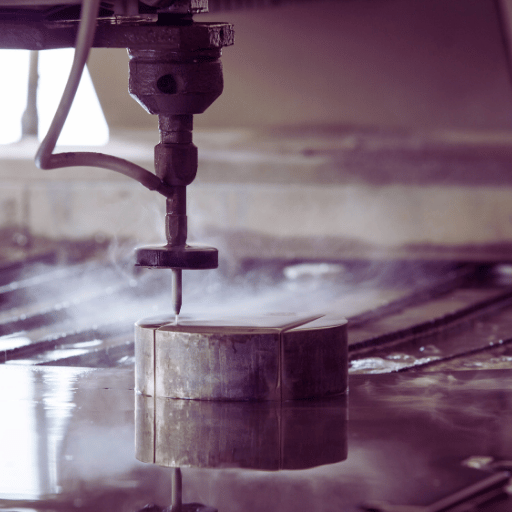
While most methods consist of direct application of heat-based alteration or mechanical devices, water jet cutting employs the use of a steam-enhanced stream of water circulating at high speed, resulting in the slicing of various materials. Whenever looking to cut different types of materials, including metals, ceramics, glasses, and composites, this technique comes in handy – also known as non-afemzig heat-generating and is also variothermal emphatic free. Some of the attributes that make waterjet cutting attractive include a clean cut, little resulting wastage, and the fact that no other work is needed after the cutting is done. It is extensively used in sectors such as aerospace, manufacturing, automotive, and construction, where it is efficient and easy to use with decorative cuts and designs or tender materials in particular.
What is Waterjet Cutting?
The Benefits of the Waterjet Cutting technique extend further, and the automation of most operations eliminates any complications. Its key differentiating feature is the cutting efficiency with the use of a very thin water beam, allowing to obtain the material to be saved when cutting as well as decreasing the costs of power consumption and all other ancillary expenses associated with producing the parts. It is applicable to a wide range of materials, which includes metals, composites, ceramics, glass, as well as others. As of today, leading industrial reports provide the evidence that waterjet cutting has taken on an extraordinary measure of utilization because it is environmentally benign, i.e., lacks any ill effects, and can be molded into a great number of activities in the various sectors of economy such as aviation, and other manufacturing including civil constructions and automobile industries.
How Waterjet Technology Works
One of the best ways to understand waterjet technology is to imagine an extremely high-pressure water gun with a laser beam that cuts through everything in its way with utmost precision and with abrasives in the mix.
Comparison with Other Cutting Methods
The Benefits of Waterjet Cutting The process may look ideal from the surface of it owing to its adaptability, ability and precision of cutting various materials without heat zones but then waterjet cutting is relatively slow as well as expensive than cutting using, for example, a laser or plasma.
|
Parameter |
Waterjet |
Laser |
Plasma |
Flame |
Wire EDM |
Punching |
|---|---|---|---|---|---|---|
|
Material |
All types |
Non-reflective |
Metals |
Metals |
Conductive |
Thin sheets |
|
Thickness |
Up to 24″ |
<1″ |
Several inches |
>1 foot |
12″ |
Thin sheets |
|
Speed |
Moderate |
Fast |
Fast |
Moderate |
Slow |
Fast |
|
Accuracy |
High |
Moderate |
Low |
Low |
Very high |
Moderate |
|
HAZ |
None |
Yes |
Yes |
Yes |
None |
None |
|
Cost |
High |
Moderate |
Low |
Low |
High |
Low |
|
Setup |
Easy |
Moderate |
Easy |
Easy |
Complex |
Complex |
The Benefits of Waterjet Cutting
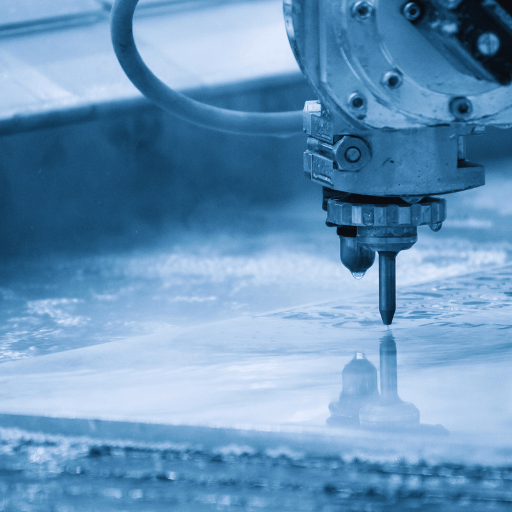
Accuracy and Precision in Cutting using Waterjet Technology
The cutting technology inherently offers great precision and accuracy, with most waterjet cutters typically working within tolerances of up to ±0.001” except in aggressive machines and materials where tolerances may be within ±0.002”.
Ability to Cut a Variety of Materials
In contrast to other methods, waterjets can be used to cut an extensive list of materials, which include metals, plastics, glass, ceramics, and composites, amongst others. It is useful for cutting both soft materials like rubber as well as hard ones like titanium or granite. Its main strength is the fact that it creates cuts without causing heat alteration of the materials, and for that reason, can be used on materials that are prone to heat damage. The accuracy, however, is similar once the thickness is adjusted to suit the type of material. Such property makes waterjet an effective tool in various industrial applications.
Environmental Benefits of Waterjet
The use of waterjet cutting has been hailed as one of the most environmentally friendly machining processes existing today. High efficiency and low wastage are key green features of this process. In contrast to many other cutting processes, waterjets do not produce any or less large amounts of noxious waste, directed cutting being predominantly done with abrasive water, mainly garnet, which is certain to be recycled, so such consumables will not be wasted. Water is the primary medium during the process and can be repurposed through cleaning to control the amount of water used during the operation.
Moreover, it does not generate dangerous fumes, gases, or dust that can compromise the health and safety of those working in the industry and the quality of air. Good control systems and optimization software have also increased energy efficiency, making many systems able to work with less power. All this active use of raw materials with care and decrease of pollution contributes to the importance of the application of waterjet technology in existing industries for environmentally friendly manufacturing.
Disadvantages of Waterjet Cutting
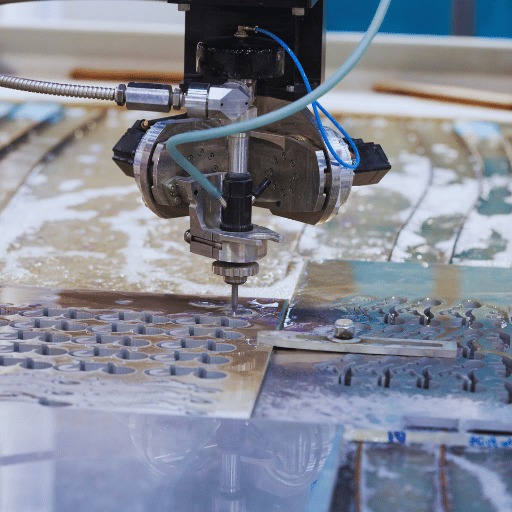
Potential Limitations of Waterjet Technology
The Benefits of Waterjet Cutting, however, are limited, and these factors should be evaluated before investing:
- Long Installation Costs: The investment and setup costs of waterjets and accessories are high, and therefore, not feasible for small businesses.
- Longer Cutting Times for Thicker Materials: The innovation of water jet is simply amazing, but cutting very thick or heavy metals is such a time-consuming process in comparison to techniques such as laser cutting.
- Care and Maintenance of machines: Such heavy pressures and grits used in machines require special attention to maintenance practices so that machines continue performing highly for a long time.
- Accuracy Constraints in Certain Conditions: Nevertheless, even though waterjets cut precisely, it may not be possible to execute extremely fine or fine cuts, more so in the context of complex laser or plasma cutting equipment.
- A Consumption and Disposal Challenge: The use of abrasives may create some environmental concerns regarding waste management, which imposes proper disposal practices to avoid any pollution.
Cost Components Analysis of Waterjet Systems
Certain significant costs need to be taken into account while analyzing the cost of waterjet systems. Primarily, these can be broken into acquisition cost, operations cost, and support cost. The cost of a waterjet cutting machine ranges from presenting the machine’s specifications, dimensions, and capabilities to anything between $60,000 and $300,000. This depends on the specifications of the machine and the size of the machine, and the machine’s capability. Generally, the cost of operation of the machine can also be known in terms of water, electricity, and abrasive materials moderately at $20 to 40 an hour. It can also be known that parts such as nozzles, seals, and pumps are involved. Breakdowns and equipment deterioration come at a high cost; however, maintenance comes in handy, preventing these consequences. It is important for practitioners to recognize these costs so that they can form an informed assessment regarding the full costing and whether the use of aircraft waterjet can be deemed in their business.
Operational and Maintenance Issues
There are waterjet systems, which are properly operated and maintained, in spite of numerous problems. Some of them include consumption of cutting nozzles, cutting seals, and high-pressure pumps. The next major concern is that all the aforementioned components should first be checked out and replaced before damage occurs to other parts of the system. The operators, in addition, should ensure the filtration system is in order so that any particles, if present, do not end up in the components. This is why it is critical that any maintenance schedule prescribed by the manufacturer is strictly followed, that substandard replacement parts are never used, and that downtime due to repairs is, as far as possible, minimized. Proper waterjet cutting techniques and maintenance, and operational procedures must be taught to all employees at regular intervals in order to ensure smooth working of the equipment.
Industry Applications of Waterjet Cutting
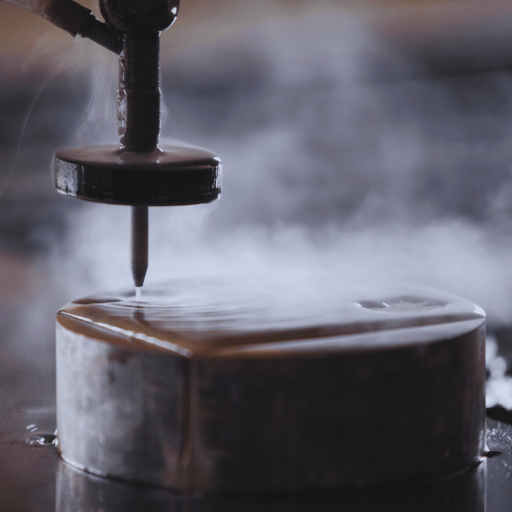
Waterjet Technology in Manufacturing
An effective waterjet machine is a tool like no other in this modern age of manufacturing – with its precision and versatility, cutting capabilities across many materials without any heat impact is immaculate. Because of this facility, there isto make cutting of foam as well as rubber, including hard material such as metal, composite, stone, and glass without any difficulty. Using the concept of high-pressure water, with the aid of high-pressure pumps and sometimes abrasive particles to enhance the cutting action of water, very clean cuts and shapes with even very detailed designs as required are achieved by the manufacturers.
Applications in Aerospace and Automotive
- Aerospace Component Manufacturing: Aircraft include the engine components and structural elements, and internal fittings that conform to demanding industry requirements. Waterjet cutting is used for these needs.
- Composite Material Processing: Since composite materials can be sectioned without delamination or heat deformation, waterjet cutting processes become very useful in the aerospace sector.
- Prototyping and Customization: Manufacturers Exploit waterjet Cutting for Quick Prototype creation and personalised manufacturing in both Air transport And Car sectors.
- Intricate Automotive Parts: Manufacturers use waterjet cutting to make components that include gaskets, dashboards, and body panels, etc., with intricate details.
- Metal Cutting for Vehicle Frames: Advanced waterjet systems provide the capability to cut metals used in making vehicle frames and chassis in a clear and accurate manner.
- Lightweight Material Shaping: It is the technique used in forming light materials such as aluminium and carbon fibre due to the need to reduce the net weight of vehicles and aircraft.
- Repair and Maintenance: The removal of exact amounts of material using waterjets, Ide Cutting makes the repair of aircraft or automotive components, which are worn or damaged, possible.
Use in Art and Design
Waterjet Cutting is a technique that is significantly applied in the world of arts and designs as it helps me to create intricate patterns and detailed designs with precision. This technology makes it possible to cut materials as hard as metals, glass, or additional materials like stone and ceramics, which are very difficult to machine without causing structural damage or distortion. Because these materials are cut and sliced in layers, I can bring to life elaborate works, for instance, sculptural pieces and adornment panels, or, more generally, customized architecture. Benefits For me, employing waterjet cutting methods not only enables me to make smooth, precise cuts but also ensures that the same intricate patterns are recreated time and time again, thus improving both the aesthetics and the functionality of my work.
Benefits of Using Waterjet Over Other Cutting Methods
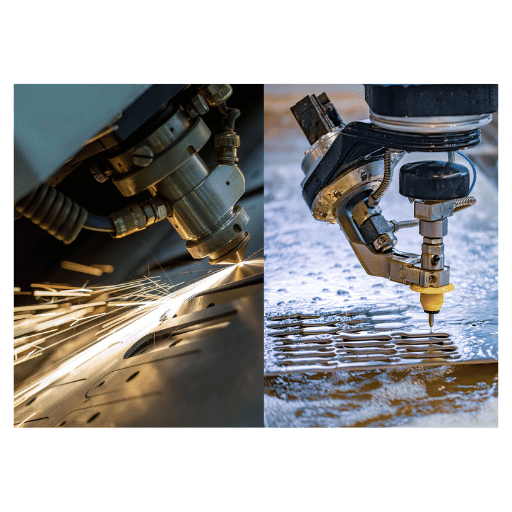
Waterjet vs. Laser Cutting: A Detailed Comparison
|
Parameter |
Waterjet Cutting |
Laser Cutting |
|---|---|---|
|
Cutting Mechanism |
High-pressure water (with abrasives) |
Focused laser beam |
|
Material Range |
Wide, including thick & delicate |
Limited, mainly thinner materials |
|
Thickness Limit |
Up to 300mm |
Approx. 40mm |
|
Precision |
±0.5mm |
±0.15mm |
|
Speed |
Slower (1-20 in/min) |
Faster (20-70 in/min) |
|
Heat Impact |
None (cold cutting) |
Generates heat |
|
Edge Quality |
Smooth, minimal post-processing |
Clean, detailed cuts |
|
Operating Cost |
$15-$30/hour |
$13-$20/hour |
|
Noise Level |
High |
Low |
|
Applications |
Thick, heat-sensitive materials |
Intricate, precise components |
Advantages of Waterjet vs. Plasma Cutting
|
Parameter |
Waterjet |
Plasma |
|---|---|---|
|
Precision |
High |
Moderate |
|
Material Range |
Broad |
Limited |
|
Thickness |
Up to 18″ |
Up to 6″ |
|
Speed |
Slower |
Faster |
|
Heat Effect |
None |
Present |
|
Eco-Friendly |
Yes |
No |
|
Cost |
Higher |
Lower |
|
Maintenance |
Frequent |
Less |
|
Safety |
Safer |
Riskier |
|
Applications |
Diverse |
Metals only |
Choosing the Right Cutter for Your Needs
When I have to select a particular type of cutter, I weigh quite a number of elements regarding the material, accuracy, and cost implications. In such a circumstance, if I require a high level of accuracy, need to cut various types of materials and thicker ones, ameliorating the problem of heat distortion, I will go for a waterjet cutter even if it is slow and expensive because the benefits outweigh the costs. However, if quickness, cheapness, and cutting through metals with reasonable accuracy are more important, then maybe a plasma cutter will be the best choice. I have to take care of all such cons along with the pros of each so that I can make the best decision for the personal project that I am currently working on.
Conclusion: The Value of Waterjet Cutting Technology
Summarizing the Benefits and Limitations
The Benefits of Waterjet Cutting Technology
- Cuts with fine precision, therefore, can produce detailed and complicated shapes.
- Cuts almost any material, ranging from metals, composites, stones, glasses, or even plastics.
- When heat treatment is a concern, water jet machines have no heat-affected zones.
- Non-toxic and non-hazardous process that generates little waste.
- The possibility of cutting through thick sections of material that other techniques might find difficult.
- The edge is left smooth, and in the majority of cases, secondary finishing is either reduced or not needed at all.
The Drawbacks of Waterjet Cutting Technology
- The cutting speed is slower in comparison to laser and plasma cutting.
- Higher expenditure on operations that involve consumables like abrasives and water causes higher costs.
- Rather difficult performance of cutting very hard, some even brittle materials at very high speeds.
- A lot of attention to detail is needed, especially for the maintenance of the high-pressure pump and the nozzle, in order to maintain the cutting performance.
- Comparatively speaking, the initial costs are rather higher than in some other cutting methods.
Future Trends in Waterjet Technology
Projected developments in water jet technology encompass aspects such as 3D and micro-waterjet cutting catering to Industry 4.0 and smart systems, increased efficiency of pumps and nozzles, as well as their availability to both small and medium-sized businesses.
Final Thoughts on Waterjet Cutting
Waterjet cutting remains a versatile and highly effective technology process that supports precision processing of materials used in different and countless industries and activities requiring work on materials. Statistical data on trends from Google’s search engine suggests that there is growing interest in waterjet cutting because it has distinct features, which include cold cutting, reduction of material distortion, a variety of materials that can be cut from metals to composites, and many more. Green solutions are also in demand, and it is no surprise that waterjet cutting fits into this bracket, profiting on the much-needed and even desired attention of its “green” advantage, which involves no chemicals and low production of waste. In the betterment of technological modalities, such as better pump efficiency of high-pressure pumps and the modern digital systems, the waterjet-cutting still stands as an indispensable business apparatus for the industrial heavyweights as well as the smaller firms needing flexible but highly efficient cutting.
Frequently Asked Questions (FAQs)

Q: Waterjet Cutting – Why is it Adored by People?
A: The fact that waterjet cutting allows many different types of materials, including metals, glass, and ceramics, to cut and these materials can be cut precisely is the primary benefit of waterjet cutting. The process is cold, meaning there is no heat generation, thus reducing the possibility of deformation of the material. Besides, waterjet cutting is green since water and abrasive material are used, and no toxic gases are emitted.
Q: Explain how a waterjet cutter functions.
A: A waterjet cutter works on the principle of injecting a stream of water with the force of a high-pressure jet stream to which fitting abrasives are added to cut materials. By this principle, water receives high pressure and then is discharged through a non-ball orifice, creating a thin cutting thread that is so accurate that it cuts particularly tough materials.
Q: Explain how waterjet cutting is different from other traditional types of cutting that involve light, heat, or physical contact.
A: In the cutting process, the way of cutting is what differentiates waterjet cutting from traditional cutting. Waterjet cutting is a cold cutting process that spares the creation of heat-affected areas, while the traditional process results in heat, which may lead to the distortion of the material. To add on, it is worth mentioning that waterjet cutting can work on shapes and designs on many planes, which makes it flexible than their contemporaries’ techniques.
Q: Is a waterjet cutter capable of multi-axis cutting?
A: Multi-axis cutting is possible using waterjet cutters, which are designed for such activities. The more advanced systems e.g., the 5-axis waterjet cutting machine, make it possible to skyrocket the level of craftsmanship at which another cut is performed by including geometries that are considered complex. This has made the water jet technology applicable among the many industries that are technologically aided, such as the aerospace sector and the automobile sector.
Q: Which materials can be cut employing waterjet technology?
A: Waterjet can be used to cut through many materials such as metals, plastics, glass, rubber, as well as foodstuffs. The capacity of the waterjet cutting seems to fulfill most, if not all, needs that may arise in the market sector.
Q: In your opinion, include both the positive and the negative aspects of waterjet cutting.
A: Waterjet cutting advantages can be high cutting control, the various materials that can be cut, and heat heat-affected zone. Nevertheless, the disadvantages are as follows: lower cutting speed in comparison to laser cutters, and the necessity of additional treatment to some edges for them to look finished.
Q: Describe the differences between laser cutting and water cutting processes.
A: Waterjet and laser cutting processes work towards the same objective, namely, precision; however, these processes differ in that each applies certain different principles to achieve its objectives. While in laser cutting where a beam of laser is focused onto a material and causes the material to melt or get vaporized, water jet cutting involves an abrasive water jet forced onto a material, thus cutting it. Both methods have their benefits and are applied based on different parameters depending on the type of cutting.
Q: But how clean is the cut produced by waterjets?
A: Cuts produced by waterjet are lauded for being accurate and of high quality. Such a level of quality is achievable without any major warping or distortion because it is a cool cutting process. Final parts produced through this process usually have perfectly smooth edges, and almost no finishing is required in such applications.
Q: What about the durability of the waterjet nozzle?
A: The durability of the waterjet nozzle is of importance in order to maintain the cutting aptitude and efficiency. In order to protect waterjet nozzles from the high-pressure environment of the cutting process, hard-wearing material has been incorporated for these nozzles. Every so often, an intelligent choice of nozzles and frequent maintenance can help enhance this and how they perform even more.
Reference Sources
1. Selected Physical Phenomena in the Cutting Process With High-Velocity Abrasive Waterjet and Their Effects on the Geometric Structure of the Surface (2024) (Leleń et al., 2024, pp. 478–483)
- Key Findings: The investigations concerned AWJ machining with high pressure for multilayer composite structures (carbon fiber layers with different matrix materials). Feed rate (vf) optimization reduced damage phenomena such as interface debonding, delamination, cracking, fiber pull-outs, and edge fraying. With the right AWJM setup, the surface morphology and cut quality can be improved considerably from all qualitative, quantitative, and economic perspectives.
- Methodology: Experiments determining how feed rate influences stereometry and morphology of the cut surface and edge quality were performed. The multilayer composite structures were manufactured by autoclave technology.
2. Monitoring Equipment Damage in Composite Material Machining: An AE Approach in AWJC (2024) (Popan et al., 2024)
- Key Findings: An Acoustic Emission (AE)-based method for monitoring abrasive waterjet cutting (AWJC), especially for CFRP, was developed in this work. The method recognized malfunction conditions such as reduction in abrasive flow, clogging, wear of components, and drops in water pressure. Mathematical regression models predicted the root mean square of the AE signal as a function of water pressure, abrasive flow rate, feed rate, and thickness of the material. Experimental validation of the method has been carried out.
- Procedure: AE sensors were placed on the cutting head and the CFRP workpiece. Tests of various cutting conditions were carried out to verify the effectiveness of the monitoring system.
4. Omax Micro Waterjet – MIT – Talks about how water jet machining is very fast and does not affect heat zones.