


The melting point is one of the crucial physical properties characterizing and identifying most organic compounds, and it holds much importance in chemical analysis and synthesis. For 1-bromobutane, being one of the most widely studied alkyl halides, the melting point therefore is important not only out of choice but also for unlocking opportunities about its structure, purity, and possible uses. In this article, we tell why the melting point of 1-bromobutane is of importance, outlining the theory behind it and how it translates to practicalities in the lab and the role it plays in the substance’s behavior in various chemical reactions. Are you a student, researcher, or industry professional? This comprehensive article is going to give you deeper insights into why the melting point matters and how it ties into the wider body of scientific concepts.
Introduction to 1-bromobutane

1-Bromobutane is an organic chemical compound classified as an alkyl halide having a four-carbon straight-chain structure with a bromine atom attached to its terminal carbon. Its molecular formula is C4H9Br. It appears as a colorless liquid under usual conditions. The primary use of 1-bromobutane as an organic reagent is in the synthesis of many other compounds, including pharmaceutical and specialty chemical products. From the point of view of 1-bromobutane’s reactivity, the presence of the bromine atom largely determines its reactivity, which is an excellent leaving group in substitution and elimination reactions. This makes it a valuable reagent in chemical synthesis, both in laboratories and industrial settings.
Structure and Characteristics of 1-bromobutane
1-Bromobutane is an alkyl halide with the chemical formula C4H9Br. Its molecule is made of an n-butane backbone in which a bromine atom substitutes for a hydrogen atom at one of the two terminal carbons. Due to the electronegativity difference between carbon and bromine, a polar C-Br bond is formed. The molecule has tetrahedral geometry about the carbon atoms, consistent with sp3 hybridization.
Physical Properties
Physically, 1-bromobutane is a colorless to pale-yellow liquid insoluble in water but miscible with many organic solvents, such as ethanol and diethyl ether. It boils at 101°C and has a density of 1.276 g/cm³ at standard temperature and pressure conditions. In synthetic uses, these properties permit easy handling and storage.
Chemical Properties
Chemically, the bromine atom in 1-bromobutane is the site of highest reactivity, primarily because it serves as an excellent leaving group in nucleophilic substitution (SN1 and SN2) as well as elimination reactions. This reactivity is at the basis of its usefulness in organic synthesis, wherein it can be transformed into various other derivatives, including alkenes, alcohols, and other halogenated compounds.
Synthesis Process of 1-bromobutane
1-Bromobutane can be synthesized in the laboratory using one of the following methods: reacting 1-butanol with hydrobromic acid under acidic conditions. The reaction proceeds via a nucleophilic substitution mechanism, usually counted as SN2, as the substitution involves a primary alcohol. The mechanism proceeds initially by the protonation of the hydroxyl group of 1-butanol by HBr, turning the hydroxyl to a good leaving group-water; hereafter, the bromine of HBr nucleophilically attacks and displaces the water molecule, forming 1-bromobutane.
The reaction is carried out in the presence of concentrated sulfuric acid, which acts as a catalyst and inhibits the reverse reaction. The synthesis is conducted under controlled conditions, such as moderate heating, to obtain a moderate yield and fewer by-products. When the reaction is over, the mixture can be worked up and purified, usually by distillation, to give pure 1-bromobutane.
General Uses of 1-bromobutane in the Chemical Industry
- Alkylating Agent: In the realm of organic synthesis, 1-bromobutane serves as an alkylating agent, transferring a butyl group to various compounds and facilitating the creation of more complex molecular structures.
- Synthesis of Pharmaceuticals: It is used in the synthesis of active pharmaceutical ingredients (APIs), acting as a reactive intermediate for the preparation of medicinal compounds.
- Manufacture of Quaternary Ammonium Compounds: 1-Bromobutane finds application in the preparation of quaternary ammonium salts, which include disinfectants, surfactants, and phase-transfer catalysts.
- Polymer Chemistry: This compound participates either as an initiator or a reagent in polymerization reactions, facilitating the formation and modification of polymers.
- Analytical Application: It possesses some analytical working capacity, the applications of 1-bromobutane preferentially including delineations of reaction mechanisms and serving as a standard in gas chromatography analysis.
Key Chemical Properties
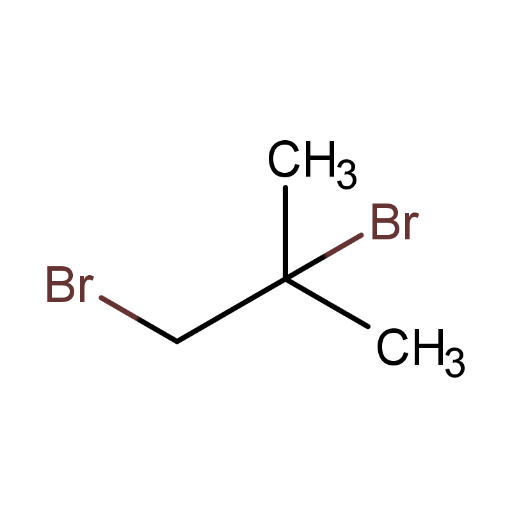
The use of the halogenated alkane 1-bromobutane exemplifies its versatility in various applications due to its chemical properties. This compound exhibits low polarity having an alkyl chain, whereas the bromine atom will create an area of greater electron density and enable a nucleophilic substitution reaction. It has a boiling point of approximately 101°C and is sparingly soluble in water, but is readily soluble in organic solvents such as ethanol and ether. 1-Bromobutane behaves much like a typical alkyl halide, undergoing reactions such as hydrolysis, elimination, and substitution, and is also a starting material in the synthesis of more complex organic molecules. This utility makes it essential in both industrial and atmospheric applications.
Molecular Weight and CAS Number 109-65-9
Molecular Weight
137.02 g/mol
CAS Number
109-65-9
The name 1-Bromobutane refers to a compound with a molecular weight of 137.02 g/mol. Its Chemical Abstracts Service (CAS) Number, 109-65-9, uniquely identifies this compound in chemical databases and research literature. This ensures precision and consistency in scientific communication and allows researchers to access standardized information about its properties and applications. The CAS number is widely used in academic, industrial, and regulatory contexts to simplify cataloging and referencing of chemical substances.
Boiling Point and Solubility
About 101°C (at 1 atm or atmospheric pressure) is the boiling point of 1-bromobutane. This value is significant when working with distillation, evaporation, and temperature-sensitive reactions. In computing the solubility of 1-bromobutane, it is only sparingly soluble in water owing to a nonpolar carbon chain. Its solubility in water is merely about 4.5 g/L at a temperature of 25°C. However, alcohols, ethers, and halogenated solvents may provide excellent solubility for 1-bromobutane, making it very useful for organic synthesis and chemical research areas.
Importance of Melting Point in Chemical Properties
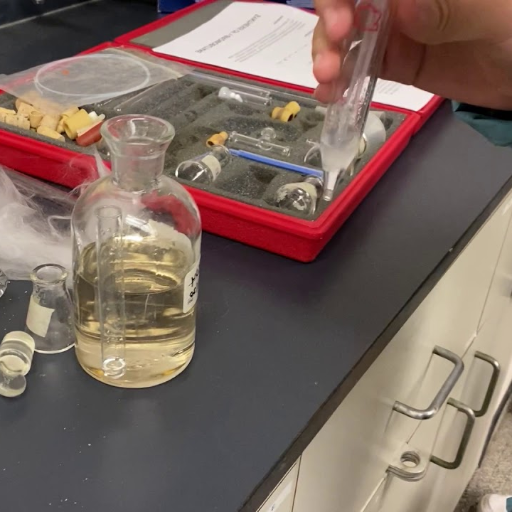
The melting point of a compound is a crucial property that furnishes more information about its purity, stability, and nature of intermolecular forces. For crystalline substances, melting point refers to the temperature at which the solid phase first melts. This physical property is utilized extensively in both chemical research and the pharmaceutical industry for the identification of compounds and the determination of sample purity.
🔬 Purity Indicator:
The pure compound has a sharp melting point/mlp range of less than 1-2°C; on the other hand, impurities lower the melting point and broaden the melting point ML range due to disturbances in the crystalline lattice structure. This effect may, in fact, be used for techniques such as recrystallization, with melting point determination confirming that the compound has been successfully purified.
For example, the melting point of benzoic acid, a widely used organic compound, is 122.3°C. Any deviation from this value almost certainly indicates contamination. Thermal data of any compound have also been used to predict its behavior in various processes, such as its use in high-temperature reactions or its thermal stability during processing.
Significance of 1-bromobutane Melting Point
❄️ Melting Point: -112°C (-169.6°F)
Being a primary alkyl halide, 1-bromobutane undergoes better regeneration, with its liquefaction occurring at room temperature and no melting point in the classical sense; hence, thermal phenomena like boiling point and freezing point significantly facilitate its natural handling and applications. Knowing these thermal properties helps storage as to unwanted phase changes during use and in reaction design, wherever temperature must be perturbated to exacting degree. The absence of a melting point emphasizes that almost all handling is focused on the stability of 1-bromobutane as a liquid.
Understanding Purity and Stability of 1-bromobutane
The purity and stability of 1-bromobutane, being key factors, ensure its efficiency in chemical applications. The determination of purity is performed using gas chromatography, which identifies and quantifies impurities. Even trace amounts of contaminants might cause changes in reactivity or yield for very sensitive reactions. Stability may be governed by light, heat, and air-the worst ones might incline toward decomposition or a precipitate form, as unwanted byproducts. To retain the integrity of 1-bromobutane, it must be kept in a dark, hermetically sealed container at the specified temperature, avoiding prolonged exposure to reactive conditions. Correct storage and handling procedures ensure optimal performance and minimize degradation possibilities.
Role of Melting Point in Industrial and Laboratory Settings
The melting point of 1-bromobutane is a crucial physical property within industrial and laboratory parameters. With a relatively low melting point of approximately -112°C (-169.6°F), the compound remains liquid under normal temperature and pressure conditions and can therefore be used in various chemical processes and formulations. This particular characteristic makes it convenient to handle and behave consistently during synthesis processes, more specifically in many organic reactions where 1-bromobutane serves as an alkylating agent. Moreover, the room temperature retention of a low melting point also facilitates its applications wherever liquid-phase operation is required at such a temperature, without requiring a specific cooling or heating method beforehand. Controlling the melting point enables the maintenance of product quality, optimizes conditions under which reactions occur, and ensures compliance with rigorous safety and efficiency standards.
Factors Affecting the Melting Point
🔗 Intermolecular Forces
The stronger the intermolecular forces such as hydrogen bonding, dipole-dipole interactions, or van der Waals interactions, the higher the melting point, because of increased energy needed to overcome these attractions.
🏗️ Molecular Structure
The melting point depends on the shape and symmetry of the molecule. Kinda symmetrical molecules tend to pack more efficiently into a crystal lattice and thus have higher melting points.
⚖️ Molecular Weight
Compounds with higher molecular weights generally demonstrate higher melting points, as van der Waals forces are increased in larger molecules.
🧪 Purity of the Substance
Presence of impurities can disrupt the regular crystalline structure and generally tends to lower and broaden the melting point range.
⚡ Polarity of the Molecule
Polar molecules are subjected to strong electrostatic interactions, which increase the energy required for melting and thereby increase the melting point.
Measurement Methods of Melting Point
🧪 Capillary Method
The capillary method consists of loading a thin-walled capillary tube with the sample and heating it at a constant rate, observing at which temperature the sample is converted into liquid. This method has been a very commonly applied and is also cost-effective method.
📊 Thermal Analysis (DSC)
Thermal analysis methods, such as Differential Scanning Calorimetry (DSC), yield data with high accuracy by recording the heat absorbed or evolved during the melting process, thus providing both accuracy and the ability to consider more complex materials or mixtures.
Both methods are sometimes selected based on the degree of precision required and at others on the type of samples being evaluated.
Advanced Analytical Instruments for Measurement
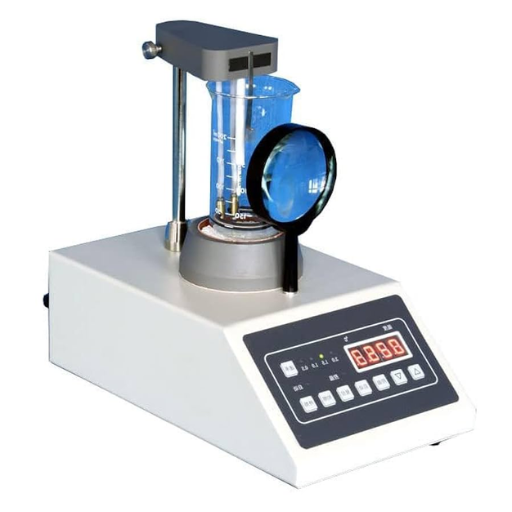
The advanced instruments used chiefly for the precise determination of the melting point are automated melting point apparatus and DSC. Automated melting point apparatus contain digital cameras and heating mechanisms for visual observation and accurate temperature recording. Such systems are suitable for routine analyses and can process multiple samples simultaneously. On the contrary, DSC affords a more precise thermal analysis in terms of heat flow during the phase transition; thus, if detailed thermal characterization of materials is required, this method is ideal and works best for those complex samples or mixtures where such thermal characterization is plainly needed. The selection of a technique or instrument depends on the accuracy required, the type of sample, and the scope of application.
Standardized Testing Techniques
A melting point determination is a highly crucial method of standardized testing commonly done in many scientific and industrial domains for a determination of purity and identity of material substances. The two most accepted methods include the use of capillary tubes and Differential Scanning Calorimetry (DSC). Using the capillary tube method is still considered a standard industry test because of its simplicity and accuracy; the sample sealed in a thin glass capillary is heated slowly until it changes from the solid phase into its liquid form, thereby providing an accurate value for the melting point of the substance as per independent regulatory guidelines such as the ASTM or ISO standards.
Differential Scanning Calorimetry (DSC), however, is another expensive and sophisticated technique that measures heat flow as a function of temperature, thereby providing greater sensitivity and recognizing even the smallest phase transitions, while fulfilling the need for fine thermochemical profiling. While both methods are essential to standardized testing, the technique selection depends primarily on the nature of the samples, the desired accuracy, and regulatory requirements.
Interpreting Melting Point Data
I essentially consider the melting point data to establish the purity and identity of a material in relation to that of any given substance under consideration. A sharp and definite melting range usually signifies that the compound is pure. A broader and depressed range, however, indicates the presence of impurities. Additionally, one must compare the actual melting point to the known reference values for the substance in question and carefully analyze any deviation from the reference value to determine whether it is due to the experimental setup or other unknown variables in the sample.
Applications of 1-bromobutane

1-Bromobutane has broad applications as an alkylating agent in organic synthesis, where its interaction with nucleophiles results in the formation of carbon-carbon and carbon-heteroatom bonds. This property is crucial in the production of pharmaceuticals, agrochemicals, and other specialty chemicals. 1-Bromobutane may also be transformed into quaternary ammonium salts or used as a solvent or intermediate in various industrial processes. Research activities in the lab also involve the use of 1-bromobutane to study substitution and elimination.
Use in Pharmaceuticals
The alkylation agent 1-bromobutane, being one of the essential alkylating agents, is used in pharmaceutical synthesis. Due to good formation of C-C and C-heteroatom bonds, it is an integral part in the synthesis of APIs and complex intermediates. Therefore, it has numerous applications in quaternary ammonium compounds, which are essential components in many drugs. Due to its high reactivity, this compound can be utilized for targeted functional group modifications, enabling the development of novel pharmaceutical products and therapies.
Role in Chemical Synthesis
1-Bromobutane acts as the ultimate alkylating agent in organic synthesis. Owing to the existence of the bromine atom, it opens the door to nucleophilic substitution reactions. This property enables 1-bromobutane to serve as an efficient avenue for the formation of carbon-carbon and carbon-heteroatom bonds, thereby making it a primary reagent in the construction of complex organic molecules. Some reactions are CCC, such as the Williamson ether synthesis, which is used to form ethers, esters, and other functionalized organic molecules. It also finds use in manufacturing pharmaceutical intermediates, agrochemical, and specialty chemicals, where selective yields are of importance. The compound finds numerous applications because it reacts under relatively mild conditions and forms the basis of several reactions, whether in academic or industrial processes.
Application in Manufacturing Processes
- Synthesis of Ethers: A critical reactant in the Williamson ether synthesis is 1-bromobutane, which is used with aliphatic alcohols, through which both symmetrical and asymmetrical ethers are manufactured with high efficiency.
- Production of Aliphatic Alcohols: It finds application in forming butanol derivatives through nucleophilic substitution reactions, which are crucial for the production of several industrial chemicals.
- Pharmaceutical Intermediates: Thus, this compound acts as an essential intermediate for supplying the butyl moiety to the selected modifications during the synthesis of APIs.
- Agrochemical Development: This bromide is used in the synthesis of pesticides and herbicides, where its consistent reactivity provides control over the composition of the final product.
- Specialty Chemicals: Being versatile in alkylation, it is used to prepare specialty chemicals employed in adhesives, lubricants, and plasticizers.
Reference Sources
- PubChem: Butyl bromide | C4H9Br | CID 8002 – Provides detailed chemical properties and safety information about 1-bromobutane.
- Wikipedia: 1-Bromobutane – Offers an overview of 1-bromobutane, including its melting point, boiling point, and other physical properties.
- Sigma-Aldrich Safety Data Sheet: SAFETY DATA SHEET – Contains precise data on the melting point and other safety-related properties of 1-bromobutane.
- ACS Publications: Thermodynamics of Ionic Liquid Precursors. 1-Bromobutane – Discusses the thermodynamic properties of 1-bromobutane, including its heat capacity and fusion parameters.
- NIST WebBook: Butane, 1-bromo- – Provides comprehensive thermodynamic data and other chemical properties of 1-bromobutane.
Frequently Asked Questions (FAQs)
📚 Conclusion
Understanding the melting point and related properties of 1-bromobutane is crucial for its effective utilization in various chemical applications. From pharmaceutical synthesis to industrial manufacturing, this compound’s unique characteristics make it an invaluable tool in organic chemistry. Proper handling, storage, and application of 1-bromobutane, guided by knowledge of its physical and chemical properties, ensures safe and efficient use in both laboratory and industrial settings.


