


Within CNC machining, one of the most crucial decisions you can make is selecting the right plastic material. Each project has its own specific requirements, and the materials now chosen may affect the performance, durability, and cost-effectiveness of the end product. With all the plastic choices—each with its properties—it can get overwhelming. This guide attempts to make it easy. Whether your emphasis is on strength, chemical resistance, temperature, or machinability, we’ll look at the key parameters to consider along with the most common plastics for CNC machining. By the time we’re done, you’ll be able to choose the best material confidently for your next project.
Types of Plastic Materials
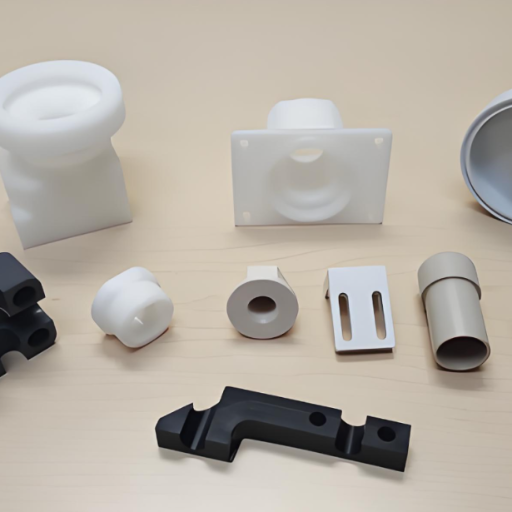
Selecting the right plastic material begins with understanding the specific requirements of your project. The factors considered may be said to include mechanical strength, thermal resistance, chemical compatibility, ease of machining, and so on. Commonly used plastics like ABS, Nylon, Polycarbonate, and PEEK offer an array of special qualities based on their particular application, which may involve durability, flexibility, or resistance to extreme environments. By matching the properties of the material to the needs of the application, one essentially guarantees optimum performance and efficiency in the product.
What is CNC Machining?
Computer Numerical Control machining processes are those wherein computer software, pre-programmed, governs machinery movement and tool movement. CNC technology allows for the precise control of machines with complex geometries-lathes, mills, routers, and grinders-which in turn halve, slice, and finish raw materials into finished parts with demanding specifications. Owing to its applications in manufacturing complex geometry components with efficiency and repeatability, CNC-machining has found uses in aerospace, manufacturing of automobiles, manufacture of medical devices, and supply of consumer electronics.
What said to be intrinsic benefits of CNC machining is said to include its versatility-that is to say-it can work with any kind of material-under metals: aluminum, stainless steel, and titanium; under plastics: ABS and PEEK. Generally, three primary processes are involved: milling, turning, and drilling. CNC machines operate in multiple axes (e.g., 3-axis, 5-axis) providing greater precision as well as the capability to handle more intricate designs.
In recent times, but other developments have further advanced CNC machining, with AI and machine learning increasing efficiencies and preventing waste. According to industry figures, the CNC machining market size was valued at about $83 billion in 2022 and is expected to grow at an annual compound growth rate of 5.7% from 2023 to 2030, fueled by the increasing demand for precision-engineered components and a push for automation in manufacturing.
Therefore, a speed of transformation made it possible by CNC machining combined with its precision and flexibility is changing how parts are manufactured, becoming one of the solutions that modern manufacturers use to overcome the challenges as they face.
Overview of Plastic Materials for CNC Machining
CNC machining employs all manner of plastic materials with physically varying properties, thus being suitable for particular applications. This list includes ABS for its toughness and impact resistance, while polycarbonate is considered for its transparency and strength. Nylon has wear resistance properties that make it perfect for moving parts, while PEEK, in contrast, affords a good chemical and thermal resistance for much harsher environments. Acrylic is chosen mostly for optical clarity, and Delrin (POM) is selected when precision and durability are required. This allows manufacturers to create lightweight, cost-efficient, and high-performance components designed for particular industry requirements.
Material Properties of Plastics
The properties of plastics are numerous and very different, making them versatile in nature and widely used in the industry. The properties, though, change according to the type of plastic and how it is made. Some of the key properties are:
- High Strength-to-Weight Ratio: Several plastics, such as polycarbonate and PEEK, provide excellent strength while being lightweight, thus highly sought after in aerospace, automotive, and consumer applications.
- Thermal Resistance: Certain plastics, such as PEEK, can resist high temperatures so that they perform well in extreme conditions.
- Chemical Resistance: Such materials as nylon and fluoropolymers resist chemical corrosion and, thus, are more durable in industrial or medical environments.
- Flexibility and Toughness: Such plastics as polyethylene provide excellent toughness and flexibility, which is critical to applications requiring impact resistance.
- Electrical Insulation: Many plastics are innately electrically insulating and, as such, are often used for electronic components.
- Optical Clarity: Acrylic and polycarbonate are often applied in contexts requiring transparent materials for lenses or display screens.
Knowing these properties enables the manufacturer to choose an appropriate plastic for a particular application, thereby ensuring reliability and performance.
Types of Plastics for CNC Machining
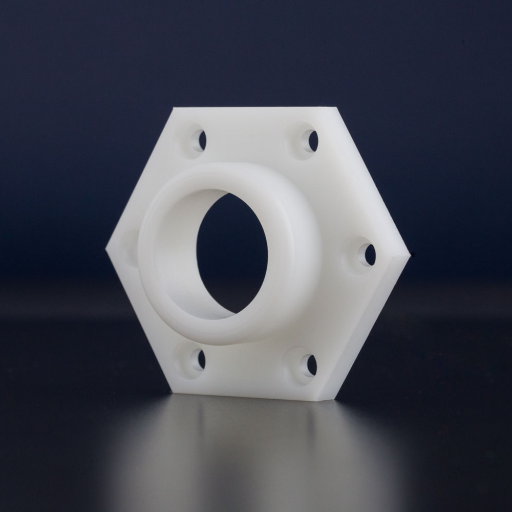
- ABS: This plastic is very durable, light in weight, and easy to machine, and thus, is excellent to be used for prototypes and enclosures.
- Nylon: It offers durability and wear era, hence suitable for parts destined for demanding wear.
- Polycarbonate: Takes great impact resistance and decent optical clarity, well-suited for transparent or treated parts.
- Delrin (POM): A general engineering plastic with very good mechanical properties; very good for high-precision parts.
- Acrylic: Mostly used where optical clarity is needed, such as display cases and lenses.
Polycarbonate: Properties and Applications
Polycarbonate is generally considered very tough and rather versatile, possessing excellent impact resistance and transparent properties. It provides a good balance between toughness and lightweight characteristics with optical clarity, thus being highly sought for various demanding applications. It also exhibits a high-temperature heat resistance and good dimensional stability over a broad range of temperatures.
Its applications, which fall under a multitude of industries, make special use of polycarbonate’s unique properties. These include the manufacture of protective equipment such as safety goggles, face shields, and helmets. Polycarbonate is used for special applications where transparency against impact and handability resistance is considered essential, such as in shatterproof windowpanes, skylights, and lens manufacturing. Furthermore, automotive sectors, electronics, and even 3D printing and prototype developments utilize polycarbonate, thereby making polycarbonate indispensable in modern engineering and design.
Polyethylene: Advantages in CNC Applications
Polyethylene is a very versatile thermoplastic, providing significant advantages in CNC machining application segments. It offers the lowest coefficient of friction conceivable applicable to wear-mated engineering and wear resistance without significantly compromising toughness. Polyethylene does not deteriorate when subjected to moisture and chemical presence; that enable it to be put into harsh industrial or outdoor applications. The lighter weight further diminishes the load and power requirements of the involved machinery, increasing efficiency. These characteristics propose the utilization of polyethylene in CNC applications for machine parts, gears, and protection.
Engineering Plastics: An Overview
Engineering plastics are materials specifically developed for withstanding arduous mechanical and environmental conditions, which makes them appropriate for industrial and technical applications. They have particular performance features including strength, durability, resistance to heat, chemicals, and wear, which separate them from what are very commonly rejected as plastics in consumer goods. Polycarbonate, polyamides (nylon), polytetrafluoroethylene (PTFE), and polyethylene are all examples of engineering plastics. Each has very special characteristics that serve various purposes, whether the manufacture of precision parts for automotive, aerospace, or manufacturing industries. Their versatility and relatively low costs compared to traditional materials such as metals provide engineering plastics with an avenue for fostering innovations across many sectors.
Applications of CNC Machined Plastics
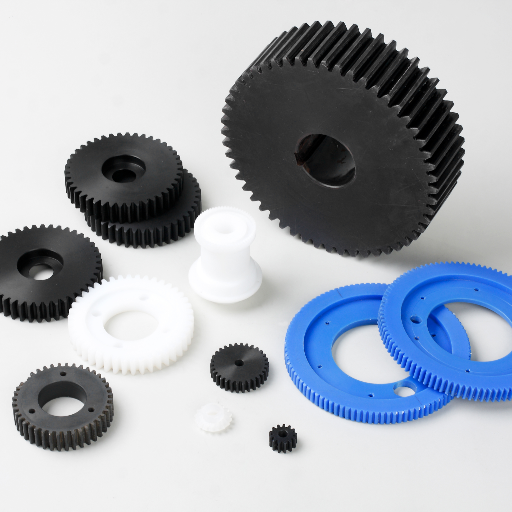
CNC-machined plastics find wide industrial applications because of accuracy and versatility. The areas of applications that exist include the aerospace, automotive, medical, and electronic sectors. CNC machining plastics make lightweight aerospace components, custom-made medical devices, and insulating parts for electronics. These examples merely establish that CNC machined plastics are reliable and efficient in manufacturing intricate and performance-demanding parts.
Industries Using CNC Machined Plastic Parts
The CNC machined plastic parts hold utility in many industries, such as aerospace, automotive, medical, and electronics. They are versatile enough to manufacture lightweight aerospace components, precise medical apparatuses, automotive components, and insulating elements for electronics that speak to their place across these domains.
Common Applications of CNC Plastics
CNC plastics are commonly used in prototyping, enclosures, medical devices, automotive parts, aerospace components, and electronic insulation.
| Key Point | Details |
|---|---|
| Prototyping | Rapid and precise model creation. |
| Enclosures | Durable and protective casings. |
| Med Devices | Precision for surgical and diagnostic tools. |
| Auto Parts | Lightweight and strong materials. |
| Aerospace | High-performance, heat-resistant parts. |
| Electronics | Insulation and non-conductive components. |
Successful CNC Plastic Machining Case Studies
Case Study 1: Custom Medical Device Components
The maker of a prestige medical device required precision parts for the production of a new surgical instrument. Using CNC plastic machining, the parts were machined with the highest precision with an allowance of ±0.001 inches from biocompatible PEEK material. FDA guidelines and standards were met while production time was reduced by 25% versus using traditional machining. The result was a robust, lightweight, and finely finished product that contributed to its acceptance into several healthcare markets.
Case Study 2: Lightweight Automotive Parts
A major automotive OEM mono desire to increase vehicle performance by replacing heavy metal components with light plastic alternatives. By CNC machining and working with advanced thermoplastics such as polycarbonate and nylon, they managed to reduce the average component weight by 40%. This implies fuel efficiency over cost benefits and a 15% increase in operational efficiency on automotive assembly lines.
Case Study 3: High-Performance Aerospace Components
The aerospace company encountered challenges in manufacturing complex parts that may withstand the rigors of extreme temperature and stresses. High-performance components manufactured by CNC machines from heat-resistant plastics such as ULTEM and PTFE. Machining underlined the achievement of very intricate geometries and integrity of materials. Resilient parts in testing helped the building of the next-generation prototype aircraft with higher performance and lower maintenance.
Case Study 4: Insulated Electronics Housings
A consumer-electonics-focused tech company required non-conductive enclosures for their new box. By relying on CNC plastic machining, the team manufactured enclosures in ABS plastic, marrying great industrial design with precise dimensions and good insulation properties. Defect rate was below 2% in batch production, allowing for excellent quality to be released into the market. This gave the company tight deadlines and scalability in production.
These case studies illustrate the viability of CNC plastic machining in various industries, demonstrating how it meets stringent demands while improving performance and efficiency.
Plastic Material Selection Guide

It is vital to consider factors such as mechanical strength, thermal resistance, chemical compatibility, and machining ease when selecting plastics for any given project. For high durability and impact resistance applications, ABS or polycarbonate could be suitable choices. Thermal considerations might lead one to opt for engineering plastics like PEEK or PTFE. The exposure of the plastic to environmental conditions such as UV rays or moisture needs to be considered to ensure durability. However, balancing all the above qualities with cost of sustenance and easy accessibility will help figure out the best plastic alternative you need.
Factors to Consider While Choosing Plastic for CNC
The main criteria for the kind of plastics that you choose for CNC machining include application requirements for mechanical strength, thermal stability, and chemical resistance. Considerations of the surrounding environment such as exposure to UV light or moisture matter too, as does machine-ability in the manufacturing process to ensure precision and efficiency. Of course, the cost, availability, and conformity to the regulatory standards must not be ignored while making an informed choice that involves both performance and budgetary constraints.
Best Practices for Plastic Material Selection
I always analyze the characteristics that the applications will require in terms of plastic material selection: durability, thermal performance, and chemical compatibility. The materials must also be able to withstand the operating conditions, which may involve exposure to harsh environments or fluctuating temperature. Machinability is equally important to product precision; that means considering materials that may be a compromise between strength and machineability. Furthermore, I consider the alternative’s cost and availability, together with guidelines from the relevant industry standards, to make decisions suitable to the performance and cost requirements in and out.
The Tips for CNC Plastic Machining
- Choose the Right Material: Select plastics with the right properties for your application, e.g., thermal stability, chemical resistance, and machinability. Analyze your performance requirements against the cost.
- Use the Correct Tool: Always keep your tools sharp and operating at high speed. Use tools designed specifically for plastics to avoid excessive heat build-up and contaminate your cut.
- Adhere to Appropriate Feed and Speed Rates: Ensure minimum melting or chipping during spindle rotation and feeding, keeping the cutting process clean and accurate.
- Use Proper Cooling: Prevent warping and deformation through adequate cooling methods, such as air jets or liquid coolants.
- Plan Your Fixturing Very Carefully: Clamp the plastic workpiece firmly using fixtures or clamps to keep vibrations and inconsistent impacts at bay.
CNC Machining Services for Plastics

CNC machining services for plastics offer a precision manufacturing solution for various industries. Using advanced equipment and techniques, these services manufacture components that have tight tolerances, smooth finishes, and are highly dependable upon use of assorted plastic materials. The importance of CNC machining is in its ability to consistently manufacture parts with intricate geometries and designs with a certain level of detail required during the prototype stage or for mass production.
Finding the Right CNC Machining Service
Selecting your CNC machining service will encompass several key considerations. Consider the suitability of the provider with the particular plastic materials your project will need, and whether they will be able to achieve tight tolerances. Think about their equipment, production capabilities, and assurance of quality. Other factors to take into account include any other testimonials you can find, and they provide transparent communication throughout the production process. A service provider worthy of being given trust will yield balancing accuracy with efficiency and cost-effectiveness to fulfill your needs.
Comparative Analysis of CNC Machining Services
Focus on a few key differentiators in your comparison of CNC Machining Services; the first of which would be differences in materials, speed of production capacity, and precision. Their ability to work with more complex geometries is especially important, through the assistance of their high-tech machinery and their skilled operators. Pricing comes next in importance: their costs must fall within your budget without compromising on the quality standards. Consider looking into the reputation of the provider, contrasting with other reviews within the industry norms, since these factors show whether it is reliable and consistent. Finally, make your choice based on that service balancing quality, efficiency, and effectiveness as related to your project.
Future Trends in CNC Plastic Machining
The CNC plastic machining sector stands to grow further, supported by technological innovations and fast-changing needs. The most prominent trend is the further expansion of automation and the Industry 4.0 concept. Force automation and intelligent technologies will ensure more accuracy, shorten turnaround time, and increase overall productivity. According to the market report of 2023, this boom will undoubtfully increase the value of the CNC machining market to $120 billion by 2030, the annual growth being 7.1%. This speaks for a rising demand in industries that require high-precision plastic components made by CNC machining, such as medical, aerospace, and consumer electronics.
Sustainability is another imperative trend considered by CNC machining providers. Some eco-friendly practices with the use of recyclable plastic materials and process optimization to limit waste are being considered. The betterment of multi-axis machining is another development that allows manufacturers to support more sophisticated geometries for designs that were impossible in the past. New materials, like high-performance plastic composites, will open new opportunities for making robust and lightweight components for specialized applications.
AI and predictive analytics are also bringing transformations to the CNC ecosystem. Such technology would help CNC machines with maintenance schedules, quality control, and production forecasting to decrease downtime and defects. With the rise of digital twins, manufacturers can virtually simulate and optimize processes before actual production to save time and resources.
Essentially, the future of CNC plastic machining is about innovation, sustainability, and precision that will provide businesses with complex customer requirements and competitive advantages in a rapidly changing market.
Reference sources
- Influence of Machining Parameters on the Dimensional Accuracy of Drilled Holes in Engineering Plastics(Pop et al., 2024)
- Publication Date: 2024-05-24
- Key Findings: This study investigated the impact of cutting speed and feed rate on the dimensional accuracy (diameter and cylindricity) of drilled holes in six different engineering plastics. ANOVA analysis revealed a significant correlation between machining parameters and hole size for some materials, but not for others. High- and medium-density polyurethane showed the best accuracy and cylindricity under the tested conditions. The authors conclude that optimizing cutting parameters based on the specific polymer type is crucial for achieving high accuracy and minimizing deviations from cylindricity.
- Methodology: A multilevel factorial design was used to conduct structured experiments. A CNC machining center was used for drilling, and high-precision measuring machines were employed to evaluate hole diameter and cylindricity.
- Synthesis of bioplastics and the effects of additives on the mechanical, thermal and biodegradable properties(Ubaidah et al., 2024, pp. 430–490)
- Publication Date: 2024-10-16
- Key Findings: This review paper explores the synthesis of bioplastics from renewable sources and the effects of various additives on their mechanical, thermal, and biodegradable properties. The authors highlight the crucial role of additives (cross-linking agents, plasticizers, fillers, etc.) in tailoring the desired properties of bioplastics. The review emphasizes the importance of understanding intermolecular interactions and other factors influencing the final properties of the bioplastic.
- Methodology: This is a systematic review of existing literature, analyzing the synthesis processes and the impact of additives on bioplastic properties.
- Eco‐Friendly Materials for a Zero E‐Waste Society: Challenges and Opportunities in Engineering Plastics(Lee et al., 2024)
- Publication Date: 2024-01-29
- Key Findings: This review paper addresses the environmental challenges posed by plastic and e-waste, focusing on the need for biodegradable engineering plastics in electronics. The authors explore various research initiatives aimed at developing biodegradable materials for electronics, including the biodegradation mechanisms and the integration of biodegradable materials into printed circuit boards (PCBs). The transition from conventional materials is highlighted as complex, requiring more than simply substituting conventional plastics.
- Methodology: This is a review article synthesizing information from existing research papers on eco-friendly biodegradable materials for electronics.
Frequently Asked Questions (FAQs)
What is the best plastic for CNC machining?
The best plastic for CNC machining will largely depend on the application and machining requirements. The commonly used plastics are ABS, Polycarbonate, and Nylon, all of which present different advantages for different applications. An ideal ABS CNC would be one that needs high-impact strength and is relatively easy to machine. Polycarbonate offers stronger tensile strength and would be suitable for applications requiring transparency. Selection of the material should be based on impact-resistance and tensile strength, as well as on how the plastic performs in the application.
How must the right plastic be selected for my project?
Choosing the right plastic involves understanding the requirements of your application.Such requirements could be: mechanical properties like impact strength or tensile strength and perhaps some machining characteristics of the plastics. For example, some low friction plastics might be more suitable in a sliding application. Then consider the environmental conditions the machined parts will be subjected to, and that could affect material choice in retrospect. For the last step, this could be very useful if one also consults a plastic CNC machining service provider for recommendations that will fit their machining needs.
What are the common plastics used for CNC machining?
Common plastics for CNC machining are ABS, Polycarbonate, Acrylic, and Nylon. They are treated as standard varieties in the field of plastic machining and serve a wide array of applications. For example, ABS is usually chosen for an excellent all-round balance between impact strength and machinability; Nylon is chosen for strength and low friction; Acrylic tends to be chosen where applications require clear parts; and Polycarbonate tends to be preferred for high impact resistance. Knowing the commonly used plastics will really help in CNC project material selection.
What advantages are there when machining plastics using CNC?
CNC machining provides many advantages when working with plastics, such as precision and repeatability. It also allows for CNC machining plastic parts with complex geometries which could otherwise prove difficult with traditional machining techniques. CNC machining tends to account for much less wastage of the raw material too, making it cost-efficient. Because prototypes and small recruitment of parts can be made very fast, CNC machining is being used a lot. Also, CNC machining provides a wide spectrum of plastic materials to choose from, so any specific project requirements can be met.
What factors do I need to take into consideration while selecting the materials for CNC machining?
Several factors need to be taken into consideration for selecting the materials to be used for CNC machining, such as the mechanical properties required, environmental conditions under which the parts are going to be used, and the actual application for which the parts are intended. Impact strength and tensile strength can be considered important for durability, whereas environmental factors such as temperature and chemical existence could influence the performance of a material. Another consideration is the machinability of plastic; this includes factors such as which materials make for better finishes and which require shorter machining times. In conclusion, a CNC machining service operator could give one clear guidance as to the best materials for their specific needs.


