


Since antiquity, humanity has consistently recognized gold for its exceptional qualities – brilliance, rarity, and utilitarian attributes. One of the defining characteristics that lend to gold classes of remarkable attributes is density. But what makes gold density so important, and how does this parameter impart it with extensive applications? This article delves into the depth of meaning that gold density holds, examining its value in the fields of jewelry, technology, and manufacturing. From the determination of jewel value and strength imparted to gold objects, density finds its specialized applications in sectors like aerospace and electronics. The density of gold determines several key attributes; thus, let us delve into why this very property has ensured the survival of the element, not just as an indicator of wealth, but rather as a crucial material for modern research and engineering.
Defining Density and Gold Density

Density is one property of matter that relates its mass to its volume. It is a very significant concept used in various scientific and industrial fields to weigh and compare materials on the basis of either contents or composition. So, naturally, with respect to gold, density assumes special importance, for it gives this precious metal a set of peculiarities that serve in defining its value, use, and performance. This article delves a bit deeper into the concept of density, explicitly focusing on gold as a defining physical property, to examine how this quality influences its applications in various fields. From the physics of high-density materials to the practical utility derived from the weight and structure of gold, we’ll inquire firsthand how and why density remains a defining characteristic of this marvelous element.
What is Density?
The density of materials is measured on a mass per volume basis, resulting in units such as grams per cubic centimeter, for example, or kilograms per cubic meter. It tells us the quantity of matter in a particular space. When calculated mathematically, it is done by:
Density (ρ) = Mass (m) / Volume (V)
Density is, therefore, an essential concept throughout sciences and industries. Hence, materials with a relatively higher density, such as gold, are expected to exhibit certain properties, like hardness and resistance to pressure, that make them suitable for construction and electronic works. On the other hand, recent developments foresee an increased need for accurate density measurements, which are extremely important in nanotechnology and material sciences where subtle density differences can immensely affect functionality. Search trends on Google also act as an indicator of increasing searches for density-related phenomena, proving its relevance in today’s educational, engineering, and applied research contexts.
The Concept of Gold Density
It is typical to express gold density as unit mass per unit volume, that is, g/cm³. The atomic arrangement with tightly packed atoms confers on gold its significant density, that is, a high mass-to-volume ratio. Therefore, pure gold has a density of approximately 19.32 g/cm³ and ranks among the densest naturally occurring metals. The industries involving jewelry and bullion highly regard accurately ascertained gold density because even the slightest discrepancy in density could create unrecoverable differences in valuation. Either by using hydrostatic weighing or X-ray fluorescence (XRF), gold density is measured with precision, thereby maintaining confidence and authenticity during commercial applications.
How Density is Measured: Specific Gravity Explained
Since we are discussing density, specific gravity is a crucial term. Specific gravity being a ratio, is the density of a sample in comparison with another substance taken as a standard. Usually, water is considered the reference for solids and liquids. Mathematically, specific gravity may be expressed as the ratio of the density of an object, typically measured at 4°C when water has its maximum density, to the density of water. This is a perfect way to test gold valuation in a Non-Destructive manner and for quality assurance.
Let’s break down specific-gravity measurement: First, you weigh the object in air, and then you weigh it again while the object is immersed in water. Measuring specific gravity today is simpler with the usage of a digital density meter. Such an instrument can calculate the specific gravity automatically and minimize errors arising from human measurements. Specific gravity is a great option used in many industries to confirm the authenticity and composition of materials, for instance, deciding if it is really pure gold or just a fraud alloy.
The Density of Gold: In-Depth Analysis
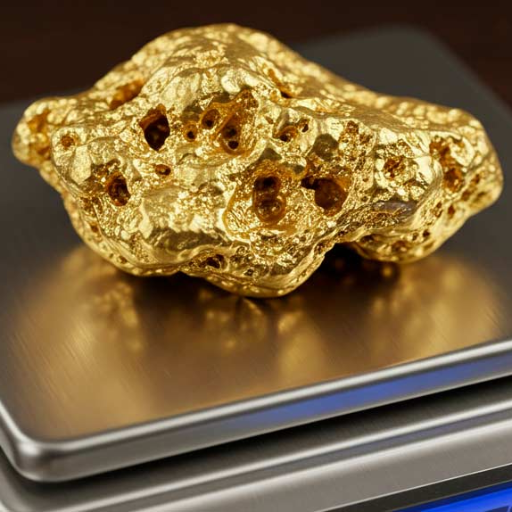
Gold has a fixed density of around 19.32 g/cm³ at room temperature, making it one of the densest naturally occurring elements. Such an extremely high density arises due to the gold atom structure, having closely packed atoms with a high atomic mass of 197 u. The higher density of gold pins it against comparatively lower-density metallic alloys for differentiating purposes in practical applications. If any alternate density has been measured, then it possibly bears the presence of an impurity or even a counterfeit. Therefore, testing methods must be correctly chosen, with the preferred ones including hydrostatic weighing and sophisticated X-ray fluorescence (XRF) analyses, so it can be matched against the physical properties already established for gold.
Why the Density of Gold is 19.3 Kilograms per Cubic Meter
Due to its atomic structure and layout, gold has a density of 19.3 kilograms per cubic meter (kg/m³). Gold (Au) exhibits transition metallic behavior, possessing an atomic number of 79 and an atomic weight of approximately 196.97 atomic mass units (amu). The dense nature of gold arises primarily from the high nuclear weight coupled with comparatively smaller atomic radii, which tightly pack atoms in its crystalline lattice.
Gold crystallizes in a face-centered cubic (FCC) arrangement, permitting fine packing efficiency of atomic clusters. Metals with FCC structure are present in large numbers, and the unique density of gold, however, depends on the position of the element in the Periodic Table and the high atomic number which allows for potent relativistic effects. These effects occur because the inner electrons of gold move with nearly the speed of light, causing the s-orbital electrons to contract and resulting in an increased packing density.
Furthermore, gold’s density can be theoretically calculated using its molar mass and the volume occupied by its unit cell. Experimentally, the volume of the unit cell for gold has been determined to be around 67.85 cubic angstroms. By calculating with Avogadro’s number, molar mass, and volume of gold, the density calculation comes quite close to the typically accepting 19.3 kg/m3 value.
Knowledge of the property finds its application in material sciences, geology, and industrial operations. For example, its great density places gold in a category of precious metals used in precision electronics, aerospace engineering, and as a standard for monetary assets.
Comparing Gold Density with Other Metals
Gold’s density is higher than that of most common metals, such as iron, aluminum, silver, platinum, and lead, except for a select few like osmium and iridium.
Key Insight: This comparison highlights gold’s unique position in terms of its density, rarity, and high utility in specialized industries.
The Role of Density in Gold’s Physical Properties
Gold’s density is one of its characteristic features, measured at 19.32 g/cm³. Due to its high density, it has either attracted or detracted from use or value at other times. Being much denser compared to other common metals gives it particular advantages peculiar to specific industries. The ability is provided, for instance, by its weight and density, which are suitable for applications that require these properties in electronics for reliability and conductivity. Intricate jewelry designs are made possible with gold due to its density, which allows even delicate constructions to withstand wear and tear. Due to its high density, gold is also an efficient radiation shielding material in aerospace engineering. This property, in combination with its rarity and physicochemical properties, characterizes it as one of the most versatile and highly desired materials globally.
Practical Applications of Gold Density

The density of gold affords great value in many practical applications. Due to its efficiency in radiation shielding, the aerospace industry employs it to protect sensitive equipment and spacecraft from high-energy particles. Furthermore, the weight of gold makes it a valuable asset in weight calibration tools used in scientific research and affairs that require high precision. This relevance also applies to the medical field, wherein gold finds uses in the building of diagnostic equipment as well as in targeted radiation therapies. This weight-malleability duo proves to be a winning combination when ensuring finer and stronger instrumentations in state-of-the-art technologies.
Importance in Jewelry: Value and Durability
Gold has merely always been adored for its indelible properties that weld practical durability with beauty. Of course, being tarnish- and corrosion-proof means that the metal will last a long time, making it ideal for designing treasures that will be handed down as heirlooms for generations to come. Notwithstanding, gold is malleable enough for very intimate design work; a very luxurious finish is the natural result of the luster therein incomparable to any other material. Gold is also appreciated for its scarcity and its universal acceptance as a symbol of riches and social standing, a factor that further increases its price. This is the provision of its advantages that make it most desirable in fine jewelry where beauty and durability are the prime requisites.
Density’s Impact on Electronics: Conductivity and Design
Gold’s high density and excellent conductivity are undoubtedly critical to the electronics field, especially in situations where precision and high performance are required. With a density of 19.32 g/cm³, it is the best choice for achieving compact and efficient components that must maintain good conductivity but are prone to oxidation. The fact that it is not reactive also implies longevity, even under harsh environments, making it indispensable as a material for manufacturing connectors, switches, and circuit boards used in systems for aerospace and medical technologies. Additionally, the high malleability and ductility of gold enable it to be drawn into wires so thin that creating complex designs is merely an engineering concern for manufacturers, as they balance space and functionality in modern electronics. These qualities—and so much more—render gold truly incomparable as an industrial metal, where performance, reliability, and design efficiency are weighed against one another in high-end technologies.
Investment Considerations: Gold’s Market Value and Storage
Gold has long been seen as a stable and secured investment, commonly used as a hedge against inflation and for economic uncertainties. Various factors, such as global demand for the metal, geopolitical tensions, currency fluctuations, and central bank policies influence its market value. During times of financial instability, the price of gold tends to hold its value, making it the most sought-after asset for portfolio diversification.
Regarding storage, investors have two primary choices: physical storage and allocated gold accounts. Physical gold comprises bullion and gold coins, which can be stored in a secure vault facility or a select safety deposit service to protect against theft. The allocated gold account system serves to provide ownership of the physical gold held by a third party with a clear and absolute title to it, offering more convenience and a lower risk of loss. Proper storage considerations will uphold the security and liquidity of the gold assets.
Historical Context of Gold Density

Gold density has been a factor affecting the manner in which it was used as an element with intrinsic value in the past. It is incredibly dense, with an average density of approximately 19.32, which is higher than that of most other metals. This density property ensured its identifiability and separation during the ancient mining and refining methods. Historically, the density of gold made its practical applications in coinage and trade viable, as smaller quantities possessed large values, making it easy for transactions and storage. Consistent density also allowed ancient societies to identify fake gold and thus protect their currency systems against corruption, thereby maintaining trust in its use as a standard of economic exchange.
Understanding Gold Density Through the Ages
Due to its density of 19.32 grams per cubic centimeter, gold has been regarded as an essential factor in its historical value and applications. This extremely high density is due to its atomic structure, characterized by a large number of protons and neutrons tightly packed in the nucleus. With respect to density, its application featured heavily with the ancient civilizations in determining gold for trade and currency and also as an identifier of its purity. Gold’s density was crucial for separating it from lighter particles in mining processes, which basically panned for the heaviness of gold.
Writing for modern times, density still stood supreme as an identifier of gold: advanced digital density meters and other methods, such as hydrostatic weighing, have been brought into play to make sure that the measurement is as exact as possible, the lab needing to ensure purity levels are very high for applications such as electronics and aerospace. There is another area of interest in measure-related innovations: across the varying forms and working conditions of gold-melted, alloyed, and solidified gold, the densities remain constant, thus allowing for manufacturing innovations and financial procedures. This wealth of uncommon qualities, from density to malleability and corrosion resistance, is what has conferred upon gold its unique value throughout history.
Cultural Significance of Gold’s Density
The density of gold has played a crucial role in its cultural and historical significance. To be weighed, to be felt in the hand, and to be seen shining was to project an assured image of wealth, power, and divinity in the eyes of different civilizations. Ancient civilizations considered gold valuable not only due to its rarity but also due to its density, making it ideal for coinage, ritualistic objects, and implements for the well-to-do. Inversely, the solidity of gold was interpreted as the quality of being eternal and inevitable, establishing trust in the use of gold as a medium of trade and a store of value in times scrutinized by historians. Even today, as the world has transitioned into postmodernism, the physical nature of gold continues to uphold its position as a global benchmark in both financial ecosystems and national treasures.
How Historical Measurements Have Evolved
Initially, with rudimentary techniques based on physical observation and empirical testing, the measurement of gold density was performed. Early civilizations utilized water displacement techniques as stated by Archimedes’ principle. It primarily involved submerging a gold object in water and measuring the displacement to calculate the density by dividing the mass of the object by the volume of water displaced. Though the process was quite innovative for its time, the apparatus available were not so precise, and the conditions for measurements required a lot of skill and patience to ensure accuracy.
Higher precision came into use by the time of the Scientific Revolution, with numerous balances bringing the possibility of exact mass measurements of gold. Hydrostatic weighing was, however, a quantica improvement for hydrostatic density calculation since it gave greater accuracy through buoyant forces in a fluid and proper mass measurements. For several centuries, this method remained in use due to its steadfastness and ability to consistently reproduce results.
The density measurement of gold and other metals and alloys has undergone significant changes with the introduction of new and cutting-edge technologies. Today, non-destructive density analysis is typically performed using X-ray fluorescence (XRF) and ultrasound technologies. In XRF, the secondary X-rays produced by a material are analyzed to determine its elemental composition, weight, and thickness, thereby enabling an accurate density measurement without causing damage to the item. The ultrasound technique involves the propagation of sound through gold, allowing for the precise determination of the density of thin or thick objects, including those within the body.
Identifying Gold Purity through Density

First, accuracy in determining the density is achieved by carefully measuring the mass and volume of the sample in question. This serves as an experimental datum for pure gold, which is accepted as 19.32 g/cm³. Usually, the volume is measured by applying Archimedes’ principle: the sample is immersed in water, and the volume of water displaced is measured. Density is obtained by dividing the mass by the volume and comparing it to that of pure gold. Any deviation from this density value would indicate the presence of impurities or added alloy materials. This technique, combined with others such as XRF or ultrasonic testing, provides a highly reliable method for assessing the purity of gold.
Techniques for Distinguishing Genuine Gold
Some advanced methods complement the conventional ones in determining real gold. Acid testing is a popular technique in which acid is dropped on an item of gold to see any reaction since an honest gold reaction is neither corrosion nor discoloration. X-ray fluorescence analysis, or XRF, is a non-destructive method that bombards material samples with high-energy X-rays to determine elemental composition with high accuracy. Another gold tester that measures electrical conductivity uses this information to confirm whether it is genuine, as gold is highly conductive.
Ultrasonic testing is another inspection method, more refined in nature, which utilizes the travel of a sound wave through an item. Stops or discontinuities occur due to the presence of air bubbles in the item, indicating impurities or alloying substances. From a purely visual and weight standpoint, one would thus check the gold with a jeweler’s loupe for hallmarks or evidence of plating. At the same time, density tests are used to check purity, wherein the calculated density is compared to the standard density of gold. When applied together, these two approaches provide a comprehensive approach in the determination of genuine versus counterfeit gold.
Counterfeit Detection Methods
In most cases, analysis for the detection of counterfeits will involve three primary methods dictated by industry standards and technological advancements:
- Surface and Material Examination: Surface markings or finishes should be examined with professional inspection microscopes or jeweler’s loupes. Hallmarks, engravings, and even the texture of the metal may provide essential clues as to whether an item is genuine.
- Physical Testing: Tests such as acid tests, checks for magnetic properties, or weighing may be conducted to determine the material composition. The acid test is good in that it differentiates between real gold and other base metals, while magnetic testing is required to rule out ferromagnetic counterfeits.
- Advanced Instrumentation Methods: Advanced techniques utilize high-end laboratory equipment, such as X-ray fluorescence (XRF) spectrometers, to analyze materials. This method typically involves an elemental analysis of an object, which is non-destructive and provides a highly accurate determination of authenticity.
Expert Tip: Combining these various methods enables an expert to achieve the highest detection accuracy, ensuring that harmful counterfeit materials are accurately identified and eliminated.
Implications for Investment and Valuation
From the standpoint of investment, valuation depends heavily on the authenticity and purity of the metal, as such considerations matter to both the investing public and the general commodities market. Reliable verification procedures, including non-destructive analysis and an accurate assessment of the elemental composition, ensure that only genuine gold enters circulation through financial channels. This dramatically reduces the risk of investors purchasing counterfeit or substandard materials, thereby maintaining portfolio value. Verified gold builds trust in markets worldwide and provides stability on the scales of inflation and currency movements. Protecting gold from adulteration by value propositions in technological routes is opposed not only to individual investment but also to maintaining stability of gold as leverage in international trade.
Frequently Asked Questions (FAQs)
What is the density of gold?
Gold’s density is 19.32 grams per centimeter cubic (g/cm)³, making it one of the heaviest metals on the earth. This high density is caused by the closer packing of gold atoms in its solid structure.
How does the density of gold compare with other metals?
Gold is classically regarded as being amongst the densest metals, with a density of 19.32 g/cm³. This density is significantly higher than that of many other metals, including silver and copper, which have relatively low densities. For example, silver has a density of approximately 10.49 g/cm³, just a little over half that of gold.
What is the specific gravity of gold?
The specific gravity of gold, which measures its density against that of water, is approximately 19.3. This indicates that gold weighs approximately 19.3 times more than an equal volume of water, making it a heavy and dense precious metal.
What about the density of gold and its price?
The price of gold shall be governed by its density and rarity. As high-density substances are precious metals, items like gold coins or bars require more mass, which imparts some value to them. The higher the density, the more worthy gold is perceived in the market, especially in times of a gold rush.
How is the density of gold measured?
Generally, the density of gold is said to be in grams per cubic centimeter (g/cm³) or in kilograms per cubic meter (kg/m³). To have the density of a gold object, one must first ascertain either its mass, volume, or both. Meanwhile, they seek the volume of an object by various methods, one of which is water displacement. After noting its mass and the volume of the mold filled with gold, the density is simply the mass-to-volume ratio.
How does gold’s density compare to that of fool’s gold?
Pyrites, popularly known as the “fool’s gold,” are mistaken for gold on sight but are relatively lighter, averaging a density of about 5 g/cm³. The difference in density between it and gold is so substantial that an equal volume of this “fool’s gold” weighs considerably less than gold; hence, an easy distinction can be made if mass per unit volume is considered.
Reference Sources
- Understanding The Density Of Gold: Practical Insights And Uses – This source explains the high density of gold (19.3 g/cm³) and its applications in electronics, aerospace, and jewelry.
- The Facts Behind the Density of Gold– Discusses how gold’s density is used in jewelry making to determine metal content and ensure quality standards.
- A Detailed Insight on the Density of Gold – Provides information on gold’s density (19,320 kg/m³) and its importance in determining quality in the gold industry.
- Calculating the Density of Gold and Silver | PhysicalGold.com – Highlights the density of gold and its comparison to other metals, emphasizing its unique properties.
Key Takeaway
Gold’s density of 19.32 g/cm³ is not just a physical property—it’s the foundation of its value, applications, and enduring significance across industries from jewelry to aerospace. Understanding this fundamental characteristic helps explain why gold remains one of humanity’s most prized materials, combining practical utility with timeless appeal.


