


Machining steel finds utmost importance in innumerable industries, from automotive and aerospace to several others, requiring a sound knowledge of strength and hardness and efficiency in steel machining. Steel offers a myriad of opportunities and challenges, owing to its unique properties, which must be addressed by employing suitable techniques and tools.
Introduction to Steel Machining
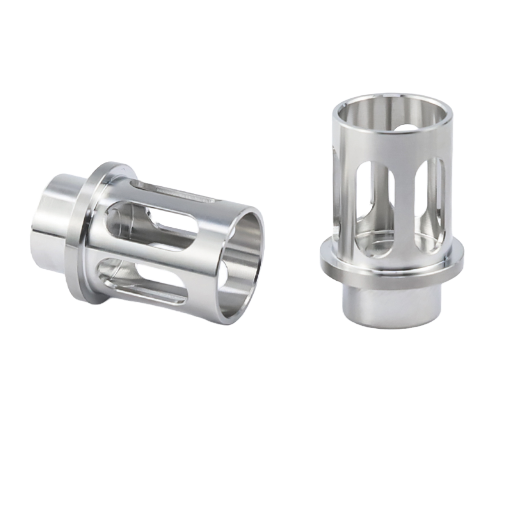
Steel machining is a general term for the working and shaping of steel for definite dimensions and functionalities using various tools like lathes, milling machines, and drills. Being a very versatile material, steel is crucial in industries such as construction, automobile, and manufacturing. Factors like tool selection, cutting techniques, hardness, and carbon content of the particular steel being used need to be appropriately considered for a proper steel machining procedure.
Benefits of Proper Steel Machining:
- To get precise results with exact specifications
- To minimize wear and inefficiency in production
- To give reliability and durability to components
- To give optimum efficiency and extended tool life
What is Steel and Its Importance in Machining?
Steel is an alloy having its basic fluctuating composition up to a maximum of 2.1% carbon by weight, with iron and other elements such as manganese, chromium, or nickel being added to improve its properties. It is favored in machining for its strength and durability, coupled with the fact that it can be used to manufacture components for a variety of industries.
🔧Basic Steel Characteristics for Machining
- Strength: the ability to withstand a lot of stress and maintain its structure
- Durability: stay long in performance while being stressed with difficult working conditions
- Versatility: applicable for various machining applications
- Precision: allows the formation of components to an exact specification
Overview of Machining Steel Processes
Machining steel involves a set of precise operations whereby the steel is shaped and finished to meet set specifications. These operations find application in the automotive, aerospace, and construction industries, where they yield functional and durable components.
Key Trends in CNC Machining
🤖 Automation and Smart Manufacturing
Integration of automation with CNC machining, robotic arms, and automated workflows aims to increase production speed and efficiency. Smart processes governed by the IoT and analytics allow for in-time monitoring and optimization of the processes.
⚙️ Multi-Axis Machining Advancements
Machining centers have pushed for a refinement in the degree of precision through 5 and 6 axial movements to handle complex geometries in a single setup, thereby reducing the time and cost of production.
🔄 Additive and Hybrid Manufacturing
The amalgamation of CNC machining with 3D printing develops hybrid systems enabling both additive and subtractive methods, thus carving the way toward newer solutions for custom and complex designs.
🌱 Sustainable Manufacturing Practices
Increasingly being given importance are energy-efficient machines, recyclable materials, and processes that generate less waste. Tools and technologies to optimize resource efficiency are shaping up to be a major industry thrust.
Types of Steel Used in Machining
General Purpose Steel: Characteristics and Uses
It is the general types of steel that are commonly utilized in machining because strength, durability, and cheapness are all considered characteristics of this class. The grade of steel in general would normally fall within the mild steel category, including A36 and 1018, and such would carry a low carbon content (usually less than 0.3).
📊 Key Points:
- Carbon Content: 0.05% to 0.25% carbon for best machinability
- Tensile Strength: 400-550 MPa
- Machinability: Excellent, being soft
- Welding: It welds well; formability is also good
- Cost: Affordable and easily obtainable
🎯 Major Applications:
- Structural construction components
- Automotive brackets and housings
- Machinery parts like gears and shafts
- General fabrication in all sorts of projects
Industry Insight: Since it has versatility and is cost-effective, mild steel shares nearly a 70 percent world steel production every year.
Free Machining Steel: Advantages for Manufacturing
⚡ Enhanced Machinability
Sulfur, lead, or phosphorus-bearing additives impart faster cutting speeds and less tool wear.
💰Cost Reduction
Machining times are shortened for increased production efficiency and lower ultimate costs.
✨ Surface Finish Enhancement
Supports smoother and more consistent surface finishes for precision operations.
🔧 Extended Tool Lifespan
Reduces tool wear, increasing the lifespan of cutting tools and reducing downtime at least.
Stainless Steel vs. Tool Steel: Comparison Guide
High hardness and wear resistance make tool steels suited for high-stress applications, while stainless steel is easily sought after for its corrosion resistance and the promise of being a beautiful sight in potentially humid or chemical environments.
Machining Techniques for Steel
CNC Machining: Modern Approaches
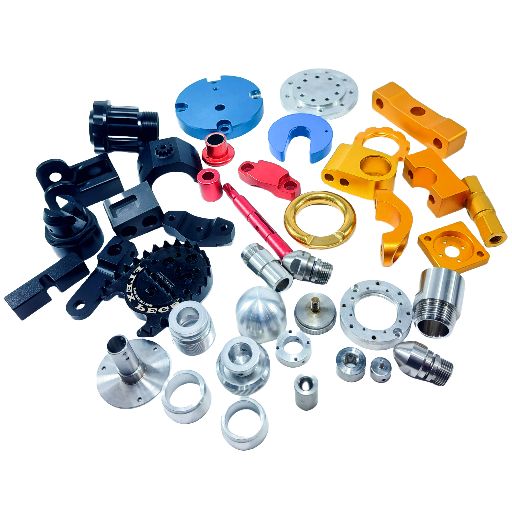
CNC machining has given a great boost to manufacturing industries and has been able to provide technical expertise for computer-aided manufacturing of complicated steel parts. Modern CNC systems are best suited for applications that require very tight tolerances, repeatability, and large batch sizes.
🚀 Advanced CNC functionalities:
- Multi-axis machining: Elaborate operations on intricate geometries
- High-speed machining: Improved productivity; less thermal distortion
- Advanced tooling: Carbide/ceramic tools for better performance
- Industry applications: Aerospace, automotive, and medical manufacturing
Precision Machining Techniques
This machining process is known for its extreme precision, repeatability, and accuracy in working on complex tooling with strict tolerances. These techniques drastically reduce errors and allow for the efficient use of materials.
📐 Accuracy
Unmatched precision for complex components
🔄 Consistency
Made difficult to impossible to replicate between production runs
♻️ Efficiency
Optimizes utilization of materials while cutting down on waste
📈 Scalability
Supports higher-volume production
Heat Treatment Processes and Their Impact
Heat treatment processes change some physical or chemical properties in materials that allow enhancement in working efficiency and durability. Proper understanding thereof is a means of informing better choices for machining steel.
Tools Required for Machining Steel
Essential Tools for Steel Machining
🔪 Cutting Tools
Steel tools of High-Speed or with carbide tips are used for cutting and shaping with precision.
⚙️ Lathe Machine
The Lathe is the heart of the shop for turning, facing, and threading steel components accurately.
🔩 Drill Bits
Special cobalt or carbide drill bits for boring holes into steel.
💧 Coolants and Lumbricants
These help by decreasing heat generation and increasing tool life during machining.
🏭 Milling Machine
Useful in creating complicated shapes and surfaces in steel.
📏 Measuring Tools
Calipers and micrometers ensure dimensions and alignments are precise enough.
Tool Life and Maintenance Best Practices
Proper tool life management and maintenance are the very basis upon which efficiency and precision are constructed in CNC processes. The most common parameters determining tool life are generally cutting speed, feed rate, machining material, and lubrication.
🛠️ Tool/machine maintenance to be carried out:
- Periodical Inspection: Inspection of tool wear or damage should be conducted to foresee sudden failure.
- Correct Parameters: Ensuring the correct cutting speed and feed rate for the material being worked on.
- Lubrication and Cooling: Providing enough coolant to reduce the heat and friction generated during cutting operations.
- Sharp Tools: Change or resharpen tools to ensure dimensional accuracy and surface finish.
- Proper Cleaning: Keep all components clean, free from foreign matter that might cause contamination or wear.
Result: Implementation, when done right, minimizes downtime, works on productivity, and sustains the quality of the products.
Choosing the Right Tool for Different Steel Grades
In the decision-making process of equipment selection for various steel grades, hardness, tensile strength, and machinability should be taken into account. With proper tool selection, one maximizes cutting performance and tool life.
🔧 Low-Carbon Steels
Recommendations: High-speed steel tools
Reason for recommendation: High toughness against soft materials
Examples: 1018, A36 steel grades
⚡ High-Alloy Steels
Recommendations: Carbide- or ceramic-coated tools
Reason for recommendation: Wear resistance at high-temperature service
Examples: Tool steels, hardened alloys
Common Challenges in Machining Steel
Machinability Issues and Solutions
There are several challenges involved in machining steel, which impact the productivity, quality, and cost-effectiveness of the operation. Therefore, being competent in the issues and their respective solutions is paramount to performing a successful job.
⚠️ Tool wear and degradation
Issue: High wear rates reduce productivity and increase costs in machining, especially when machining harder steel.
✅ Solution: Cemented carbide and ceramic tools should be used, proper cooling and lubrication methods should be followed, and cutting parameters should be optimized.
🔥 Heat buildup
Issue: Thermal effects accumulate during machining operations, resulting in material alteration and enhanced tool wear.
✅ Solution: Set up cutting fluids, adjust feed and spindle speeds, and use tools that resist high temperatures.
🎯 Surface finish problems
Issue: A bad surface finish is due to incorrect cutting conditions, vibration of the tool, or material properties.
✅ Solution: Adjust feed rates and cutting speeds, use sharp tools with the right geometry, and stabilize the machine.
🔄 Built-Up Edge (BUE) Formation
Problem: Adhesion of material onto the cutting tool results in a lack of proper dimensional accuracy and surface finish.
✅ Solution: Apply tool coatings to minimize adhesion and keep cutting speeds high; opt for materials with better machinability.
🌪️ Vibration and Chatter
Problem: Vibrations shorten tool life, worsen surface finish, and maintain poor dimensional accuracy.
✅ Solution: Ensure the workpiece is well clamped; maintain the least possible tool overhang; use vibration-damping settings and resistant tool designs.
Achieving Desired Surface Finish
The technique for achieving an exquisite surface finish requires an impeccable mix of tool choice, cutting parameters, and lubrication.
🎯 Some of the key strategies in attaining a superior surface finish include:
- Tool choices: High-grade cutting tools should have TiN or TiAlN coatings for lower friction and heat.
- Parameter optimization: Maintain uniform feed rates with varying spindle speeds.
- Lubrication: Use high-quality coolants or cutting fluids to avoid thermal deformation.
- Technology integration: Use the most recent machining technologies in order to attain greater precision.
Handling Different Machining Applications
🔄 Turning
In this process, cylindrical parts are created by removing material from a rotating workpiece using a cutting tool.
⚙️ Milling
Involves the use of one or more rotating cutters on a stationary workpiece to create complex geometries and shapes.
🔩 Drilling
Drilling involves the creation of a round hole using drill bits, normally followed by tapping or reaming.
✨ Grinding
Utilizes abrasive action to achieve very close to dimensional requirements and highly smooth surface finishes.
🎯 Boring
Actually, enlarging or refining the diameter of the existing hole to the desired tolerance and finish.
🔧 Broaching
For keyways or teeth on gears, keyway and gear teeth production
Future Trends in Steel Machining
Emerging Technologies in CNC Machining
In the future of CNC machining, the driving force is represented by revolutionary tech bellwethers offering greater efficiencies, accuracy, and capabilities.
🤖 Automation
Streamlining operations with minimum human intervention
🧠 AI Integration
Making smarter decisions and optimizing processes
🔧 Robotics
Added precision and consistency in operations
📱 On-Demand Manufacturing
Manufacturing is flexible depending on real-time needs
🥽 VR/AR Integration
Training tools, design visualization
Expert Insights on Industry Innovations
Industry experts recognize several important aspects that will influence future steel machining, thereby assuring greater precision and flexibility across the spectrum.
🔮 Key Innovation Areas:
- AI-Powered CNC Systems: Predictive maintenance and efficiency through the use of machine learning
- Automated Handling: Robotics for operational assistance of automated assembly systems
- Digital Design Platforms: A thinner production lead-time with greater customization potential
- VR/AR Tools: Revolutionary means of training and prototyping for precision
Predictions for the Future of Machining Steel
🚀 Future Focus Areas
🤖 Automation
ML and AI optimization for minimized downtime
🎯 Precision
Enhanced cutting tool materials and additive manufacturing
🌱 Sustainability
Energy-efficient machines and recyclable byproducts
Frequently Asked Questions (FAQs)
Reference Sources
1. A weighted mean square error approach in robust optimization of surface roughness in turning operation of AISI 12 L 14 Free Machining Steel
- Authors: Almeida et al.
- Year of Publication: 2018OkaySchool: Trabalho
- Summary: This study focuses on surface roughness optimization of AISI 12L14 free-machining steel during the turning process. The authors use the weighted mean square error approach to obtain a better quality machined surface.
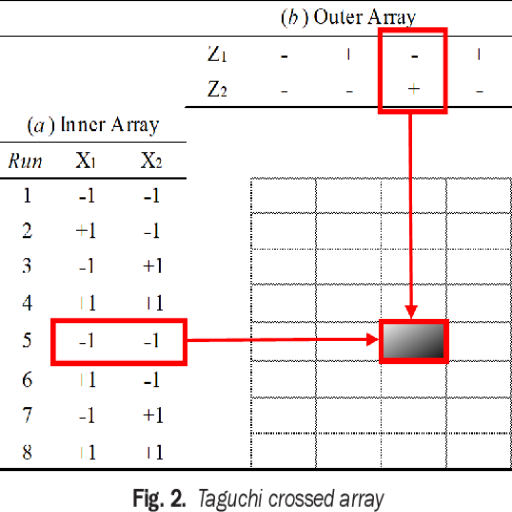
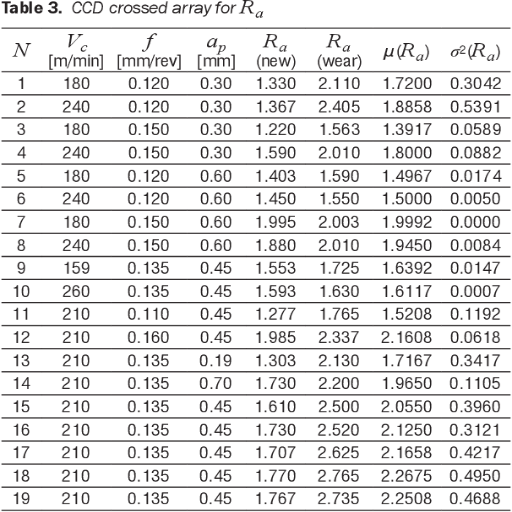
- Methodology: The study utilizes a variety of mathematical approaches, including the Taguchi method and RSM, to study the effects of cutting parameters (cutting speed, feed, and depth of cut) on surface roughness. The chief roughness parameter considered is the arithmetic average roughness (Ra), which has been considered quite important from the standpoint of quality control in manufacturing.
- Key Findings: The study points out the significance of tool wear and cutting parameters on surface finish and insists on robust optimization so as to minimize the experimental cost(Almeida et al., 2018).
2. Normal Boundary Intersection Method Based on Principal Components and the Taguchi Signal-to-Noise Ratio, Applied to Multiobjective Optimization for Turning of 12L14 Free Machining Steel
- Authors: Costa et al.
- Publication Year: 2016
- Summary:The paper develops a multiobjective optimization approach for turning 12L14 free machining steel, using the Normal Boundary Intersection method with Taguchi’s signal-to-noise ratio.
- Methodology: The objectives being considered in the study include surface roughness and tool wear, with the analysis meant to come to an overall best choice of cutting conditions. From a methodology perspective, principal component analysis is employed to reduce the complexity of optimization.
- Key Findings: It is evident from the results that the method proposed can balance various objectives well, thus offering improved machining performance (Costa et al., 2016, pp. 825–834 steel grades are often used in industries requiring specific strength and hardness characteristics.
🎯 Conclusion
Steel machining can be mastered through the use of terminology to describe materials’ properties and the correct choice of tooling and apt machining techniques under various conditions. The future of steel machining stands to offer greater efficiency, precision, and environmental consciousness if AI integration and sustainable methods enter the picture. An ocean of opportunities will be opened for the successful as they continuously learn and adapt to technological advancements while focusing on quality and productivity.
This guide is comprehensive and forms the base for successful operations in steel machining. Continue to explore advanced techniques and stay ahead of industrial developments to yield the greatest results.


