


Sheet metal cutting has evolved far ahead of traditional means, now driven by the most sophisticated technologies that guarantee absolute precision and versatility. Water jet cutting has been declared one of the paramount innovations in the field: a process that employs high-pressure water and abrasives to cut any material with utmost precision. But why is water jet cutting transformative to sheet metal fabrication? This guide offers an in-depth examination of sheet metal water jet cutting, exploring its operation, benefits, and key considerations for various applications. Fabricators, engineers, or anyone interested in modern techniques will find this article a valuable resource for mastering waterjet cutting and sheet metal cutting.
Introduction to Sheet Metal Water Jet Cutting

In studio fabrication, water jet cutting is an advanced fabrication technique using sheet metal. Here, a high-pressure stream of water is introduced with an abrasive to cut metal with precision. The process is cold, as no heat is generated, and accordingly, the metal does not warp or alter its properties. It is very versatile, designed to cut complex profiles and different materials ranging from thin sheets to thick plates. Since water jet cutting is a non-contact method, the material waste produced is almost negligible, giving it an efficient and environmentally friendly grade. With all these features, industries that need detailed and premium cutting prefer it.
What is Water Jet Cutting?
Water-jet cutting in the manufacturing process utilizes water pumped at extremely high pressure levels, sometimes with the addition of abrasives such as garnet, to cut materials with precision. This state-of-the-art methodology enables the smooth handling of all types of materials, ranging from metals to composites, glass, ceramics, and even stone. It works by pressing water, sometimes at pressures of 90,000 pounds per square inch, with so much power from a tiny orifice that it cuts through intricate patterns and shapes with ease.
Being a cold jet-cutting method, it produces no thermal stresses or distortions in the material, making it more suitable for applications sensitive to heat. Such industries as aerospace, automotive, medical device manufacturing, and architectural applications would benefit from the use of water jet cutting due to its superior versatility and clean cutting of details. Water jet cutting is also considered an environmentally friendly solution, as it wastes the least amount of materials and is free from the hazardous byproducts that usually result from other cutting methods.
History and Evolution of Water Jet Cutters
Since water jet cutting has a significant history, the early 20th century saw the use of very high-pressure water streams in mining and erosion control. By the 1930s, the first hydrodynamic tools were being developed to cut such soft materials as paper. Dr. Mohamed Hashish began developing modern water jet cutting in the 1970s, introducing the abrasive water jet. It allowed the cutting of more complex substances, such as metal and stone, through the combination of high-pressure water and abrasive particles.
During this same time, water jets saw significant advancements in high-pressure pumps along with CNC and materials science to increase precision and efficiency. The technique was harnessed by industries ranging from aerospace to automotive during the 1980s and 1990s to enhance manufacturing procedures. From there forth, water jet cutting witnessed stages of improvement to deliver green solutions and, thus, are used in an increasing number of industries.
Comparison with Other Metal Cutting Techniques
Water jet cutting can be compared with laser cutting, plasma cutting, and mechanical cutting techniques.
| Parameter | Water Jet | Laser | Plasma | Mechanical |
|---|---|---|---|---|
| Precision | High | Very High | Moderate | Low |
| Material Type | All Types | Limited | Conductive | Limited |
| Heat Effect | None | Present | Present | None |
| Speed | Moderate | High | High | Slow |
| Thickness Limit | Very High | Moderate | High | Low |
| Cost | Moderate | High | Low | Low |
| Environmental | Eco-Friendly | Moderate | Low | Moderate |
Understanding the Water Jet Cutting Process for Sheet Metal
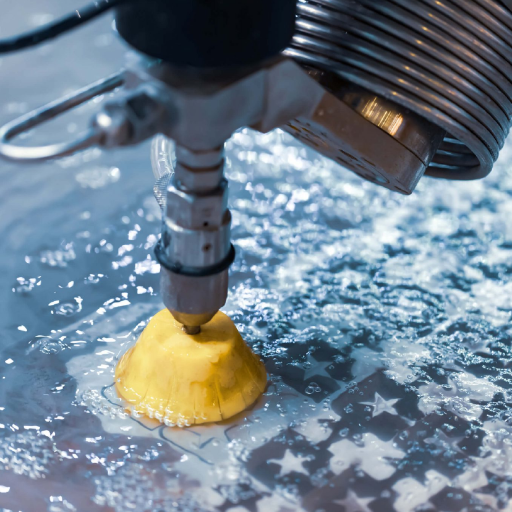
Water jet cutting is exact and versatile and hence suitable for sheet metal cutting of different thickness. It uses a highly pressurized jet of water mixed with abrasives to cut through materials sans heat formation, so soft materials that may warp or degenerate thermally cannot be subjected to this form of cutting. The technique can be applied to almost all types and is considered environmentally friendly, as it does not produce chemical emissions. Cutting speeds fall within the medium range, and costs depend on application requirements. Still, it is really an unbeatable medium for demanding precision and clean finish requirements.
How Water Jet Machines Work
Water jets operate by expelling water from a narrow nozzle with the force generated by a high-pressure pump setup. The pressures can reach up to 90,000 pounds per square inch (PSI), allowing for the cutting of materials with the highest level of accuracy. For the hardest materials, such as steel or stone, abrasive particles are added to the water stream to enhance its cutting potential. These machines feature CNC systems that execute cutting with precision and accuracy, producing intricate details and complex designs based on digitally generated designs. There is no heat induced in the cutting procedure, which imposes stresses on the material, thus ensuring warping or any structural damage by the material does not happen. These water jet machines contain filter systems for the recycle of water, providing a greener process, reducing operational expenditure.
The Role of Abrasive Materials in Water Jet Cutting
Abrasive materials help increase cutting ability of the water-jet system. Since the machine uses water under high pressure as the cutting tool itself, abrasive materials like garnet are often added to it to increase its cutting power. If a cutting task is too complex for direct waterjet cutting due to the hardness of metal, ceramic, or composite materials, abrasive materials like garnet are often mixed in to increase its cutting power. Adding kinetic energy to the water, the abrasives allow it to form a slurry that can extremely intensively and precisely erode target surfaces. The type, size, and density of the abrasive directly affect the cut quality and speed; therefore, their selection is vital for the best possible performance.
Types of Water Jet Cutters
Pure Water Jet Cutters
These employ only a high-pressure water stream and can cut through various soft materials such as rubber, foam, and fabrics. They’re ideal for applications that require smooth surfaces to be cut through cleanly and precisely without the use of abrasives.
Abrasive Water Jet Cutters
These machines put abrasive like garnet into the high-pressure water stream, thereby making them capable of cutting hard materials like metal, stone, and composite.
Micro Water Jet Cutters
Used for intricate designs and small-scale applications, these precision cutters are typically employed in the aerospace, electronics, and medical device industries.
Robotic Water Jet Cutters
This type of water jet cutting combines water jet cutting technology with robotic arms, providing flexibility and automation for cutting intricate shapes and areas that are difficult to access.
Hybrid Water Jet Cutters
These sophisticated machines combine water jet cutting with other cutting methods, such as laser cutting, to achieve greater versatility and compatibility with a broad range of materials.
Advantages of Using Water Jet Cutting for Sheet Metal
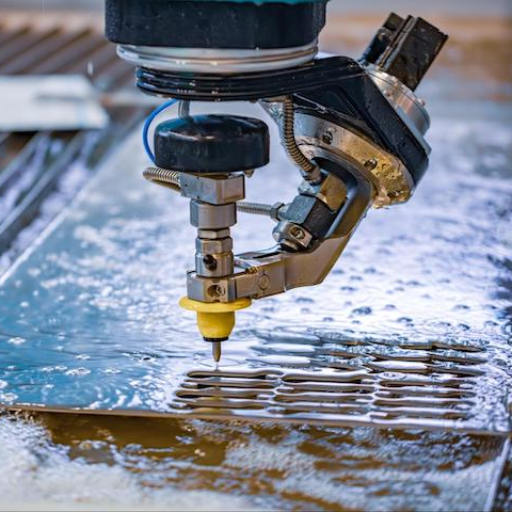
- ✓
Accuracy of the Cuts
– Water jet cutting assures high accuracy for creating intricate designs and complex shapes without compromising the quality of the work. - ✓
Heat-Affected Zones
– Being a cold cutting process, there is no distortion of the material or thermal damage; thus the structural integrity of the sheet metal remains unchanged. - ✓
Wide Variety of Materials
– It can be used to cut different metals such as stainless steel, aluminum, and titanium, without switching the tooling. - ✓
Environmentally Friendly
– Water jet cutting causes low wastage and does not release any toxic chemicals. - ✓
Good Edges
– Good edges mean clean and precise edges that reduce the work in secondary finishing and ensure quality work.
Precision and Accuracy in Cutting Sheet Metal
Water jet cutting is renowned for its unparalleled accuracy and precision in machining sheet metal. Using high pressures and injecting abrasive substances, this method achieves tolerances as fine as ±0.003 inches. The absence of heat distortion ensures the preservation of the material’s mechanical properties, allowing for precise cuts, particularly on delicate or complex designs. With cutting-edge technology and precise control systems, further accuracy is achieved, making water jets a preferred method for fine detail work in aerospace, automotive, and manufacturing activities. This method provides a high-quality alternative for reducing waste, making it both cost-efficient and environmentally friendly.
Material Versatility: Steel and Aluminum
Water jet cutting offers extreme versatility when working with steel or aluminum. It does an excellent job of cutting both metals while maintaining precise and clean edges on the workpiece without compromising its structural integrity. Water jet cutting in steel suits various applications that require complex shapes or detailed patterns. Aluminum is equally suited due to its softness, and the process does not harm it with effects of heat, such as warping and cracking, that are sometimes experienced in the thermal-based methods. This versatile procedure thus suits industries that require high tolerance and the preservation of materials.
Environmental Benefits of Water Jet Cutting
The environmental advantages that water jet cutting provides thus make this dependent option in creating a goal for industries. It does not combine hazardous or offensive fumes or gases, thus enhancing the overall air quality in the workspace. The water jet cutting process utilizes water and abrasive material efficiently, resulting in less waste generation. Since water jet cutting is a cold process and secondary by-products emanating from heat incidents do not come to play, this reduces the possibility of an imposed release of harmful substances. Likewise, the double economics of water recycling and the usage of non-toxic abrasives grant it a good environmental rating, thereby relieving any environmental burden for industries attempting to offset their carbon footprint.
Comparative Analysis: Water Jet vs. Laser Cutting

Key Differences Between Water Jet and Laser Cutting
Water jet cutting utilizes high-pressure water and abrasives for cold cutting, whereas laser cutting employs a focused laser beam for precise cutting. The main differences lie in the heat generated, the materials used, precision, cost, and environmental impact.
| Parameter | Water Jet | Laser |
|---|---|---|
| Heat Impact | None | High |
| Materials | Wide | Limited |
| Precision | Moderate | High |
| Thickness | High | Low |
| Cost | Moderate | High |
| Speed | Moderate | High |
| Waste | Low | Moderate |
| Maintenance | Moderate | High |
| Setup Time | High | Low |
| Eco Impact | High | Moderate |
When to Choose Water Jet Cutting Over Laser Cutting
Water jet cutting is often preferred when materials that are heat-sensitive, such as rubber, plastics, or composites, are involved in the process. Water jet cutting is, in essence, a cold cutting process that obviates the need for thermal distortion, thus making its use highly desirable for temperature-sensitive applications. Another significant advantage is the ability to be used on a much broader spectrum of materials, including those that are particularly thick and/or multi-layered, which a laser might be uncertain about. Suppose you have a project that requires minimal material waste and a reduced kerf width. In that case, a water jet cutting procedure is best suited to achieve its goal due to its high precision and environmentally conscious nature. Another case where you’d pick water jet cutting is when you want a clean finish and minimal post-processing. Even though it might take a bit longer to set up initially, the trade-off between setup time and its versatility and environmental benefits will be well worth it when it comes to custom or complex designs.
Cost Considerations for Both Cutting Methods
Laser cutting and water jet cutting have cost factors that depend on the work material and project complexity. Water jet cutting, in general, involves higher operational costs, as it requires abrasives and consumes a significant amount of energy; however, it is relatively cheaper when dealing with thick materials or a variety of materials.
Laser cutting, on the other hand, has lower operational costs for thin materials and standard designs, with no abrasives and reduced energy consumption. As such, it is considered the fastest and most precise option, with minimal material thickness. The decisions come down to the project’s specific requirements, comparing upfront costs with production cost efficiency and material suitability.
Choosing the Right Water Jet Cutting Machine
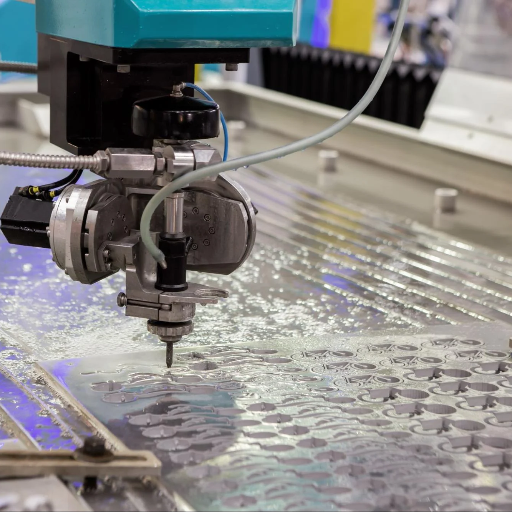
Material types and thicknesses to be worked with, precision levels to be achieved, and production volumes are among the key factors to consider. Consider the pressure within which the machine can oscillate, cutting speeds, and nozzle configurations to suit your project target. Take also into consideration the price offered to you for the purchase, the working expenses you have to bear, and the maintenance requirement; consider a machine that can be efficient but yields value for money over time.
Factors to Consider When Selecting a Water Jet Cutter
- 1
Material Compatibility
– Ensure the water jet cutter can handle the kinds of materials you expect to work on, considering their thickness and density. - 2
Cutting Accuracy
– Depending on the amount of precision required for your projects, the machine must be capable of meeting those standards. - 3
Operational Costs
– Factors such as power consumption, water usage, abrasive costs, and routine maintenance should be taken into consideration when considering cost-effectiveness. - 4
Machine Durability and Reliability
– From a well-known manufacturer and regarded for its impeccable durability and performance consistency with time. - 5
Ease of Use and Integration
– Consider user interface and training requirements and how well the cutter can align with your present workflow or production line.
Maintenance Tips for Water Jet Machines
- ⚙
Sometimes Serving Component Inspection
– One checks critical parts like nozzles, seals, or orifices for wear and tear to avoid partial or total breakdowns. - ⚙
Rapido Replacement of Parts
– Such worn parts should be promptly changed to ensure accurate cutting and to avoid long-term damages. - ⚙
Maintain Water Quality
– The water used in a machine should be properly filtered and free of any contaminants to reduce maintenance and extend machine life. - ⚙
Maintain Abrasive Levels
– Keep the abrasive levels in check during operation and prevent clogging problems. - ⚙
Strict Maintenance Schedule
– Follow manufacturer maintenance schedules including calibration and routine servicing for dependable performance.
Water Jet Cutting Applications
- ✈
Aerospace Industry
– For the purpose of cutting precise components out of aluminum, titanium, and other materials without causing thermal distortion. - 🚗
Automotive Manufacturing
– Used for precise cutting of parts for interiors, gaskets, and metals. - 🏛
Architectural Design
– To assist in generating complex patterns and designs on stone, glass, and metal. - 🍖
Food Processing
– Considered for slicing of meat, vegetables, and baked items hygienically and efficiently. - ⚕
Medical Device Production
– Considered to cut and shape parts of surgical instruments and medical implants at absolute precision.
Reference Sources
- Characteristics of Waterjet Cutting | A Technical Guide
– Explains the precision and capabilities of waterjet cutting for various sheet metal thicknesses. - Selecting the Best Cutting Method for Your Metals
– Details the abrasive waterjet cutting process and its applications in metal cutting. - How Metal Water Jet Cutting Works
– Provides an overview of the waterjet cutting process for sheet metal fabrication. - Top custom stainless steel parts Manufacturer and Supplier in China
- Guide for Machine to Cut Metal
Frequently Asked Questions (FAQs)
What is water-jet cutting and how does it function?
Water-jet cutting is a technique that utilizes a high-pressure jet stream of water to cut through various materials. Sometimes, this process can actually cut metals, such as steel or aluminum, with a focused stream of water mixed with an abrasive material, like aluminum oxide. The water jet cutting machine operates by forcing water at extremely high pressure through a fine nozzle, forming a powerful stream of cutting water that can slice through hard materials with precision.
What materials can a waterjet cutter cut?
The waterjet is capable of cutting a wide variety of materials, including metals such as steel and aluminum, as well as glass and stone, all of which are pretty hard materials. Additionally, it can serve other cutting purposes, such as cutting plastics, rubber, and relatively soft materials. The versatility of water cutting renders it suitable for numerous applications across various industries.
What is the comparative study of waterjet cutting and traditional cutting techniques?
Waterjet cutting offers more benefits compared to traditional cutting methods, including laser cutting and mechanical saws. Another distinction that separated waterjet cutting from other conventional methods is the fact that there is no thermal distortion from waterjet cutting. Instead, it is a cold cutting technique, implying the absence of HAZ (which usually changes material properties). In other words, the narrow kerf width produced by waterjet cuts is cleaner than those of conventional alternatives, hence less secondary finishing is required.
What is a CNC water-jet cutting machine?
A CNC water-jet cutting machine is a high-tech industrial cutting machine that automates the waterjet cutting procedure. These machines utilize CAD files to program intricate designs and patterns, enabling extremely high precision and repeatability in cutting metals and other materials. The CNC waterjet cutter operates on multi-axis systems to handle complex geometries, thereby further enhancing capabilities for both prototype and production runs.
Can water jet cut hard metals effectively?
Waterjet technology can effectively cut hard metals. The abrasive jet enables the waterjet cutter to penetrate even the toughest materials, making it a suitable tool in industries that require precise cutting of hard metals. At some point, one of the chief benefits of the waterjet machine is maintaining precision even in cutting thick sections of metal.
What is the difference between waterjet and laser cutting?
Both waterjet and laser cutting are popular ways of cutting materials and yet work differently. Waterjet cutting utilizes a high-pressure stream of water, often combined with abrasive particles, to cut through materials without generating heat. In contrast, laser cutting employs a divergent beam of light to melt or vaporize the material. Each method has its range of application; waterjet cutting is more versatile for thicker and more rigid materials, while laser cutting is more suitable for thinner materials.


