When it comes to precision cutting in modern manufacturing, few tools have come close to water jet cutting. This is because this technology takes high-pressure water streams to cut abrasive materials, resulting in precision cutting edges on metals, glass, composites, stones, etc. Be you are a professional in the manufacturing sector, an engineer carrying out studies on the latest production processes, or even an individual curious about tools that are on the edge, this article is here to assist you. We will learn how water jet cutters work, the markets they serve, the advantages most users get from water jet cutting systems, and why these have made them indispensable in industries all over the world. You will find out why water jet cutting technology has greatly altered the scope of precision engineering by the end of this article.
Understanding the Advancement of Cutting with the Help of Water and Water Jet

Cutting with media such as water jet uses water at a very high pressure, together with abrasive particles being mixed or not, as the latter serves a purpose in a pattern of cutting. Being able to cut such a wide range of material as metal, stone, and glass, these machines give no heat and stress over the cut surfaces or the edge of the material to be distorted. It is the process during which the water is concentrated and ejected under very high pressure from a small diameter nozzle that makes it possible to cut very intricate structures or forms very precisely and neatly. The technique is considered essential in many processes as it is fast, eco-friendly as well and saves fragile objects from any damage while being processed.
What Do We Mean By a Water Jet Cutter?
A water jet cutter is a tool that uses water and sharp-edged particles to cut through different materials, including metals, stone, glass, ceramics, composite materials, and even softer materials such as rubber or foam. The principle of operation consists of directing a stream of water with high pressure, often including an abrasive substance like garnet, to a very thin nozzle to concentrate the cutting force. It is a cutting technique that is highly sought after and enables the cutting without zones influenced by heat in any way, which is imperative in the retention of the character of the elements or components that are temperature sensitive. The water jet cutter is used in many different sectors such as aerospace, automotive, construction, and manufacturing because it can cut complicated shapes, the edges are clean, and there is minimal unused material. The process changes the state of aggregates and adds no pollution into the air, and it produces no greenhouse gases in great amounts, hence, so to speak, some of the best practices in manufacturing.
Principle of Water Jet Cutting
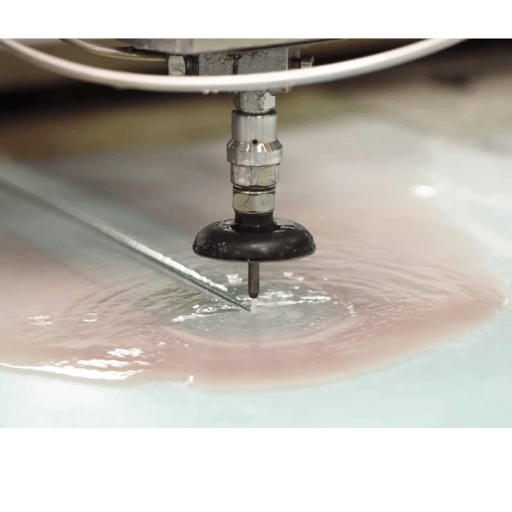
In water jet cutting, a very high water beam intermixed with abrasives can easily shear any type of material. Water is pressurised by the pump and is then directed through a very tiny nozzle at a tremendous speed, creating a cutting force. If the material is soft, such as rubber or foam, only water can be used for cutting. If the material is very tough, such as metal or stone, the water is supplemented with abrasive grains to increase the efficiency of cutting. These operations are programmed and carried out with the compact assistance of the computers to avoid any variations in the cuttings. This technique creates sharp edges and complex shapes that are free of structural damage.
Composing Parts of A Water Jet Cutting Apparatus
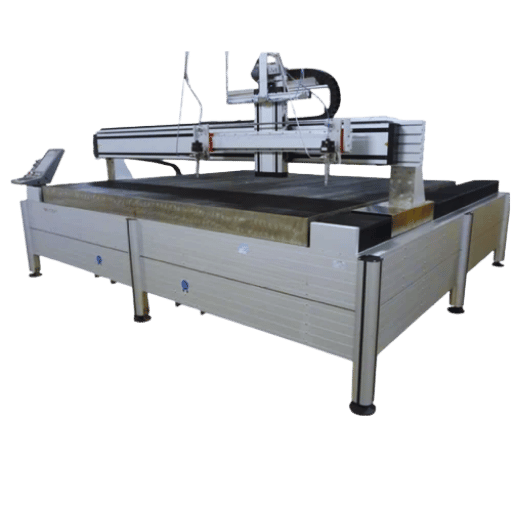
The water jet cutting machinery is mainly composed of a high-pressure pump, a cutting head provided with a nozzle, a tank containing the material catcher, an abrasive feed system incase of an abrasive cutting, a tale that can traverse the presented parts within the X, Y and Z axes, and a central computerized control system.
Water Jet Cutting Usages
Industries in Which Water Jet Cutting Is Used
- Aerospace: Cutting of materials like titanium, aluminum, and composites for aircraft parts where high accuracies are required.
- Automotive: Perfectly suited to parts such as interior panels, seals, and. precision cutting of metal with unusual shapes.
Sheet Steel and Others: Applied in various metals to produce contours and shapes and to decorate anything. - Building: Thin lines still allow stone, marble, and glass to be cut for architectural purposes as well as for decoration.
- Health: That in which the accuracy of cutting the tables for instruments or in-plants is attainable.
- Entertainment: Cutting is mainly directed at accomplishing the inner structure of the circuit, as well as cables.
- Security: This is the requirement of Rahmanization to be able to cut armor and special materials to the satisfaction ofthe requirements.
- Food: Cutting technologies of non-cavitating water jets are used for cutting foodstuffs such as cake, meat, and vegetables.
- Utilities: Elements for the execution of nuclear, wind, or solar energy production techniques are produced.
- Crafts: This involves the use of overlapping elements, within which it is recommended to make cut patterns within ceramics or pottery. Craft materials may include metal and plastics, but the most commonly used materials are glass and water.
Water Jet Cutting for Metal and Sheet Materials
Water jet cutting is the most superior method among the forms of cutting metal and sheet materials due to the fact that it possesses high precision and due to its unique nature. Mixed with high-pressure water, abrasives can cut steel, aluminum, and even titanium, not to mention that the technology neither creates nor spreads heat, which could turn out to be damaging. This method is important for economic reasons because no wrapping occurs, and few secondary processes like grinding are necessary, and any material thickness can be cut. This technique deals with complex shapes without loss of physical integrity and even rustling or vibrations, rendering it a popular technique with the aerospace, automotive, and construction sectors.
Innovative ways to apply water as a cutting medium
Creative applications of water jet technology cover elements such as extreme precision cutting in aerospace, medical manufacturing processes, floor medallions, and other creative uses in new advanced systems while maintaining other material properties.
Pros of Cutaneous Ablation with a Water Jet Cutter
Distinction From Other Cutting Methods
- Cutless Cutting Technology: In the procedure of cutting with a water jet, no heat is produced, and therefore, the possibility of thermal distortion or warping is eliminated, so one can cut those materials that are sensitive to heat without worries.
- Tolerances: Waterjets are able to create designed elements, straightforward and complex cuts, with ratings up to 2 decimals of a millimeter.
- Material Flexibility: Different material types, such as metal, glass, stone, composites, rubber, and plastic, can easily be cut using this technique.
- Restriction in the Don’t Exist: Fundamental Cutting Hardness Material: Water jets can also cut extremely hard materials with ease, such as titanium or boron glass, a capability that does not exist in some cutting systems.
- Green Cutting: Water jets produce very little waste, and in most instances incorporate the utilisation of recycled water, thus
lessening the impacts on the environment.
- Abrasives Damage Less: While using abrasives and water to cut, a cutting blade does not touch the material being worked on, and therefore, there is no tool wear or maintenance costs incurred.
- Superior Cut Quality: In most cases, without having to employ any post processes, the edges left after cutting by water jet are quite smooth, saving a lot of time.
- Complex Material Processing: Provided the materials to be stacked have been divided into several layers, these layers can all be cut at the same time while maintaining a high level of productivity.
- Low waste: The main advantage of water jet cutting is its high precision, which leads to a minimized generation of waste. This, as a consequence, has a lower environmental impact during manufacturing.
- Recycled Garnet: Abrasives such as garnet, which are employed for cutting using water jets, may be conserved and used again, thereby fostering environmental consciousness.
- Safe Gases: Unlike other cutting processes, the water jet cutting process does not generate hazardous gases and fumes, ensuring a safer and cleaner workplace.
- Economizing Water: In most cases, the water used in cutting systems is from fresh sources, but this is not the usual practice in the industry, as the water is recycled, and as such, no water wastage occurs.
- Consumption of Energy: It is worth noting that water jet cutting technology uses minimal energy in contrast to other cutting methods, leading to a reduction in emissions from power plants.
Benefits in Reducing Expense and in Promoting Productivity
Ziro grain damage as a result of cutting with a water jet is achieved because the unit provides the predicted accuracy, focusing on the benefits of each aspect. There is less wastage of raw materials at large, thus the costs are reduced due to the factors considered, especially regarding expensive materials. There is a time saver as it can deal with multiple materials without much change in settings. Further operational costs are minimized by implementing a closed-loop water system and energy use. This makes water jet cutting a very good option for certain smaller projects and very large projects as well.
Improvements in Water Jet Cutting
Aerospace Waterjet Applications: Technology Development
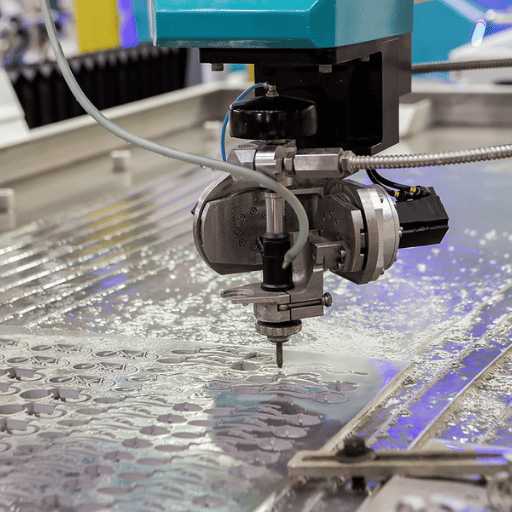
Over the years, high-pressure water jets have played a crucial role in the industrial field, mostly thanks to the adoption of ever-improving hydraulic and pump technologies. High-pressure water jet cutting works at pressure levels of above 60000 psi, crushing through various materials without leaving any thermal effect. In addition, different materials such as metals, composites, and ceramics, as well as more delicate and fragile reinforced glass, can be machined by water jet machining systems operating at such high PSIs. Further, when embraced by a more improved form, such as the application of computer numerical control (CNC) advances, such systems will allow a user to make complex and detailed parts, and therefore their usage will increase in such sectors as aerospace, automotive, and medical device manufacturing.
CNC Water Jet Machining – The Latest Advancements
Changes have been made to CNC water jet machining technology such as improvements in pump work rate, cone design, five axis milling for higher precision and providing the optimum performance, integration of smart machine application that involves Artificial Intelligence and environmental friendly sustainability technologies, edge technology and closed-loop water saving systems from the basic principles to advances in water recycling.
Prospects for the development of Waterjet Cutting Technology
I foresee a number of important developments affecting the further progress of water jet cutting in the future. The usage of artificial intelligence and mechanisms for self-improvement will further the processes of automation and predictive maintenance even beyond what we have now being seen now. The practical aspect should cover other elements, such as hard development in the area of materials, causing a better understanding of cutting members. In addition, there should be a corresponding rise in the efforts of recycling water and other sustainable measures that save on energy. The above means that water jet cutting systems are likely to become more lucrative, time-saving, and green in the future.
Choosing the Right Water Jet Cutter

Factors to Consider When Selecting a Water Jet Machine
- Material Suitability: Ascertain the capability of the machine to process the materials intended to be cut, including the expected types of materials, thicknesses, and, in some cases, specific hardnesses of the material.
- Cutting Accuracy: Consider the precision of the machine concerning tolerable limits, and also the capacity to do even tiny cuts.
- Pressure and Horsepower: The use of a higher pressure system and horsepower means that thicker or denser materials will be cut at much faster speeds and efficiencies.
- Operating Expenses: Look at the overall, long-term expenditure, as well as the cost of maintenance, consumable items, including abrasives, water, and power.
- Equipment Dimensions and Workspace needs: Look for a machine that can be accommodated in the available space and enables the processing of the largest material sizes required.
- Software Performance: Ensure the control software is user-friendly, strict, and extensive with advanced capabilities, including features such as nesting and multiaxial cutting.
- Assistance and Course: Look for the available property support, instructional courses, and materials from the respective manufacturer.
- Construction Quality and Durability of the High Performance Machine: Inspect the build quality of the machine, paying attention to the materials and components intended for use in harsh conditions, that is, the heavy work.
- Water Conservation Modules: For more environmentally conscious users, more systems with water reclamation and purification options are available.
- Budgets: Decide on how much you are willing to pay for this machine and give certain assurance on the machine’s performance versus cost over some length of time.
All these factors are paramount when shopping for an appropriate water jet cutter for operational use as well as justifying the investment in the equipment.
Comparing Water Jet and Other Cutting Technologies
|
Parameter |
Water Jet |
Laser |
Plasma |
EDM |
Milling |
Sawing |
Knife |
Die |
|---|---|---|---|---|---|---|---|---|
|
Material |
Any |
Most |
Metals |
Conductive |
Sheets |
Sheets |
Soft |
Non-metals |
|
Thickness |
24″+ |
1″ |
2-3″ |
12″ |
Limited |
Limited |
Thin |
Thin |
|
Accuracy |
±0.001″ |
±0.001″ |
±0.01″ |
±0.0001″ |
Moderate |
Low |
Moderate |
Low |
|
Speed |
Moderate |
Fast |
Fast |
Slow |
Moderate |
Moderate |
Moderate |
Fast |
|
Heat Effect |
None |
Yes |
Yes |
Yes |
None |
None |
None |
None |
|
Setup |
Easy |
Moderate |
Moderate |
Complex |
Moderate |
Easy |
Easy |
Complex |
|
Cost |
High |
High |
Moderate |
High |
Moderate |
Low |
Low |
Low |
|
Edge Quality |
Smooth |
Clean |
Rough |
Clean |
Rough |
Rough |
Clean |
Rough |
|
Eco-Friendly |
Yes |
No |
No |
No |
No |
No |
Yes |
|
Maintenance Tips for Water Jet Cutters
1. Inspecting the Orifices and Nozzles with Regularity
It is necessary to check and orifices and nozzles frequently in order to look out for any wear and tear. If any part is damaged, it can lead to a reduction in the quality of cutting and also there will be poor level of efficiency in accomplishing cutting tasks.
2. Performance evaluation
Clean water should be used so that no contamination destroys the water jet cutting parts. Bad quality water can cause the machine to clog and hence reducing the lifetime of the machine
3. Monitor and Replace the High-Pressure Seals
High-pressure seals are essential to the operation of a machine. Make sure to inspect these seals at regular intervals and change them whenever necessary in order to prevent any leakages or poor performance.
4. Move All Components as Soaked with Lubricating Oil for No Unnecessary Friction and Wear in the Iron System
Lube all mechanical components like the bearings, as well as the gear trains, to reduce the need for excessive effort or the early destruction of the parts.
5. Flush Systems Regularly
Every so often, decide to flush the whole system to get rid of whatever hardened dirt or deposition of minerals in the machine that might interfere with operations. Hence, helps in ensuring that top-notch cutting performance is retained for a long time.
Frequently Asked Questions (FAQs)
Q: What is a water jet cutter, and how does it work?
A: A water jet cutter is a machine that uses a high-pressure stream of water or water combined with some abrasive material aimed at cutting through various materials. A small nozzle, through which high-pressure water flows, contains the cutting stream. To work on harder materials, abrasive materials are added, including garnet, on cutting surfaces.
Q: Are water jet cutters safe to use?
A: Water jet cutting tools are relatively safe, but precautions are required when using it. Loading and operating water jet cutters should always be complemented with an appropriate dress code, gloves, and goggles for the service personnel. It is also essential to absolutely avoid the cutting area.
Q: What are the limitations of water jet cutting?
A: Waterjet cutters are very versatile; however, the limitations encompass the slower cutting speeds involved when cutting very thick or heavy materials and the inability to cut tempered glass because it can shatter. The machine may also be expensive at first.
Q: How thick of material can a water jet cutter handle?5
A: The maximum cutting thickness depends on the material and the particular water jet cutting machine. In general, the thickness that poses no difficulties for water jet cutters is twelve inches (300 mm), although this may vary.
Q: What industries commonly use water jet cutting?
A: Water jet cutting is utilized across practically all industries, which include quite a wide range: mechanical engineering, aviation, automobile construction, production, design, sculpture, and other fields. This makes it appropriate for applications such as rapid prototyping, bespoke assembly, and manufacturing engineering.
Q: Does using abrasives increase operating costs?
A: Yes, abrasive materials are a consumable resource, so the cost of using them is a part of the operating expenses. However, the exact effect on costs will depend on the type of abrasive and the corresponding rate of expulsion.
Q: Where can I find support for operating my waterjet cutter?
A: Help is typically provided by the company making the product or by authorized service centers. It is possible to book personnel training, establish a hotline, and provide detailed guidance on the operation of the device. Useful online resources include user groups and videos.
Reference Sources
1. Composite Rock Breakage Method of an Ultrahigh Pressure Jet. Practice and Theoretical Aspects
- Authors: Can Cai et al.
- Published in: International Mining Congress & Exhibition of Turkey – IMCET 2007
- Conference Date: June 4-7, 2007
- Citation Token: (Cai et al., 2007)
Abstract:
- A multistage process for effective rock breaking using ultra-high-pressure water jet and PDC cutter for deep drilling applications is researched in this study.
- An inner rock-breaking experimental test apparatus was prepared. A numerical model was presented using smoothed particle hydrodynamics/finite element method (SPH/FEM).
There were a few findings extracted:
- The high-pressure water jet precisely creates grooves and concavities on the rock surface, thus releasing the rock constraints and amplifying the effective breaking surface.
- When a high-pressure jet is supplied, the resonance frequency of the PDC cutters’ lead is lower.
- With timely removal of excavated material in front of the cutters helps in eliminating the energy dissipation and thus reduce the temperature in the cutters during operation.
- The research enables further optimization of some parameters for jet pressure (30-40 MPa), nozzle angles ( 60°), nozzle diameters (2.0 – 2.5 mm), and distances of impact (up to 20 mm).
2. Experimental and Numerical Simulation Study on the Relationship Between the Cutting Depth of a High-Pressure Water Jet Traveling at a High Traverse Speed and the Penetration of Disc Cutters of a TBM When Tunneling in Hard Rock
- Authored by: Yiqiang Lu and colleagues.
- Published in the Journal of Tunnel and Underground Space Technology.
- Date of Publication: 1 December 2023.Reference
- Token: (Lu et al., 2023)
Abstract:
- In this paper, the authors investigate the interaction between high-pressure water jets and cutting disks within tunnels of advanced tunnel boring machines (TBM) used in hard rock.
- Experimental and numerical simulation methods have been used to understand the depth of cut and cutting efficiency.
- Major results show that the water jet contributes greatly to the variation of cut depth, as well as the cutting speed of the disc, assisting in the improvement of hard rock TBM operation.