


From building to food production, different industries use stainless steel for its strength, durability, and corrosion-resistant properties. However, stainless steel is never one and the same-all grades are made for certain purposes and each has a different property. 303 and 304 stainless steel are among the most prevalent grades used, but it is essential to understand how they differ in order to choose the appropriate material for the job. For manufacturers, engineers, or even those curious about the finer points of stainless steel composition, this emphasis will highlight the key differences, advantages, and considerations between 303 and 304 stainless steel grades. After going through this article, you must be able to decide which grade is best for your application.
What is Grade 303 Stainless Steel?
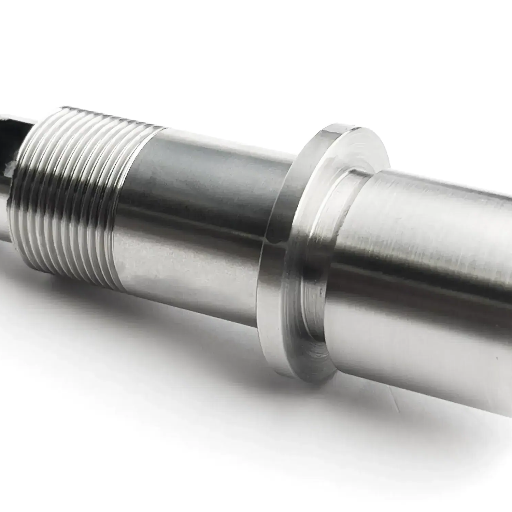
Grade 303 stainless steel is an austenitic stainless steel and is considered the best for good machinability. Mushrooms can be machinable, but corrosion resistance slightly decreases when they are present. It is, therefore, generally used in applications involving severe machining, such as automotive and manufacturing industries, and is less suitable for environments involving severe corrosion.
Chemical composition of 303 Stainless Steel
The chemical composition of austenitic Grade 303 stainless steel is adjusted to enhance machinability while maintaining good mechanical properties. Sulfur or selenium greatly improves its machinability in cutting or shaping operations. The composition is given as follows:
| Element | Percentage (%) | Purpose |
|---|---|---|
| Chromium (Cr) | 17.0 – 19.0 | Provides corrosion resistance and forms a protective oxide layer. |
| Nickel (Ni) | 8.0 – 10.0 | Enhances toughness and contributes to corrosion resistance. |
| Carbon (C) | ≤ 0.15 | Maintains strength and machinability. |
| Manganese (Mn) | ≤ 2.0 | Improves hardenability and provides additional strength. |
| Sulfur (S) | 0.15 – 0.35 | Improves machinability, often a key feature of Grade 303. |
| Silicon (Si) | ≤ 1.0 | Contributes to strength and oxidation resistance. |
| Phosphorus (P) | ≤ 0.20 | Improves machinability but can reduce toughness if too high. |
| Iron (Fe) | Balance | Forms the base metal with the other alloying elements. |
A higher amount of sulfur lowers corrosion resistance, thus making 303 less resistant than 304 or 316.
This composition makes Grade 303 especially useful where precision machining is of utmost importance, such as manufacturing fittings, screws, bolts, and gears. However, this also means that it cannot endure harsher corrosive environments, nor can welding be carried out on it confidently.
Key Physical Properties of Grade 303
Grade 303 stainless steel exhibits properties that combine for a unique synergy in applications requiring precision machining. Below are the key physical properties that characterize Grade 303 as a unique material choice:
- Density: 7.8 g/cm³ (78 g/dm³); It is comparable to those of standard austenitic stainless steels that offer strength and durability.
- Tensile Strength: Around 500-750 MPa, good resistance to deformation when stressed.
- Yield Strength: Around 190 MPa; it offers moderate resistance to applied loads without undergoing permanent deformation.
- Elongation: Close to 35% in 50 mm; it is sufficiently ductile for its machining requirement.
- Thermal Conductivity: 16.3 W/m·K at 100°C; fairly moderate heat transfer capability when compared with other stainless steel grades.
- Melting Range: 1,400°C to 1,420°C; good thermal resistance for most working conditions.
- Hardness: Subscriptionally 200 BHN, raised through the added sulfur for better machinability.
These properties act strongly, combined with the sulfur-enhanced composition making Grade 303 more applicable in situations where machining takes importance. The sulfur content cuts down corrosion resistance, however, and weldability compared to other grades like 304 and 316. This is what makes Grade 303 the preferred material in industries such as aerospace, automotive, and electronics, where the speed and precision of production are of paramount importance.
Applications and Uses of Stainless Steel 303
The Stainless Steel 303 is mainly utilized in wherever high machinability and manufacturing precision are required. Because of easy machinability, the production of screws, nuts, bolts, gears, and shafts becomes the best-choice application, especially in aerospace, automotive, and electronics industries. It is also sufficiently road-worthy for machinery components requiring intricate detailing, testing, and controlling rights. Since its corrosion resistance is less than that of other grades of stainless steel such as 304, it is generally employed in environments with little exposure to corrosive agents. This balancing act of-machinability and adequate-strength makes Stainless Steel 303 indispensable in high-speed and high-efficiency manufacturing processes.
What Is the Difference between 303 and 304 Stainless Steel?
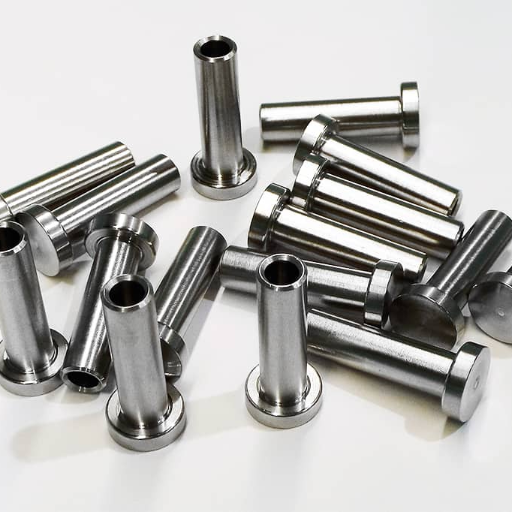
A key difference between 303 and 304 stainless steel lies in their machinability and corrosion resistance. 303 is specifically designed for machinability and is used in precision machining operations. This, however, compromises corrosion resistance. On the other hand, 304 performs best in corrosion resistance and tends to be the choice for harsher environments. Whereas 304 remains a versatile and stronger option for many applications, 303 is preferred when efficiency and ease in manufacturing take precedence.
Difference Between 303 and 304 Stainless Steel
303 and 304 stainless steel differ in machinability, corrosion resistance, composition, and applications.
| Key Point | 303 | 304 |
|---|---|---|
| Machinability | High | Moderate |
| Corrosion Resist | Moderate | High |
| Sulfur Content | Higher | Lower |
| Strength | Standard | Higher |
| Weldability | Moderate | Excellent |
| Applications | Machining | Harsh Environments |
Advantages of 303 vs 304 Stainless Steel
While 303 stainless steel is chosen when high machinability is needed, its higher sulfur content helps ease the machining process and makes it suitable for the manufacturing of precision parts and fittings. However, the corrosion resistance of this steel is inferior to that of 304. It is, therefore, less useful in applications that require higher levels of corrosion resistance.
304 stainless steel fares slightly better against moisture in comparison to 303 stainless steel and will present better corrosion resistance in such conditions. It is also stronger and more weldable, making it a preferred material for structural and industrial applications under corrosive conditions.
Potential Drawbacks of 303 Stainless Steel
The excellent machinability bestowed on 303 stainless steel by the high sulfur content, on the one hand, introduce a few drawbacks on the other. Although sulfur has made cutting easier, it has reduced the corrosion resistance of the material compared with other grades such as 304 and 316. This nature of corrosion causes 303 not to be considered for applications exposed to marine or harsh chemicals and for prolonged wetness where over time, pitting and rust formations stand a chance of forming.
Additionally, tensile strength of 303 stainless steel is lesser when compared to tensile strength offered by other austenitics. To give an example, its tensile strength usually varies in ranges from 510 – 750 MPa while 304 stainless steel has higher strength in ranges from 520 to 770 MPa. Its elongation to break is slightly less than 304 at about 35% versus 40%, which is crucial for areas needing more flexibility or resistance to deformation.
Another disadvantage of 303 is weldability. A high content of sulfur tends to produce micro-cracks in welds and so is not very suitable for joining or fabrication techniques requiring extensive welding. Post weld annealing alleviates this problem somewhat, but can rarely justify the cost in most projects.
Lastly, 303 stainless steel is not to be considered for applications where clean surfaces are required, such as food processing or medical instruments. Although sulfur promotes machinability, it can lead to surface impurities that would undermine either cleanliness or material integrity in these particular applications.
Why Is 303 Stainless Steel Known for Machinability?
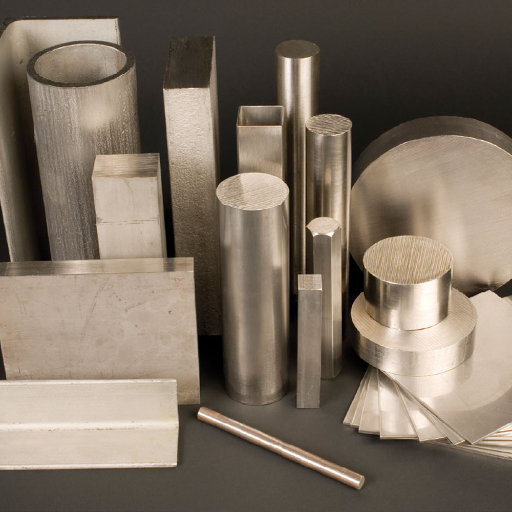
303 stainless steel is known for the machinability because the added sulfur and phosphorus lower the friction during cutting and improve chipped breaking capability. These additives allow the machining processes to run more smoothly and at faster speeds as compared to other grades of stainless steel, thus making it highly appropriate for high-speed production.
Sulfur’s Role in 303 Stainless Steel
Sulfur is the key to the entire machinability concept of 303 stainless steel. A tightly controlled quantity of sulfur is added to maximize small chip formation that breaks easily during machining. It reduces frictional forces between the cutting tool and workpiece to allow smooth operations and prolonged life of the machining equipment. Sulfur content normally ranges from 0.15% to 0.35% by weight in 303 stainless steel, which is a much higher range of sulfur content as compared to other grades like 304 stainless steel that actually have trace amounts of sulfur.
With the sulfur addition comes slightly reduced corrosion resistance of 303 when compared with non-free-machining grades such as 304. According to some industry data, such sulfur additions increase production speeds, up to 30 percent, against machining grades without sulfur addition. Hence, 303 stainless steel is chosen wherever precision parts are manufactured under high-production methods, such as automotive parts, fasteners, and fittings. Balancing machinability and durability make it an industrial option where manufacturing process efficiency and costs are major concern.
How 303 Stainless Steel Improves Machinability
An important feature of 303 stainless steel is its increased machinability, which is obtained through the controlled addition of sulfur in its composition. Sulfur forms manganese sulfide inclusions which act as a sort of built-in lubricant. These inclusions reduce friction between the cutting tools and the material, thus increasing machining speed and precision. Data pulled from recent industry surveys indicate that machining 303 stainless steel is from 25 to 30% faster, maintaining very good surface finish quality, in contrast with more “standard” austenitic stainless steel grades, such as 304.
In addition to their chip-breaking benefits, these enhancements also improve overall machining efficiency. Sulfur inclusions promote shorter, more brittle chip formation during machining, minimizing entanglement and downtime in chip clearing. It has been found that processing 303-grade stainless steel with tooling causes less wear and overheating of tools, which further increases tool life and cuts down on costs in the operation. This makes 303 stainless steel a preferred material in aerospace, electronics, and automotive industries where precision and speed are of the utmost importance.
What are the corrosion resistant properties of 303 stainless steel?

303 stainless steel has good corrosion resistant properties, yielding good results in an environment with mild exposure to corrosive chemicals or salt. The chromium content offers protection against oxidation and rusting in wide atmospheric conditions; however, the sulfur inclusions required to increase machinability tend to slightly diminish its corrosion resistance as compared to other grades of stainless steel. It is best used for applications requiring both machinability and corrosion resistance.
Comparing Corrosion Resistance of 303 and 304
303 stainless steel offers moderate corrosion resistance, while 304 stainless steel exhibits superior corrosion resistance in a variety of environments.
| Parameter | 303 Grade | 304 Grade |
|---|---|---|
| Corrosion | Moderate | High |
| Rust Risk | Higher | Lower |
| Strength | Good | Excellent |
| Machinability | High | Moderate |
| Chemical Res. | Lower | Higher |
| Saltwater Res. | Limited | Excellent |
| Heat Res. | Moderate | High |
| Applications | Machining | General |
Understanding Corrosion Resistant Properties in 303
The 303 stainless steel design has been especially made for excellent machinability, making it well-suited for extensive machining processes. In regard to this greater machinability, this grade of stainless steel has a lower corrosion resistant capability as compared to the 304 grade. It will do well in conditions of a slight presence of moisture and corrosive agents that are not strong enough for 303, do not offer large exposure to saltwater and acids, or chemicals. The sulfur is provided to improve machinability, but in return, it adversely affects corrosion resistance on the whole. Thus, the 303 is best used in a dry environment that is noncorrosive to prioritize precision machining.
Working with 303 Stainless Steel in Various Forms
- Cutting and Machining: Due to the sulfur added to 303 stainless steel, it has become a metal optimized for machining. Sharp tooling and moderate speeds are recommended for good finish and tool-life considerations.
- Welding: Welding somewhat depletes corrosion resistance and may cause cracking in 303 stainless steel and therefore it is not recommended. If welding becomes necessary, stainless steel 304 might be a better alternative.
- Forming: Since it suffers from low ductility when compared to other stainless steel grades, 303 stainless steel is not good for heavy bending or forming work.
Working Round Bars and Square Bars in 303
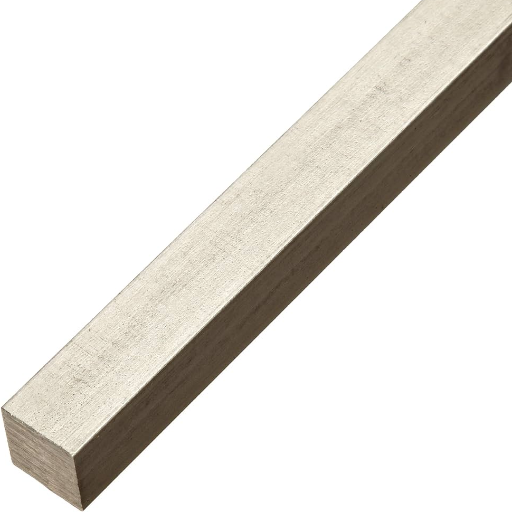
In general, round bars and square bars of 303 stainless steel find application wherever durability coupled with easy machining is required. Round bars are generally preferred for shafts, fasteners, and components that need to be rotated or machined in cylindrical shapes. Square bars find application in frames, braces, and components in need of a rigid, uniform structure. Such uses take advantage of the excellent machinability of 303 stainless steel in both forms, making it a very efficient choice for fine machining and medium strength applications.
Working 303 Grade Hex Bar and Flat Bar
The hex bar and flat bar of 303 grade stainless steel are widely used in parts and perhaps in the manufacture where corrosion resistance and good machinability are required. The hex bar finds great use in fasteners and bolts, going to components that need precision and a strong uniform grip. The hex shape offers stability and ease of use in fastener manufacturing, making it an excellent candidate for demanding mechanical applications.
Flat bars made of 303 grade stainless steel are great in structural applications, brackets, and any tool requiring a flat, durable surface. Their uniform thickness and flat surface keep them safe for applications requiring tightly toleranced machining.
Data indicates that generally, 303 stainless steel achieves a tensile strength of about 620 MPa (90 ksi) and a yield strength of about 240 MPa (35 ksi). Its elongation at break is roughly 50%, which offers moderate ductility. In combination with sulfur content for enhanced machinability, 303 stainless steel hex bars and flat bars perform moderately in varying sectors ranging from aerospace to automotive and construction.
Machining of 303-grade hex and flat bars should be done with the best machining methods in order to offer maximum usage and life to these materials. Following the recommended cutting speeds and feeds as well as appropriate cooling processes will help maintain the integrity of the material and avoid work hardening throughout fabrication.
Welding and Heat Treatment Recommendations for 303
In welding 303 stainless steel, I always recommend caution; not ideal is it for welding because the high sulfur content could lead to cracking or weld strength reduction. Where welding cannot be avoided, low-temperature procedures and the use of a filler compatible with 304 stainless steel can give better results. Heat treatment is generally avoided in 303 since this grade is not hardenable by heat, and its properties are best maintained as supplied.
Reference sources
- Suppression of Corrosion on Stainless Steel 303 with Automatic Impressed Current Cathodic Protection (a-ICCP) Method in Simulated Seawater
- Authors: H. Hamsir et al.
- Journal: Eastern-European Journal of Enterprise Technologies
- Publication Date: December 30, 2022
- Citation Token: (Hamsir et al., 2022)
Summary:
This study investigates the effectiveness of the automatic impressed current cathodic protection (a-ICCP) method in reducing corrosion rates of stainless steel 303 when exposed to simulated seawater with varying concentrations of NaCl (27 ppt, 31 ppt, and 35 ppt). The specimens were immersed for three weeks at a constant temperature of 38 °C.
Key Findings:
- The difference in average weight loss and corrosion rate across different NaCl concentrations was minimal, with variations less than 0.1% and 0.22%, respectively.
- The potential value reached a steady state quickly at NaCl concentrations of 27 ppt and 31 ppt, within 10 seconds.
- Scanning Electron Microscopy (SEM) revealed structural changes in the metal, and Energy Dispersive X-Ray Spectroscopy (EDS) indicated a significant decrease in oxygen content, which is associated with a reduction in corrosion rates.
Methodology:
- Quantitative measurements included average weight loss, corrosion rate, and potential value.
- Qualitative assessments were conducted using macroscopic observations, SEM, and EDS.
- Experimental Investigation of Surface Roughness and Chip Morphology During Machining of Austenitic Stainless Steel 303 with PVD Coated (TiAlN) Insert
- Authors: Sundara Bharathi S R et al.
- Journal: Surface Topography: Metrology and Properties
- Publication Date: May 10, 2021
- Citation Token: (R et al., 2021)
Summary:
This research focuses on optimizing machining parameters for stainless steel 303 using a PVD (TiAlN) coated cutting tool. The study employs Taguchi-based Grey Relational Analysis (GRA) to determine the optimal conditions for achieving desired surface roughness and material removal rate.
Key Findings:
- The optimal parameters identified were a spindle speed of 600 m/min, a feed rate of 0.1 mm/rev, and a depth of cut of 0.2 mm.
- Spindle speed was found to be the most influential factor affecting the overall responses of the turning process, accounting for 37.91% of the variance.
- The study developed second-order mathematical models for output responses, which accurately predicted experimental values.
Methodology:
- The experimental design was based on Taguchi’s Design of Experiments technique.
- Analysis of Variance (ANOVA) was used to identify significant factors affecting the machining process.
- SEM images were analyzed to validate the optimization results.
- Machinability Study on CNC Turning of Stainless Steel 303 with CVD Multi-Layer (TiN/Al2O3/TiCN) Coated Carbide Insert by Using Grey-Fuzzy Logic Approach
- Authors: S. S. Bharathi et al.
- Journal: Proceedings of the Institution of Mechanical Engineers, Part E: Journal of Process Mechanical Engineering
- Publication Date: February 10, 2022
- Citation Token: (Bharathi et al., 2022, pp. 1967–1978)
Summary:
This paper investigates the machinability of stainless steel 303 during CNC turning using a CVD multi-layer coated carbide insert. The study employs a Grey-Fuzzy logic approach for multi-objective optimization of turning parameters.
Key Findings:
- The study identified optimal cutting conditions that minimize surface roughness while maximizing material removal rate.
- The analysis revealed that the cutting speed, feed rate, and depth of cut significantly influence the machinability of stainless steel 303.
Methodology:
- The experimental design utilized Taguchi’s L9 orthogonal array.
- Grey-Fuzzy logic was applied to optimize the multi-objective parameters.
- SEM was used for morphology analysis of the machined surfaces and chips.
Frequently Asked Questions (FAQs)
Q: What is stainless steel 303?
A: Stainless steel 303 or another common name alloy 303 is an austenitic stainless steel type that is very readily machinable. It has good mechanical properties and corrosion resistance, but is slightly less corrosion resistant than grade 304 stainless steel.
Q: How are alloy 303 and grade 304 stainless steel compared?
A: Due to its sulfur content, alloy 303 tends to be more readily machinable than grade 304 stainless steel. The drawback to the addition of sulfur is that it somewhat reduces corrosion resistance relative to grade 304.
Q: Can stainless steel 303 be hardened by cold working?
A: Cold working does not harden stainless steel 303. Since it is an austenitic grade, it is mainly kept from being hardened through mechanical cold working because it is non-magnetic.
Q: Does 303 alloy make magnetic?
A: Generally, due to the austenitic structure of the alloy, it remains non-magnetic when annealed. Cold working, however, can render it slightly magnetic.
Q: For what kind of applications is grade 303 steel used?
A: Grade 303 is best used where extensive machining is required, such as in nuts, bolts, screws, and gears. It is extensively machined due to its excellent machinability.
Q: Does the stainless steel type 303 resist oxidation very well?
A: Stainless steel type 303 resists oxidation well. However, it is a little behind in corrosion resistance when compared to other austenitic grades like alloy 304 and grades 308L and 309 steel.
Q: What are coolants and lubricants used for with alloy 303?
A: The use of coolant and lubricant while machining alloy 303 assists in passing away heat and cutting-tool wear absence.
Q: Could 303 stainless steel be used in a high-temperature environment?
A: Although 303 stainless steel possesses good oxidation resistance, its use is not suggested for continuous exposure at higher temperature environments, where grades like 308L and 309 stainless perform better.
Q: What are some limitations of type 303 in corrosive environments?
A: The corrosion resistance of grade 303 steel is less than that offered by other grades of austenitic steels such as 304 stainless steel. Alloy 303 is not good for environments with high exposure to corrosive agents, especially chloride-based environments.


