There is a significant role played by heavy machine companies in the industrial revolution, as they provide solutions for vast manufacturing issues. They are often seen as necessary when dealing with industries that involve intricate machining, such as aerospace, energy as well and construction, just to mention a few. Therefore, this text aims to highlight the benefits of these heavy machining companies and illustrate certain ways they could become an advantage to the firms seeking to enhance processes, increase or pass the orders satisfactorily, and stay afloat in the industry. Perhaps you need to find your custom manufacturing and/or want to improve what you make. This masterclass should explain what it is that makes working with a heavy machining company the most suitable option.
What Are the Key Heavy Machining Capabilities?
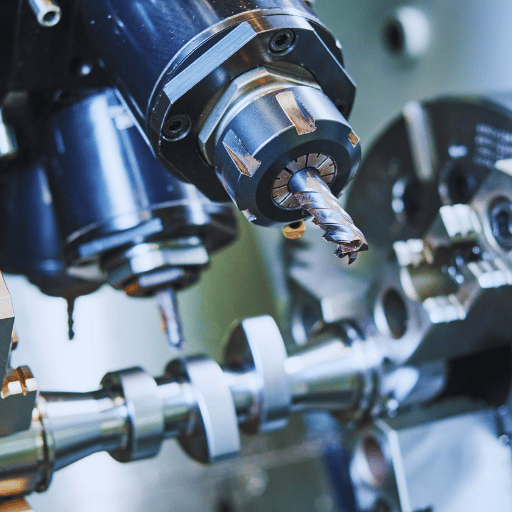
Heavy industries involve solving problems with materials and also possess specific skills to complete tasks related to manufacturing. These include the following:
- Massive Material Removal: Highly advanced tools can remove national prestigious amounts of material from oversized workpieces with such finesse.
- Machine Tooling: The application of advanced skills to produce complex parts with very strict production parameters.
- Design and Building: Development of customer-friendly services and products that are essential in most areas of business.
- Five-axis Machining: Increases creativity and accuracy in dimensional shapes at once, rather than in different positions.
- Assembly: It is the combination of the operations of machining and assembly, with welding being the most important assembly operation.
- Different material handling means: the ability to handle, exploit, and work with strong composite materials like steels, aluminums and titanium.
All of these services enhance the benefits of using heavy machining companies in industrial activity.
An Overview of Machining Equipment
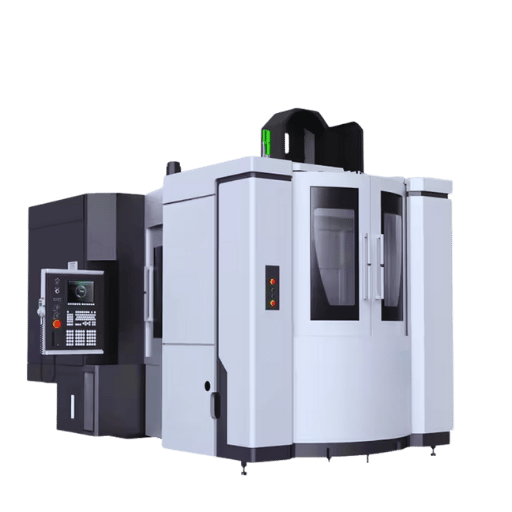
Machining tools are the equipment used in subtractive manufacturing to cut things like metal, plastic, and ceramics, which includes lathes, mills, drill presses, and other devices used for turning and milling, and drilling.
The Importance of Precision-Machined Components
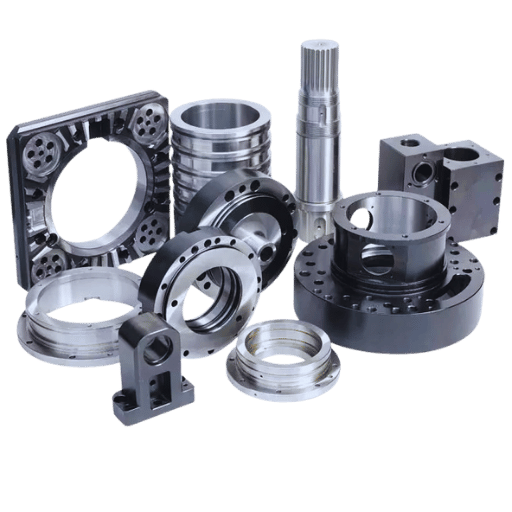
Custom-made components from leading heavy machining companies play many roles due to the high precision requirements of their respective industries. Such elements are produced with accuracy constrained to approximately micrometer sizes to make sure that they conform to very specific standards. These are critical as they contribute to end users’ apparatuses such as grinding machines in the automotive or even pharmaceutical industry, which would not work if the components are wrong. The latest statistics from the understanding of the keywords searched in Google Mexico, a growing number of people these days seem to be searching for precision-compatible, especially those who are engaged in rapidly developing spheres of the market, such as energy-efficient solutions and robotics. This demonstrates the degree to which reliable precision and quality-oriented components are essential for progress and achievement. More than reducing cycle time, dematerialization enables stamping and accurate measurements of components that prevent any material wasteage and, in the long run, lower operational costs through longer functional products, further illustrating their utmost importance in current manufacturing industries.
Role of 5-Axis and Advanced CNC Technology
The use of 5-axis and more sophisticated CNC (Computer Numerical Control) machines brings a new perspective to precision manufacturing because they allow for greater complexity of shapes and further precise tolerances. This is accomplished with 5-axis machining because it allows machining of components in five directions, as the name suggests, eliminating the need of several setups and increasing the rate of production. When these appliances are paired with the latest software applications and closed tracking systems, they allow highly precise machining to be carried out with minimal limitations on error levels.
The concern for the 5-axis CNC machines among consumers as well as industries is growing due to the support that they can easily offer high-performance industries like aerospace, automotive, and medical technology. Some of the areas that are a key focus include the production of complex turbine blades, custom-made prosthetics, and light-weight vehicle parts that are very strong, among others. These sectors require parts that are not only accurate but also in bulk and consistent in shape, thus explaining the need for 5-axis and some advanced CNC machines in modern-day competitive environments for scalable and accurate manufacturing.
How Do Heavy Machining Services Benefit Diverse Industries?

Applications in Aerospace and Power Generation
- Aerospace Structural Components: Heavy machining services enable the production of precision-machined components like fuselage, wing spars, and landing gears, maintaining the structural integrity of airframes and meeting the strict safety requirements.
- Turbine Components: Production of high-performance, precise turbine discs, blades, and casings is developed to satisfy the needs of aircraft and power plant turbines.
- Engine Housings: The use of precision machining allows the engine housings to be within very narrow limits, which is important for the proper function of the engine in both aerospace and industrial applications.
- Rotors and Stators: For these critical components that form the core of jet engines and gas turbines, the manufacture is adapted to withstand high temperature and high rotational stress.
- Heat Exchangers: In heavy machining, robust and functional heat exchangers, particularly in turbines and aerospace, are produced for cooling.
- Prototypes and R&D: Furthermore, there are machining services that greatly aid the process of creating innovations in the field of aerospace and power generation through prototyping and research.
Meeting the Needs of Large and Heavy Machinery
Constructing and maintaining the machines, which are large and heavy, requires precise engineering as well as tough materials to ensure that they perform in strenuous conditions. This is largely made possible by heavy machining companies, a process that allows elements to be fabricated within tight parameters and high-quality expectations. In practice, the most advanced solutions, such as CNC machines or dedicated custom-made brackets, have been introduced to deal with the bulk and sophistication of the genuine parts. Strict quality assurance processes have to be in place, consisting of checks and tests to guarantee that each piece is used to its full potential, including in the most intense working conditions. It is this attitude that keeps the machinery working efficiently and being strong enough to work for long periods.
Ensuring High-Quality and Tolerance Standards
Maintaining high standards of accuracy and quality in production requires the adoption of techniques that are not possible in conventional methods. This is made possible by modern inventions that have been adopted in the processes. For instance, jigs, fixtures, Computer-Aided Design (CAD), or Computer-Aided Manufacturing (CAM) systems increase the efficacy of the design process, and a more pronounced assurance of the parts meeting specific tolerances is enhanced. Such technology helps engineers to test their models for plausibility, deficiencies, and adjustments before physical production begins.
Besides, there are examples of improvements, for example, in the form of in-line inspection instruments which allow every detail of the production cycle to be continuously assessed qualitatively. They are based on laser scanners and 3D cameras, which instantly allow analyzing dimensions and tolerances, significantly lowering the number of mistakes and hence rework cost. Moreover, predictive analytics and data integration instrumentation with leading-edge heuristic and platform technologies, namely Google search engine AI, enable heavy machining companies to identify probable quality deviations, even more so than previously possible. While the former is an example of other equipment, in conjunction with sophisticated forms of data-based approaches, enables the delivered components to meet superior quality standards, while even enabling them to work in difficult conditions.
What Makes a Machining Company a Reliable Supplier?
Evaluating Machining Services and Precision Capabilities
Assessing and Comparative Analyses of ‘Trustability’ Between Heavy Machining is an attempt to study, measure, and compare levels of trust in relationships of customers with two heavy machining companies.
The Role of Manufacturing Solutions and Automation
The incorporation of specialized production and specialized treatment processes, including mechanization, already stood as a significant contribution to the control of work in heavy machining companies. Manufacturing developments in the smart era technologies are allowing companies to wholly embrace the incorporation of robots and other computer-operated equipment in the manufacturing procedures. The latest figures predict that the industrial automation industry worldwide will exceed $265 billion by 2027, which translates to an annual growth rate of 9.2% within the forecast period of 2022 up to 2027. The demand for efficiency in the processes, cycle time reduction, and high accuracy in industries such as Aerospace, automotive, medical, among others, fuels this growth.
Moreover, Industry 4.0 applications enable manufacturers to lower machine downtime by as much as 30% with the use of predictive maintenance and monitoring systems integrated with Internet of Things sensors and machine learning. Automated QMS platforms are another critical component that contributes to defect detection. They help in increasing production yield while limiting material wastage. These developments ensure the retention of the supremacy of the providers while fulfilling the ever-increasing challenges brought by the manufacturing of high complexity products. Hence, automation per se is not just utilitarian but also tactical regarding achieving integrated growth as well as maintaining uniformity in the quality of the products.
Importance of State-of-the-Art Machine Tools
The best machine tools in today’s market need to be accurate, productive, and easily scalable in any manufacturing task. Most of these state-of-the-art tools employ some of the latest technologies, such as Internet of Things, artificial intelligence, and data analytics, in order to provide means to producers to enhance their performance and win the competition. More than 70% of the manufacturing firms that apply smart machines in their processes are found to record marked improvements in manufacturing speeds and prolonged machine uptime periods, according to recent statistics. Furthermore, adaptive control systems integrated into tool designs enable the performance of real-time adjustments as per the cutting operations taking place, thereby lowering equipment degradation and errors. This aspect facilitates excellent production without an excessive expenditure, a factor necessary to satisfy the extremely high expectations of the consumer markets today. Installation of these sophisticated tools not only augments the business zing but also brings environmental considerations into the picture by virtue of curtailing energy consumption and material wastage.
Why Are CNC Machining Services Essential in the Manufacturing Process?
Understanding CNC Milling and CNC Turning
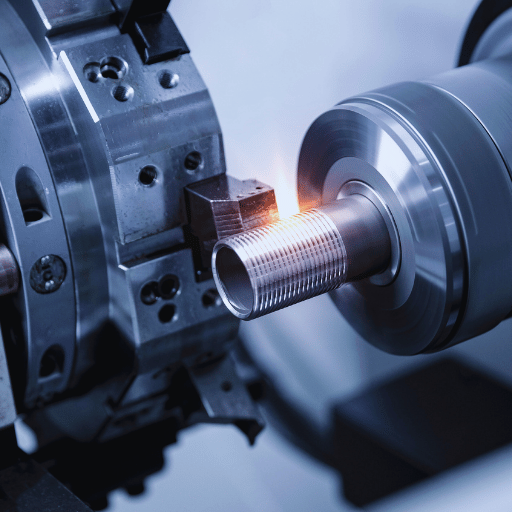
CNC milling makes use of a rotating cutting device that shapes the immobile material. On the other hand, the operation of CNC turning involves rotation of the material on its axis, putting a stationary cutting device into action.
Advantages of Machined Components for Assembly
- Extreme precision: The components are machined with the utmost precision possible, making sure they fit perfectly in an assembly that is very detailed. This level of precision minimizes mistakes and enhances the quality of the output in its entirety.
- Standardization: In CNC machining, if a part is produced once, it means there is a guarantee that all other parts will look exactly the same. This is very true for volume manufacture of products since in such cases that there should be no inconsistency in product quality or even standards is not acceptable.
- Ability to work with different materials: These parts can be made out of almost any material, be it a metal, a polymer, or a composite, as the context will involve.
- Less time for assembly: Since the machined parts are always within the required accuracy, it is easy to assemble them, hence optimizing the time taken as well as reducing the labor fees.
- Better Resistance: Mostly, machined parts are geared to endure all that could make the material body ripe for proper assembly.
- Economic: As CNC machining reduces the labor input and minimizes the waste generated in manufacturing however especially in full swing productions, producers reduce costs.
- Many Opportunities for Customization: With the technique of CNC machining, it is possible to produce non-standard and extremely unique parts to serve the purpose of a particular task.
- Strengthened Structure: Where there is the densing of the tolerance and a good design for the part in concern, there is also less probability and more resistance against damage in the presence of operational loads.
- Ability to Increase Production: Industrial CNC processes support both production and scaling up requirements in case samples need to be tried for a certain design, whilst governance on quality is observed.
Integration of Cutting-Edge Tool and Lathe Technologies
The contemporary CNC technology of heavy machining companies is inculpable without state-of-the-art machines/tools and turners aiding their advances in precision and productivity. These abilities include multi-axis machining, live tools, and hybrid manufacturing processes that encompass both subtractive and additive techniques. For example, the implementation of five-axis machining means manufacturers can easily make geometrically complicated parts without the extra hassle of having many different setups, cutting down on waste and time used in production.
Highlighted Functionalities and Advantages
- Rotational Macromachining: There are further enhancements to this type of lathe, with up to 9 axes, with more flexibility and accuracy. With this level of advanced control, there is the capability of manufacturing complex components with tight tolerances.
- Incorporation of Live Tools: With live tools, it is now possible to stack simple turning operations with milling, drilling, and tapping, all done in one operation. This is advantageous as it declusters the workload and improves the efficiency with which work is accomplished.
- Utilising Machine Learning and IoT: Such modern machines are installed with adaptable technologies in the form of smart equipment that is capable of monitoring the processes as they are performed and provides a prognosis about the wear of the machines in advance, thus reducing the duration of the machines being rehabilitated or repaired. Markets and Markets (2019) explains that such sophisticated technology is the reason CNC machines will go for more than USD 115 billion in the next decade.
Materials and Creativity
Such creativity also invited many machinable materials to the pool. Lathes and tools equipped with these modifications can machine advanced alloys, composite materials, and ceramics with high surface quality. Adaptive control strategies provide a high degree of accuracy together with reduced tool wear.
This has enabled heavy machining companies from aerospace, automotive, healthcare, and other spheres of life to improve production operations, quality assurance of products, as well as the cost dynamics in line with the rise in precision and high-quality advantages of the fast-growing industries.
How to Choose the Right Large Machining Services for Your Needs?
Factors to Consider in Selecting a Manufacturing Partner
- Technology Capacity and Availability: Check the partner’s ability to deliver the required service, including their heavy machinery and complex works, if they have any. Check whether the partner possesses technical experience for the intended manufacture or further production.
- Requirements and Testimonials regarding quality: It should be confirmed whether the manufacturer has been embraced by international standardization and certification agencies and has the necessary certificates for product quality assurance, such as the ISO 9001.
- Product Capacity and Growth Potential: Assess their policies for meeting your production requirements in terms of time and space.
- Production and Execution Lead Times: Examine the ability of the partner to provide on-time delivery and performance without sacrificing quality.
- Maintaining Low Costs: Examine price policies and cost structures, and any possibilities of cost effectiveness by exposing all quotations and billing practices.
- Development in Technology: Ascertain whether there is the application of sophisticated technologies like equipment, software, and better techniques in a client’s work to restore its perfection and efficiency.
- Customer Services and Interaction: It must also be ascertained that the partner will provide effective communication, accurate customer care services, and thorough explanations regarding the whole duration of the work.
- Specific Field of Interest: Search for a partner who has experience with this particular field to minimize the chances of making mistakes due to a lack of knowledge.
- Credibility Assessment and Feedback: Find out about the history and reputation of the organization through feedback from previous clients, testimonials, and audit documents, to determine how historical and present clientele are satisfied.
- Eco-consciousness: If it makes sense and/or applies, it should also be taken into account whether a company values and practices environmentally conscious operations.
All of the mentioned factors in one way or another influence the selection of a suitable manufacturing partner for custom requirements.
Evaluating Machining Capabilities and Fabrication Expertise
The assessment of machining competitiveness and fabrication potential requires consideration of such causes as quality of machinery, level of specialists, the methods of working, the system of quality, and the efficiency of costs.
Frequently Asked Questions (FAQs)
Q: What services are usually offered by heavy machining companies?
A: Heavy machining companies operate various services, including the production of precision machined components, CNC machining, welding, drilling, and an array of modern manufacturing technologies. Also, they provide machining and fabrication services to build parts and materials for different industries with the highest quality.
Q: How do heavy machining companies ensure quality?
A: Heavy machining companies ensure quality by a stringent quality control procedure involving the use of modern CNC and CAD technology to achieve precision and accuracy. This quality control procedure, coupled with an experienced workforce, ensures the delivery of quality parts with consistent outcomes.
Q: What role does a machine shop play in a heavy machining company?
A: A machine shop is based at a heavy machining company to maintain its commitment to precision manufacturing. The shop caters to the various needs of precision machining components by housing various equipment such as milling machines, lathes, and horizontal boring machines.
Q: Why are CNC machining capabilities crucial for heavy machining companies?
A: CNC machining capabilities allow companies to fulfill orders that demand high levels of tolerances and intricate geometries on time, hence increasing the level of satisfaction amongst their clients due to consistent and superior results.
Q: How do heavy machining companies meet the needs of different industries?
A: Heavy machining companies serve a variety of industries using their manufacturing abilities and highly skilled workforce. With these capabilities, the companies produce components across different industries irrespective of the applications, ensuring accuracy and quality.
Q: What are the advantages of 5-axis machining in heavy machining?
A: 5-axis machining offers greater precision and accuracy and is designed to produce complex parts in a single setup; this feature helps reduce production time, thereby enhancing the quality of the end product, so it is one of the highly valuable tools in precision manufacturing.
Q: How do heavy machining companies maintain customer satisfaction?
A: Heavy machining companies maintain customer satisfaction through high-quality parts that meet tight tolerances, on-time deliveries, and keeping an open line of communication throughout the project.
Q: What makes the highest quality machining solutions stand out?
A: The highest quality machining solutions use state-of-the-art machinery, have stringent quality control measures, and employ experienced and highly skilled technicians; this is what guarantees that precision machined components are produced to meet the exacting specifications of their clients.
Q: How do heavy machining companies use welding and fabrication processes?
A: Welding and fabrication in machining are processes used either for assembling or for modifying parts to meet specific requirements. Engineers encourage these processes so companies can ensure a full machining package that covers both fabricating and assembling the components.
Reference Sources
- Authors: I. Afy Razak et al.
- Published: October 8, 2020
- Summary: This paper aims to examine financial performance indicators, namely Current Ratio (CR), Total Assets Turnover (TAT), Return on Assets (ROA), and Debt to Equity Ratio (DER) effect on stock return among the machinery and heavy equipment companies in Indonesia between 2014 and 2018. The rise represented by growth was tempered by the analyzed variables, which lacked any discernible effect on returns. This suggests that investors consider the overall economic performance rather than that of individual firms when making investment decisions.
- Analysis: Panel data analyses are conducted on the assessment of the financial performance and the stock returns as the data comprises financial statements of the companies that are located and traded on the Indonesia Stock Exchange (IDX).
2. Title: Study on Application of Cellular Manufacturing Technology to Enhance the Efficiency of the Cell
- Authors: Rahul Mishra and Shrikant Rajendra Masne
- Year: 2017
- Abstract: The main theme of the scientific article is determined by the application of a cellular manufacturing system to improve the performance of heavy equipment manufacturing. The research indicates that the slight reduction in lead times and increase in production is due to the cellular setups.
- Approach: The study used a case study approach where the researchers evaluated the performance of the cellular manufacturing concepts in a heavy machinery application.
3. Title: Analysis of The Efficiency of Hydraulic Torque Wrench Machines With Application of Failure Mode Effects and Analysis (FMEA) and Logic Tree Approach (LTA) In the Heavy Equipment Industry
- Authors: Dhadung Prihananto, Taufik Roni Sahroni
- Publication Date: December 10, 2023
- Summary: This paper aims to verify whether hydraulic torque system machines are effective in the manufacture of earthmoving equipment. Industrial processes are prone to interruptions mainly due to these machines breaking down. The aim is to prevent any potential failure of emergency controls from being a hindrance to the performance of processes.
- Methodology: It involves the performance assessment of the hydraulic torque wrench machine using Failure Mode and Effects Analysis (FMEA) and Logic Tree Approach (LTA). Improvements in areas relating to the efficiency of the machine will be identified.