


Sheet metal fabrication and bending services are crucial in modern manufacturing, serving industries that range from automotive and aerospace to construction and consumer goods. Precision and customization are essential in these processes to ensure that components meet pre-established standards for durability, functionality, and design. This blog will guide the reader through the intricate details of custom bent metal services, illustrating how art and technology combine to create tailor-made solutions. Thus, by being informed about these services, you may either be a company seeking to streamline production or a designer creating custom metal parts, which will help you considerably in achieving your goals in less time and with less effort. Let’s examine the primary techniques used, their advantages, and their applications.
Understanding Custom Bent Metal

Custom bending of metals is the precise operation of forming metals into the desired angle, curve, or form dictated by design and function. Special machinery, such as a press brake, roll bender, or CNC, is used in this operation to maintain accuracy and uniformity throughout. The process offers near-practical customization to serve construction, automotive, aerospace, and manufacturing industries. Custom bent metal solutions are highly esteemed for their capacity to provide durability and efficiency while supporting designs with a sophistication standard that off-the-shelf components cannot.
What is Custom Metal Bending?
Metal bending involves shaping metal into custom sizes, angles, or curves to meet varying design and functional requirements. Working alongside CNC machines, press brakes, and roll benders, this technology can accurately bend metal materials with minimal to no tolerance. Custom metal bending is growing in popularity due to its application in creating complex and highly specialized parts for industries such as construction, automotive, and aerospace. Custom metal bending provides a versatile method that enables engineers and manufacturers to produce a wide range of products, from intricate architectural frameworks to high-performance machine parts. Besides ensuring structural integrity and accuracy, this also reduces the need for alternative process steps, which is expected to enhance overall operational efficiency.
Types of Metals Used in Bending
Steel, aluminum, copper, brass, titanium, and stainless steel are commonly used metals in the bending process.
The Importance of Custom Bent Metal
Custom-bent metal plays a vital role in present-day manufacturing and engineering processes. Its ability to be formed and shaped into a particular design accounts for its versatility across a spectrum of industries. From metal job sites that require strong frameworks to machining and aerospace applications necessitating small but critically precise parts, custom-bent metal provides exact technical specifications without compromising the mechanical integrity of a part. Advanced techniques, such as CNC, traversal through die sets, and press brake methods, provide the acceptable tolerances and repeatability of bending that conventional methods often lack.
Besides reducing the actual raw materials that go into their manufacture through the optimization of dimensions for a specific lay-up, custom bent metal also improves overall performance by ensuring that the metal parts fit and operate in harmony within the larger system. This ability to customize is critical in industries with stringent operational standards such as medical, automotive, and energy, where dependability and quality come first. The process utilizes sound engineering techniques, backed by state-of-the-art technology, to achieve solutions that minimize costs while maximizing efficiency.
Sheet Metal Bending Techniques
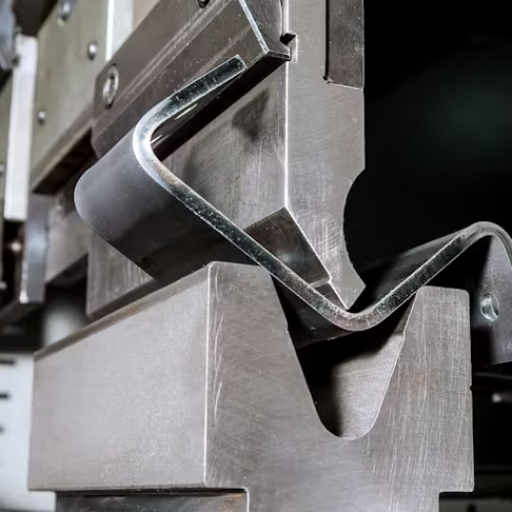
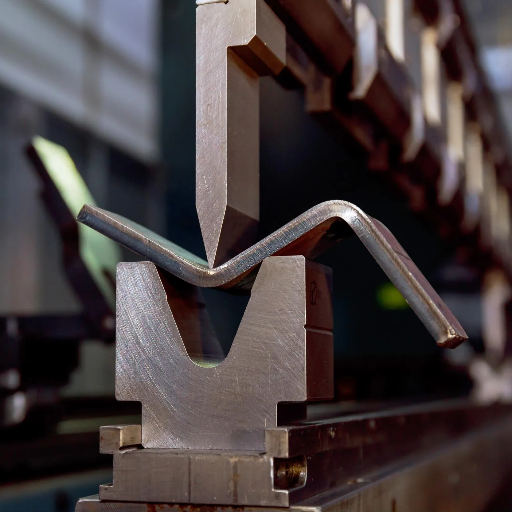
The sheet metal bending techniques contain multiple methods to accurately and consistently bend materials to meet specific project requirements. Some standard techniques include air bending with a punch and die, which involves minimal contact to form the required angle; bottoming, where a sheet is fully pressed into a die for the exact formation of the bends; and coining, a high-pressure process that requires extreme precision and results in permanent deformation into the die. Rotary bending and roll bending can be used to produce special shapes or for large-volume production. Material type, thickness, bend radius, and accuracy requirements are some of the factors that influence the choice of technique.
Overview of Sheet Metal Bending Processes
Sheet metal bending is a crucial manufacturing operation that shapes metal sheets into desired forms by applying force to the material, deforming it to the necessary extent without breaking it. This process primarily encompasses various techniques designed to ensure accuracy and speed across a wide range of applications. The major ones include:
- Air Bending – Possible partial contact between the punch and the sheet allows for obtaining different bend angles. It is adaptable to various materials and thicknesses, but requires care to minimize springback.
- Bottoming (V-Bending) – The sheet is pressed very tightly into a V-shaped die for more accurate bending in repetitive operations. Here, a bottoming method will minimize springback and ensure weldable bends, but requires custom dies for the exact angles.
- Coining – This is a very high-pressure technique wherein the metal is forced to deform into the die, offering utmost precision permanently. Coining is used for applications that demand tighter tolerances, but it is expensive due to the forces involved.
- Rotary Bending – This process uses a rotary die to perform smooth, rounded bends while minimizing marks on the parts, making it suitable for delicate or coated materials.
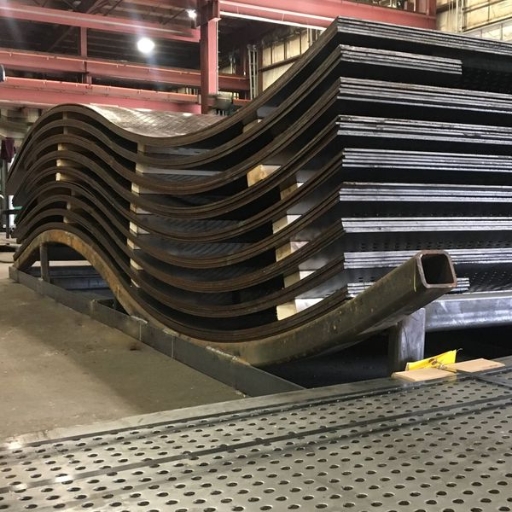
- Roll Bending – To produce cylindrical or curved shapes, roll bending uses a set of rollers that gradually bend the sheet. It is an ideal method for large or high-volume production runs.
The choice of bending technique depends on various parameters, including material, thickness, bend radius, and tolerance requirements, which provide the best results for a specific industrial application.
Precision and Tolerance in Bending
In sheet metal bending, precision and tolerance are the utmost considerations, as they significantly affect the quality and function of the product. Precision refers to the accuracy with which the bending was performed in terms of dimensions, angles, and shapes specified by the design. Because CNC machines control every angular position and bending process from the start to finish, modern bending methods use several advanced technologies. The bends’ position, bend angle, and pressure can be controlled with CNC, significantly reducing human error and variability.
Tolerance, in contrast, is a measure of allowable imperfection or deviation from a defined property, usually a dimension. Factors that come into play include the actual material properties (e.g., melting point), the thickness of the material, and the complexities of bending geometrical structures. It is essential that tooling and processes be defined to achieve the best results if high tolerances are to be met. Thin metals generally require low bend angles and proper handling to prevent overbending, while heavy sheets demand high tonnage and robust tooling for precision bending.
For optimal results, manufacturers conduct rigorous quality control inspections that utilize calipers, gauges, or lasers, depending on the dimensional features, to identify any discrepancies. When high-precision workflows are combined with strict adherence to tolerances, defects are minimized, repeatability is ensured, and the structural integrity of the components is enhanced. These standards enable the industry to meet the demands of critical applications in the aerospace, automotive, and construction sectors.
Benefits of CNC Bending Services
- Unmatched Precision: The CNC bending machines utilize high-quality, automated, computer-controlled mechanisms to ensure precision and high repeatability of bends according to given design specifications.
- Greater Efficiency: CNC technology, being automated and programmable in nature, dramatically reduces lead time, thereby increasing turnaround while maintaining the same quality through large batch production.
- Wide Design Versatility: CNC bending accommodates a wide variety of complex geometries, as well as various materials, to meet the diverse design requirements of intricate or non-standard components.
- Increased Cost Savings: CNC bending ensures reduced material waste and less manual intervention in manufacturing, thereby lowering the overall manufacturing cost, especially in mass production.
- Reliable Quality Control: Although the process is subject to strict time constraints, the incorporated systems in CNC bending machines enable real-time monitoring, reducing the likelihood of error occurrences and ensuring consistent product fulfillment of industry standards.
Innovations in Metal Fabrication
Recent developments in metalworking were spurred by automation and digital integration. Enhancing technologies, such as robotic welding systems, automated laser cutting, and IoT-enabled fabrication machinery, have heightened efficiencies and precision, as well as scalability. This, in turn, requires diminished human intervention but has increased respective consistent and monitoring processes being done in real-time in production activities for optimum performance and rigid adherence to quality standards. Moreover, materials science, including high-strength alloys and composites, has also transformed design alternatives and enhanced the durability of fabricated components.
Emerging Technologies in Custom Bending
With the integration of emerging technologies into automation, 3D simulation, and precision control systems, custom bending has seen considerable upgrades lately. CNC technology continues to demonstrate its superiority in terms of accuracy and consistency, offering a level of precision that no other technology can match in bending. Using sensor data in real-time within the CNC system keeps manufacturers informed about the actual bending angle, allowing them to adjust parameters for defect minimization and match geometries precisely.
Furthermore, the design and planning stages of bending operations are seeing an increasing number of AI-based algorithms entering the picture. The AI can optimize material usage, predict points of stress, and create bend sequences that reduce waste and accelerate production time. The introduction of machine learning models enables adaptability, allowing systems to learn from past operations and further optimize themselves over time. Digital twin-based tools are also gaining traction, with manufacturers simulating bending on a virtual model before actual fabrication to identify any faults early on.
These, combined with advancements in robotized material handling, are reshaping what can be accomplished in custom bending as they have shortened production cycles, allowing greater design flexibility and thus improved efficiency.
Laser Cutting and Its Impact on Metal Bending
Laser cutting has revolutionized the metal-bending industry by giving it alternative preparatory processes that help control the overall accuracy and functionality of the final products. Using high-powered lasers, the more miniature sheets are cut with great precision to provide immaculate edges and exact linear dimensions before they are bent. In other words, a near-perfect cut with the laser cutter leaves little room for error during the bending operation, allowing for tighter tolerances and complex geometries that were almost impossible with traditional cutting tools.
By identifying complex nesting patterns, laser cutting optimizes high-end material utilization, resulting in greater efficiency and reduced waste. There also stands a CAD computer system that helps execute the design perfectly, providing high repeatability and customization. From an extreme precision perspective, therefore, laser cutting supports industries such as aerospace, automotive, and medical device manufacturing as an essential tool used in conjunction with modern metal bending processes.
To put it simply, combining laser cutting with metal bending results in faster production and greater design flexibility. Production cycles can be low-cost due to the lesser requirement of finishing operations, which maintains the quality and consistency of the products at a high level.
Future Trends in Custom Bent Metal Fabrication
Future trends in custom bent metal fabrication are being shaped and influenced by automation, environmentally friendly methods, and precision technology. Through AI-powered robots and other forms of automation, production times have become even shorter, accuracy has improved, and labor costs have been significantly lowered. Therefore, this transition opens an avenue to produce complex design structures efficiently. Sustainability is becoming an increasingly important factor, with manufacturers pursuing green manufacturing initiatives, such as the use of recycled materials or energy conservation methods. Better simulations and 3D modeling tools are enhancing the design process, allowing for greater customization and reduced waste. These tendencies will collectively redefine the capabilities that bent metal fabrication can provide to various industries.
Factors to Consider When Selecting a Bending Service
Material Compatibility
Evaluate whether the service provider can work with the very materials required by your project, such as steel, aluminum, or other alloys, and thus has the tools and experience to perform to your requirements.
Precision and Accuracy
Evaluate a vendor’s ability to provide advanced precision manufacturing in apparatus and inspection processes, ensuring narrow tolerances and exact adherence to design requirements.
Production Capacity and Lead Times
Consider the vendor’s production capacity and turnover time and then scale the operations to carry out projects of smaller and larger volume fabrication to meet deadlines.
Technology and Equipment
Utilize CNC bending and automated systems with modern technology to ensure the bending service yields consistent output and fewer production errors.
Compliance and Certification
The service should be compliant with relevant standards and laws. Certifications, such as ISO, could be considered to ensure the quality and safety of the product.
Experience and Expertise of the Fabricator
When evaluating the experience and expertise of a fabricator, it is crucial to consider the fabricator’s industry reputation and track record. They should be involved in a variety of projects, and their problem-solving approaches should be tested in challenging situations. An experienced fabricator will know how to select materials, techniques, and specifications, and consistently meet quality standards in the execution of their trade. In addition, an aptitude for rare applications, such as those involving industrial components that require extreme tolerances or custom architectural designs, suggests an even higher level. The review of case studies, testimonials, and references from previous clients will shed light on their professional approach and their ability to fulfill or even surpass project requirements.
Technology and Equipment Used
The technology and the equipment employed are essential factors to consider when choosing a bending service. State-of-the-art machines, including CNC press brakes, automated bending systems, and hydraulic bending equipment, will allow for precision, repeatability, and efficiency. CNC systems, especially, are capable of very accurate programming, allowing the use of complex bends with little human error.
Additionally, the capacity of the equipment itself —such as tonnage, bending length, and tooling compatibility—should align with the specific requirements of your project. Advanced options, such as multi-axis or laser measurement systems, can further enhance its accuracy and productivity.
Companies with the best technologies would likely utilize software solutions for simulation and design analysis to visualize bending operations before they are actually carried out, thereby helping to reduce waste and allowing for design iterations. In summary, a provider with modern and well-maintained equipment is likely to deliver consistent and high-quality results, even for items with stringent tolerance requirements.
Quality Control and Tolerances
When selecting a bending service, also ensure compliance with stringent quality control measures and maintain tight tolerances. Any precision bending process is typically subject to one or more industry standards, such as ISO 9001 or AS9100, which indicate that the facility maintains consistent process control and product quality. Even minuscule variances in calibration can lead to misaligned components or structural insufficiencies; hence, calibration of bending equipment is of the utmost necessity to confer precision.
Such bending services ensure that modern metrology tools, such as coordinate measuring machines or laser scanning systems, are used to inspect final products and analyze traceability throughout all stages of production, thereby providing documentation that proves conformance to quality tolerances. A company must validate the service provider’s capabilities in delivering consistent accuracy for both prototype and high-volume production runs, particularly considering material variability without jeopardizing service performance.
Ultimately, the considerations for selecting a bending service rest on its capability to meet or surpass criteria that assure the delivery of accurate and reliable components for a critical application.
Key Applications for Custom Bent Metal
🚗 Automotive Manufacturing
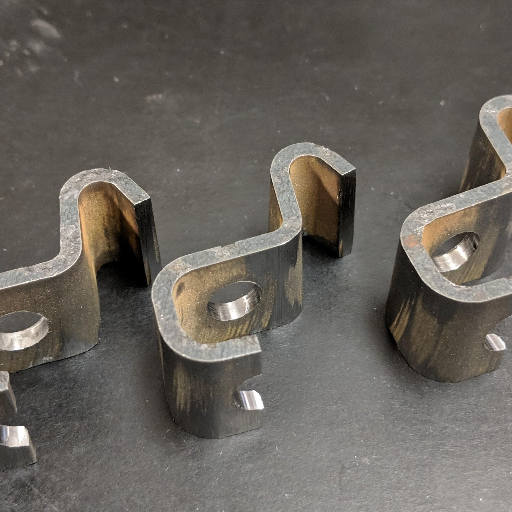
Custom bent metal components are utilized to fabricate vehicle frames, exhaust systems, and structural reinforcements to make the vehicle durable and to perform under harsh conditions.
✈️ Aerospace Engineering
Precisely bent metal parts ensure accuracy and strength in aircraft assemblies, such as fuselage structures, hydraulic systems, and support brackets.
🏗️ Construction and Infrastructure
Structural beams, railings, and piping systems for buildings, bridges, and other infrastructure rely on custom bending to satisfy their specific design and load requirements.
🏥 Medical Equipment
Bent metal components are used in hospital furniture, surgical instruments, and diagnostic machines, requiring high-grade materials and precise fabrication for safety and effectiveness.
🏭 Industrial Machinery
Custom bent metal forms the heart of manufacturing plants, conveyor systems, and agricultural machinery and thus gives them the design to enable complex mechanisms to work smoothly and efficiently.
Architecture and Construction
Being adaptable, durable, and strong, custom-bent metal is vital in modern architecture and construction. It is used for structural frameworks, decorative façades, railings, and support beams, providing both functional and aesthetic advantages. Metal-bending processes enable the realization of complex designs while maintaining structural integrity and meeting the strictest safety and load-bearing requirements. Additionally, steel and aluminum are often chosen for their environmental resistance, providing longevity to residential and commercial projects. With all its adaptability, custom-bent metal has assured a prominent role in architectural advancement.
Automotive and Transportation
Custom bending of metals holds great significance in automotive and transportation applications where it is required with precision and reliability. In metal bending applications, areas such as chassis components, exhaust, and structural frames may be created. These bending techniques enable manufacturers to produce lightweight yet sturdy metal parts that enhance vehicle performance and fuel efficiency. The most commonly used metals are high-strength steel or aluminum, which offer an optimal strength-to-weight ratio and corrosion resistance, ensuring the metal will last for a long time when subjected to strenuous conditions. In addition to rail mechanism manufacture, custom-bent metal finds application in aerospace components and heavy transport mechanisms, where safety and adherence to industrial regulations are paramount. The art of custom bending thus eliminates the design compromises that could otherwise affect the performance and appearance of custom-bent components, promoting the sustainable design of more energy-efficient processes in the transportation industry.
Industrial Machinery and Equipment
The term “custom bent-metal” has been generally applied to various types of machinery and equipment used in the industry. Different industries utilize bent metals to construct components that exhibit high durability, precision, and structural rigidity. Using advanced machining tools, including CNC press brakes and laser cutting facilities, manufacturers create custom parts to exact specifications. The parts find their typical applications in conveyor systems, hydraulic frameworks, and heavy-duty processing equipment, where such parts must perform robustly under continuous stress.
Material engineering developments have, however, led to the introduction of various innovative alloys aimed at improving the strength-to-weight ratio of custom-bent metal components. Aluminium and high-strength steel, in particular, are often chosen due to their corrosion resistance and relatively lightweight nature, which facilitates better design implementations of machinery. Custom-bent metal is engineered for complex geometries with minimum tolerances for smooth interfacing into automated systems so that the design of tooling workflow in industrial operations can be utilized. Together, all of these capabilities combine to prove how custom-bent metal is central to the advancement of today’s manufacturing technologies.
Reference Sources
- OSH Cut – On-Demand Sheet Metal Bending: Provides insights into sheet metal bending services with high accuracy and quick turnaround.
- Zetwerk – The Future of Metal Fabrication: xplores emerging trends and insights in the metal manufacturing industry.
- IBISWorld – Sheet Metal Work Manufacturing in the US: Offers industry-specific data on sheet metal manufacturing applications.
- Top custom stainless steel parts Manufacturer and Supplier in China
- Guide for Company Machining Stainless Steel Parts


