


The discipline of CNC metal cutting is actually among the driving forces working in the precision and rapid manufacturing industry for the relief of muscle efficiency, innovations, creativity, and all-round problem-solving. Whether or not you are an established professional in the field-and the conditioning CST training-or just entering the mare of machining, it certainly pays to have CNC machines and cutting techniques as part of your skill set to allow you to stay ahead in this fast-evolving world. This blog discusses the basics of CNC metal cutting, and it also goes on to showcase advanced technologies, tools, and methods that are changing the very art of manufacturing high-quality accurate parts for several industries. From an analysis of the mechanism of a CNC machine to the key cutting methods, this guide provides an insight into the future of precision manufacturing. Now, unveil CNC metal cutting’s power and versatility with us!
Introduction to CNC Metal Cutting
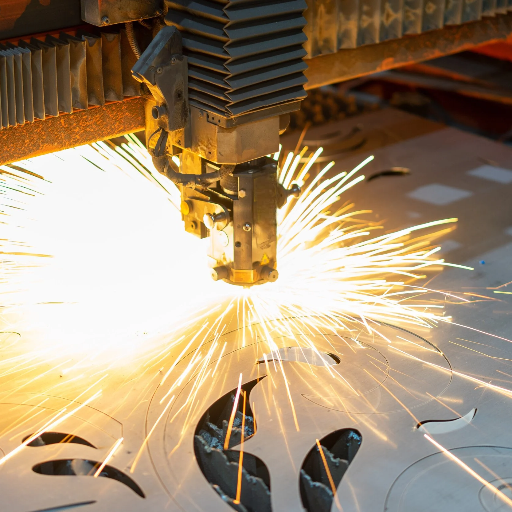
CNC metal cutting shapes and cuts metal to precise dimensions and designs using a computer-controlled machine. Pre-programmed software is responsible for directing the movements of the cutting tools, resulting in uniform and accurate outcomes. Due to its speed and ability to make complex parts within tight tolerances, it finds wide applications in the automotive, aerospace, and manufacturing industries. CNC metal cutting benefits are less manual labor, faster rates of production, and more quality of the product. These benefits have earned CNC machining a place in the modern precision manufacturing industry.
What is CNC Metal Cutting?
CNC (Computer Numerical Control) Metal Cutting stands as a precision manufacturing methodology whereby machines are operated by means of preset computer programming software to cut, shape, and finish metal components. CNC metal machining robots utilize advanced computer algorithms to control remote tools, including lathes, mills, and grinders, enabling precise and consistent material removal to meet intricate design specifications.
Key Benefits:
CNC metal cutting is capable of creating highly complex geometries with tight tolerances, serving industries such as aerospace, automotive, and electronics. Advances in CNC machinery, such as adaptive machining and integration with robots, have increased further the manufacturing performance and component functionality while enabling fast industries to meet pertinent demands for high-grade products.
Importance of CNC in Modern Manufacturing
Precision & Quality
The CNC machining is a key core of modern manufacturing, offering precision, repeatability, and efficiency like no other machine. CNC machines are capable of automating complex processes, thereby minimizing human error, and they can produce objects on a mass scale with acceptable quality standards.
Industry Applications
The aerospace, automobile, and medical fields utilize CNC for creating intricate parts with tight tolerances, which are essential for performance and safety. Multi-axis machining capabilities and the seamless integration of design with CAD/CAM software have further refined the design-to-production workflow.
Overview of CNC Machines
CNC (Computer Numerical Control) machines are automated tools that utilize pre-programmed software and codes to direct machinery and tools in the required directions. These machines operate with the highest level of precision and uniformity, making them extremely crucial in industries that require intricate designs with excellent tolerances. CNC machines are a technology that drives many manufacturing processes, such as cutting, milling, drilling, and turning, resulting in enhanced speed and accuracy in production. Most contemporary CNC machines are interfaced with CAD/CAM software, enabling seamless operation and allowing industries to reduce waste, enhance productivity, and achieve geometries that would be otherwise difficult to attain. Such applicability has made CNC machining indispensable in various fields, including aerospace, automotive, and medical device manufacturing.
CNC Machine Types for Metal Cutting
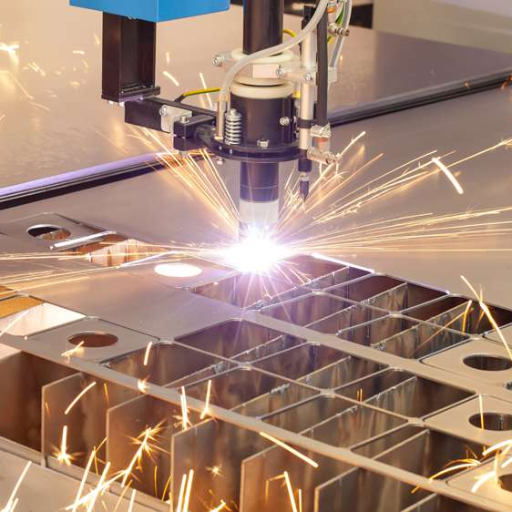
The main types of CNC machines for metal cutting are CNC milling machines, lathes, plasma cutters, laser cutters, waterjet cutters, and grinders.
CNC Milling Machines
The CNC milling machines refer to highly sophisticated tools that fashion materials by cutting them with absolute precision. CNC machines operate by moving the cutting tools in multiple directions to create intricate shapes and designs. Materials used with CNC machines include metal, plastic, and wood, thereby making CNC machines versatile to cater to the requirements of lots of industries. Their main advantages are accuracy and speed, as well as the ability to mold complex parts repeatedly without error. CNC milling is utilized in applications that require precise and repeatable results.
CNC Plasma Cutters
With CNC plasma cutters, the working of machines to cut anything by any process is relatively unheard of. These lasers produce high-temperature plasma arcs that melt the surface, while jets of gas dissipate the molten metal, allowing for clean cuts. These machines are used in aerospace, automotive, and metal fabrication industries, providing an efficient means of cutting thin and thick designs into metal sheets. The ideal efficiency, combined with automation, makes these cutting tables or stations highly in demand in production environments that require consistent and complex designs.
CNC Laser Cutters
CNC laser cutters are precision tools that utilize a high-power laser beam guided by CNC technology for cutting, engraving, or etching various materials, including metals, woods, and glass. The laser melts, vaporizes, or burns through the material, leaving cleanly cut and very smooth edges. These machines are renowned for their high-speed operations, with the precision of intricate patterns that enhance their use in manufacturing, electronics, and custom fabrication. The appeal of such laser cutters lies in their flexible operating nature and minimal material wastage.
CNC Metal Cutting Techniques
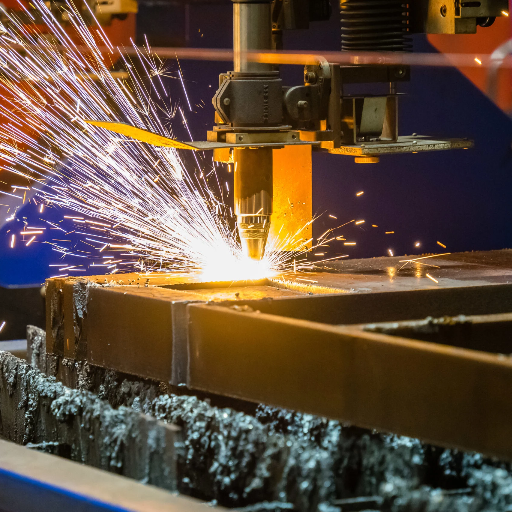
CNC metal-cutting techniques refer to the cutting operations performed using computer-controlled machines to remove material from a workpiece, thereby forming the desired shape and dimensions. Some of the methods usually employed are milling, turning, laser cutting, plasma cutting, and waterjet cutting. These processes are selected based on the material properties, the level of precision required, and production demands to ensure efficiency and accuracy in manufacturing.
Plasma Cutting: Advantages and Applications
Key Advantages
If there is any field that is more versatile for metal cutting, it would undoubtedly be the plasma cutting process, capable of cutting almost any conductive metal, including steel, stainless steel, aluminum, and copper. Speed is one of the reasons for its growing popularity: plasma cutting can cut through materials that are so thick that other cutting processes would be extremely slow and tedious.
Another advantage is the excellent finish quality from the cutting action; the edges have minimal dross, requiring much less grinding or finish, thus saving the user time and money. In contrast to other cutting options, plasma cutting offers high adaptability, making it suitable for use in various industries, including automotive repair, construction, aerospace, and manufacturing.
Applications
Applications range in plasma cutting from creating intricate sheet metal designs to large-scale structural fabrication. Plasma cutting machines can be used both in the workshop and in the field because of their portability. In addition, CNC plasma cutting machines take cutting precision and repeatability to the next level, and thus remain a cutting-edge tool in today’s manufacturing and industrial organizations.
Laser Cutting vs. Plasma Cutting
Laser cutting and plasma cutting differ in precision, material compatibility, speed, cost, and cutting method.
CNC Milling: Precision and Versatility
CNC milling is a highly precise and versatile component manufacturing technology that uses programmed controls to manage the cutting tools for various operations. CNC milling is designed to grant elaborate and repeatable results that would otherwise be challenging or impossible with manual techniques-a function ideally suited for complex shapes, prototypes, and high-accuracy parts. This technology can work on almost any material—from metals to plastics to composites, lending great value to industries such as aerospace, automotive, electronics, and many others. With advancing automation and software developments, CNC milling now sets the benchmark in efficiency, bringing drastic reductions in production time while retaining strict quality requirements.
Components of CNC Machines for Metal Cutting
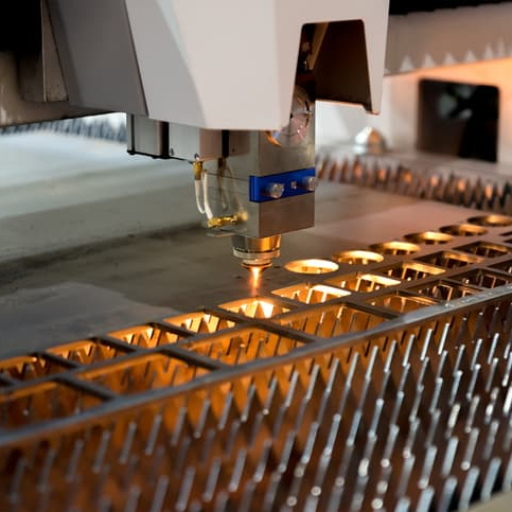
The primary components of a CNC machine for metal cutting include the control unit, which oversees the machine’s operation; the spindle, which holds and rotates the cutting tool; and the worktable, where the metal piece is securely clamped. Other components include servo motors for precise movements, ball screws for transmitting motion, and coolant systems for maintaining temperatures during the cutting operation. All these work in unison to maintain the accuracy, efficiency, and superior finish required for metal cutting processes.
The Role of the Spindle Motor
Spindle motors in CNC machines are critical components. The accuracy with which metal cutting operations are performed is dependent on it. The spindle motor essentially spins the spindle, i.e., either the cutting tool or the piece, to carry out machining operations. The spindle motor shall rotate the tool in cutting of particular materials at variable speeds.
Today, spindle motors are significantly more advanced, featuring VFDs for precise control of speed and thus optimal cutting conditions. In performing their power transmission duties with respect to given loads, spindle motors having abnormal vibrations result in poor surface finishes. Other parameters such as tool wear and the cutting parameters influencing spindle motor vibrations shall determine the best configuration for spindle motors. The two factors that define the power and torque requirements are the materials to be cut and the depth at which the cut is made. These make it one of the most important considerations for the versatility of CNC machines.
Understanding Toolpaths and CAM Software
Toolpaths and Computer-Aided Manufacturing (CAM) software play a crucial role in CNC machining. A toolpath is the engineered route that a cutting tool takes for shaping or machining. The design of toolpaths ultimately lays the foundations of true precision and efficiency.
CAM software generates and simulates these toolpaths, converting design files into instructions recognizable by machines. Effective CAM systems enable users to specify their toolpaths in relation to cutting speeds, tool engagements, and material properties. This ensures accurate and efficient toolpath generation, which aids in productivity enhancement, reducing waste, and achieving consistent results in CNC machining.
Importance of Coolant and Lubrication in CNC Machining
Coolant and lubrication have been carried forth along the CNC machining processes in terms of efficiency and end-to-end existence. They are necessary to maintain best cutting conditions by heat generation and friction adverse creation during machining. Excess heat leads to high-wear tools, material deformation, and bearing tolerances with poor judgment toward the final product’s quality. The correct coolant and lubrication enable the machinists to increase tooling life, better finishes on the surface, and ensure the consistent performance of CNC machines. These days, however, coolants used in the system can be filtered and recycled to make a manufacturing strategy cheaper and more sustainable.
Applications of CNC Metal Cutting

CNC metal cutting finds utility across myriad industries, including aerospace, automotive, medical, and electronics. It is applied with precision in components such as engine parts, medical implants, and very fine electronic housings. The capability of the technology to cut complex shapes to high accuracy and exact tolerances is what puts it at the forefront of production today.
Industry Uses for CNC Cutting Machines
🚀 Aerospace Industry
CNC cutting machines are used for manufacturing critical parts such as turbine blades, structural components, and landing gear with complete accuracy and reliability.
🚗 Automotive Industry
The manufacture of engine blocks, transmission parts, and custom car accessories is carried out by these machines, ensuring consistency and a focus on achieving a perfect finish.
🏥 Medical Industry
They are used in the manufacture of highly intricate tools, surgical instruments, and prosthetic implants, with a focus on precision and biocompatibility.
💻 Electronics Industry
CNC machines are used to manufacture electronic housings and circuit board components, requiring extremely close tolerances for optimal functional efficiency.
🏗️ Construction Industry
CNC cutting machines in construction projects fabricate architectural elements, metal frameworks, and custom designs built to exact specification.
Custom Engraving with CNC Technology
Custom engraving reaches heights of precision never imagined before with CNC machinery. With its highly fortifying capabilities, we should be able to engrave an intricate design, logos, and text on metals, woods, and acrylics. Accuracy at this stage ensures that every engraved product meets its specifications and, therefore, receives a top-tier professional finish.
Future Trends in CNC Metal Cutting
The CNC metal-cutting technology will soon belong to the class act under consideration of automation, AI, sustainability, and so forth. Automation appeared in place to maximize production efficiency, be it workflow efficiency, human intervention, or reduction in error. Integration of AI empowers far more accuracy through real-time alternations or through predictive maintenance, leading to greater productivity. There exists a greater need for sustainability; as a result, new avenues are transforming the reduction of material waste and energy consumption. These trends enforce quality and efficiency on CNC metal cutting, hence keeping this technology at the very forefront of modern manufacturing.
Reference Sources
- CNC Metal Cutting: The Complete Guide – A comprehensive guide on CNC machines and their specialized cutting tools.
- What is the Best Way to CNC Cut Sheet Metal? – Explores top techniques for CNC sheet metal cutting.
- Understanding CNC Machines: What They Are and How They Work – Explains the programming and functionality of CNC machines in detail.
- Top custom stainless steel parts Manufacturer and Supplier in China
- Guide for Steel Cnc Machine
Frequently Asked Questions (FAQs)
What is CNC metal cutting and how does the process work?
CNC metal cutting is a method of cutting and shaping metal using computer numerical control (CNC) machines. Depending on the task, one might employ an end mill, a router, or even a laser cutter to cut metal materials accurately according to digital design instructions. First, CAD software generates G-code instructions for the CNC machine, which then carries out metal operations at high speed and with great precision.
What are the various types of CNC machines that are employed in metal cutting?
The common types of CNC machines that are used in metal cutting include CNC milling machines, CNC routers, and CNC plasma cutters. Each of these machines operates in a different set of applications; CNC milling is ideal for incredibly intricate designs, whereas plasma cutting is best suited for cutting thicker metals. CNC routers are used for sheet metal work and in the process may use various router bits for different cutting jobs.
How are CNC milling and CNC routing machines different from each other?
The CNC router is primarily designed for cutting softer materials, such as wood and plastics. The CNC milling machine is designed mainly on machining metal. Generally, CNC milling offers higher spindle speeds and can utilize carbide end mills with more flutes, which are better suited for metalworking. On the other hand, CNC routers primarily use single-flute router bits, which provide a better cutting action in softer materials.
What cutting fluid does CNC metal cutting use?
Cutting fluid increases CNC metal cutting performance by limiting temperature rise during the cutting process, reducing wear on the cutting tool, and promoting surface finishing quality. It reduces the surface tension of the material as its lubricant, helping cutters to move with lesser friction; less friction induces deflection, and deflection induces error.
How can I ensure my material is properly clamped during CNC machining?
Motor and spindle will never give in to if the material is clamped correctly. But clamps can never be correct if they do not hold the material in place. There should be no flex-nor if it moves during the operation, the tool will cut into the clamp, even if there is misalignment. This workhorse will give you stability throughout the entire machining process, resulting in consistent quality of the final workpiece.
What importance does spindle speed hold in CNC metal cutting?
Spindle speed is a measure of the rotation of the cutter in CNC machining, specifically in metal cutting. When the spindle speed is fast, it increases cutting efficiency but shortens the feed rate to prevent tool wear. Knowing the suitable spindle speed to use, depending on the materials and tools, whether it is carbide end mills or router bits, will help achieve excellent accuracy and finish.
Ready to Explore CNC Metal Cutting?
Transform your manufacturing capabilities with precision CNC technology and stay ahead in today’s competitive industrial landscape.


