Introduction to CNC Laser Cutting
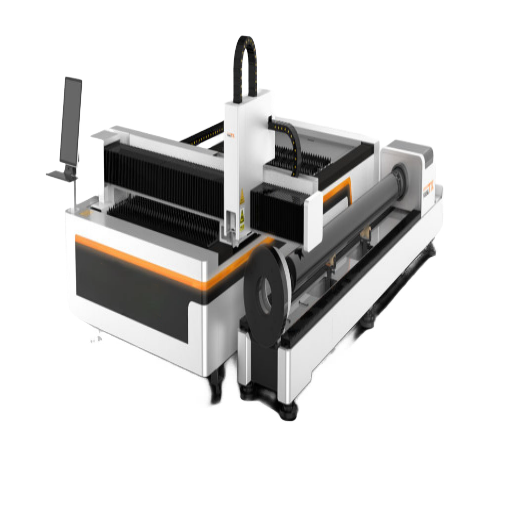
CNC laser cutting is a fabrication method that utilizes laser beams directed by computer numerical control for cutting, engraving, or shaping materials with high precision. This method is characterized by its ability to manufacture complex geometries with fine details and perfectly smooth edges with minimal material wastage. Due to its speed, accuracy, and capacity to deal with different materials, including metal, plastic, and composites, CNC laser cutting finds use in many domains, such as automotive, aerospace, and electronics. The CNC laser-cutting operation combines the prowess of advanced technology with automation to produce consistent, top-notch-quality finishes while enhancing overall production efficiency.
What is CNC Laser Cutting?
CNC Laser Cutting is a cutting-edge manufacturing process that uses highly focused laser beams to cut, engrave, or shape materials. This process uses CNC automation, where cuts and movements are automatically controlled in order to attain a particular design, and lasers are thus used for highly accurate and feature-rich works. The beam, coming from an extremely focused and amplified light source, melts, burns, or vaporizes the material to offer either intricate designs or functional parts.
With increasing popularity, the machine has become an essential component for an industry that requires technology, repeatability, and speed since it works on the inter-array of materials. A good CNC Laser machine works on metals, plastics, glass, and sometimes even wood. Selectively, if environmental issues are taken into consideration, then this cutting process takes less wastage of material and uses lower energy; so, this makes the CNC Laser Cutting an emerging process in sustainable manufacturing.
Importance of Laser Cutting Technology
Laser cutting technologies, largely fiber laser cutting, are crucial in the departments of precise and consistent results for a range of applications. With accuracy, the error gets eliminated and material wastage gets minimized, thereby optimizing both production efficacy and cost. Laser-cutting technology offers a broad spectrum of materials and complex geometries to work with, widely accepted as the automotive, aerospace, and electronic industries’ solutions. Besides, in environmentally friendly manufacturing in energy-efficient operation and low waste it becoming of important in contemporary industrial practice.
Overview of CNC Machines and Their Applications
CNC machines are versatile tools used for precision cutting, shaping, and engraving, and find applications in industries like automotive, aerospace, healthcare, and electronics. Other applications include prototyping, manufacturing of custom parts, and high-precision machining.
| Key Point | Details |
|---|---|
| Definition | Computer-controlled machining tools |
| Types | Milling, Lathe, Router, Laser, Plasma, EDM, Waterjet, Grinding, Drilling |
| Applications | Aerospace, Automotive, Healthcare, Electronics, Furniture, Prototyping |
| Materials | Metals, Plastics, Wood, Composites |
| Advantages | Precision, Efficiency, Versatility |
| Industries | Aerospace, Medical, Automotive, Consumer Goods |
| Capabilities | Complex Geometries, High Accuracy |
| Future Trends | AI, Automation, Sustainability |
Principles of CNC Laser Cutting
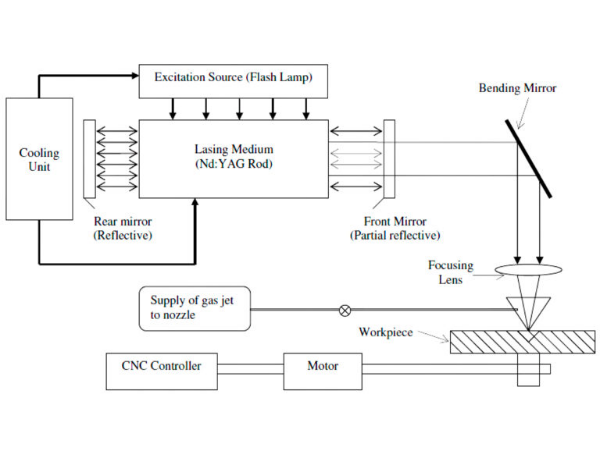
How CNC Laser Cutters Work
To cut and engrave with extreme precision, CNC laser cutters focus a high-powered beam onto the material. The process starts with creating a digital design that is then input into the CNC system. The system controls the laser movement. The laser, with its concentrated energy, heats, melts, or vaporizes the material along the chosen path, thus achieving very neat and accurate cuts. This technique is very well suited for intricate areas, thin materials, and applications requiring an extremely high level of detail in the cutting area..
Benefits of Using CNC Laser Cutting Machines
- High Precision and Accuracy: They can do drawings and tricky patterns with very high precision, making these machines the ultimate choice when something requires fine details.
- The Machines Worked in Any Need: The laser cutters can do the cutting for many materials, from metal, plastic, woo,d to textiles, hence opening the passage to different industries.
- Efficiency and Speed: CNC fiber laser cutting machines can cut very high at speeds with little setup time, thereby increasing productivity.
- Minimize Material Waste: Materials used are optimized with laser cutting, and hence, the machines ensure that no material is wasted at an added cost.
- Non-Contact: This means the cutters’ operation will convert state-of-the-art tools into worn-out ones, saving a fortune on tool maintenance.
- Automated and Repeatable Results: CNC systems guarantee the same results for every run of production, increasing reliability and reducing uncertainty in mass-scale production.
- A Good Finish: Another action of the laser would be to make the edges clean and smooth, so you rarely have to worry about finishing them.
- Earth Friendly: CNC laser cutting creates low levels of waste and requires less energy to operate when compared with traditional cutting methods, thus being much more sustainable.
Comparison of CO2 and Fiber Laser Cutting Technologies
Fiber lasers are faster, more efficient, and better for thin metals, while CO2 lasers excel in cutting thicker materials and non-metals.
| Parameter | Fiber Laser | CO2 Laser |
|---|---|---|
| Cutting Speed | Faster for thin metals | Slower for thin metals |
| Material Range | Metals, reflective materials | Metals, non-metals |
| Thickness Suitability | Best for thin (<8mm) | Best for thick (>10mm) |
| Precision | High | Moderate |
| Operating Cost | Low | High |
| Maintenance | Minimal | Frequent |
| Energy Efficiency | High | Low |
| Initial Cost | Higher | Lower |
| Lifespan | Longer | Shorter |
| Applications | Metals, precision work | Non-metals, general cutting |
Innovative Applications Across Industries
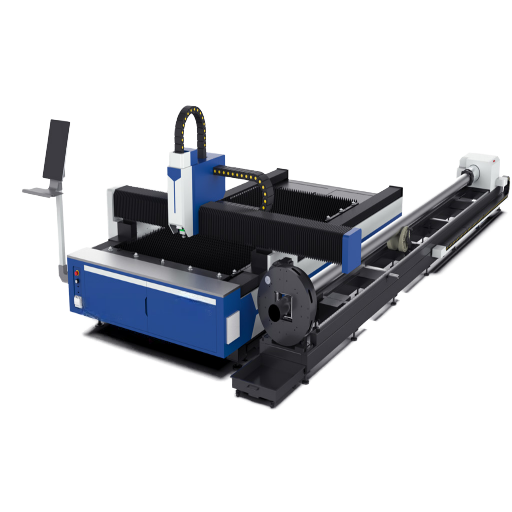
CNC Laser Cutting in the Automotive Industry
The automotive industry considers CNC laser cutting fit for the precision fabrication of components. It is mainly used to cut 3D intricate shapes in steel, aluminum, or other alloys for car parts such as body panels, chassis structure, and exhaust systems. It can retain a higher level of accuracy, repeatability, and part quality while lessening production time and material waste. CNC laser cutting technology conforms perfectly with the firm prediction for light and durable components.
Transformative Uses in Aerospace Manufacturing
The transformative applications span aerospace manufacturing territory with AI, additive manufacturing, IoT, blockchain, AR, and advanced materials, including the so-called “smart skin” technologies, all enhancing efficiencies and innovations toward production capabilities throughout the manufacturing process.
Sheet Metal Fabrication and CNC Laser Cutting
To rephrase: Sheet metal fabrication coupled with CNC laser cutting results in a highly precise and efficient method for shaping and cutting metal components. CNC laser cutting is adept in clean cutting with minimal material wastage whenever industries demand consistency and precision: aerospace, automotive, and electronics. High-speed production, lesser lead times, and greater complexity in geometries with tight allowances-these abilities prove its indispensability in today’s manufacturing.
Recent Advancements and Future Trends
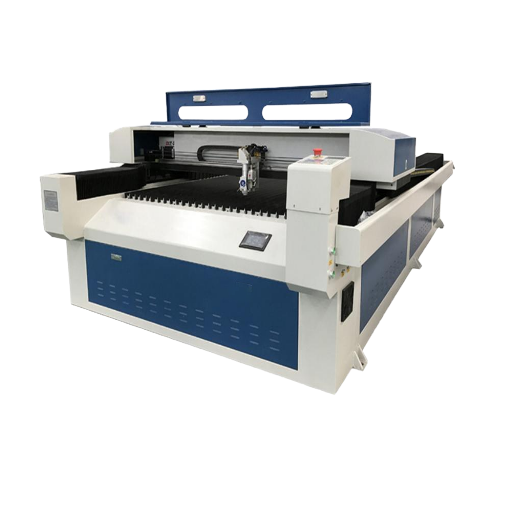
Emerging Technologies in CNC Laser Cutting
Among the new CNC laser cutting technologies are advanced automation facilitated by AI, advanced laser sources, energy-saving facilities, integration of 3D printing, and augmented reality. These technologies are simultaneously transforming precision manufacturing and have created new opportunities for complex geometries and customization.
Expert Insights on the Future of Laser Cutting
Experts believe that in the future, fiber technology will be associated with laser cutting, the development of high-grade laser sources for precision, and markets for innovation and quality assurance. The industry will continue to evolve with automation, smart manufacturing integration, and sustainable practices.
Impact of AI and Automation on CNC Laser Machines
CNC laser cutting has opened doors for AI to produce various benefits but primarily enhancing efficiency and accuracy. CNC fiber laser cutting systems, with the help of what is considered machine learning-based technology, can optimize the cutting path, minimize wastage, and uphold quality standards. The automation systems help faster production through real-time monitoring coupled with automated adjustments, ensuring less downtime and human error. Collectively, these advancements ensure a reduced cost of operation with enhanced benefits in the manufacturing process in terms of productivity and accuracy.
Practical Considerations for Implementing CNC Laser Cutting
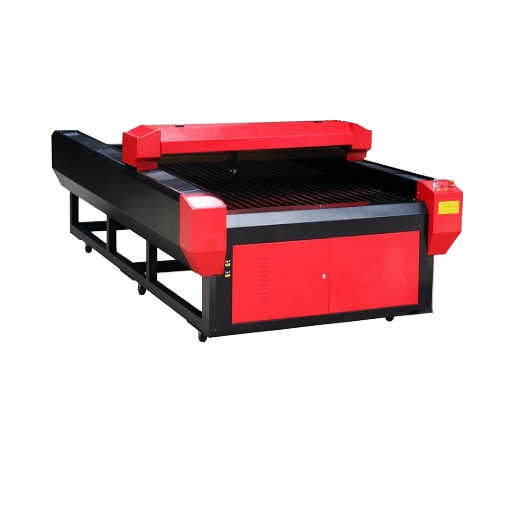
Choosing the Right CNC Laser Cutter for Your Business
When picking a CNC laser cutter suitable for your business, check the key essentials that meet your training needs:
- Types of Materials and Thicknesses: Different machines perform well cutting certain the very materials with which you will mostly be working.
- Power Output, Speed, and Precision: The machine must provide you with the level of production and quality you require.
- Budget Analysis: Factor in the initial cost, maintenance, and operational expenses of the machine.
- Software Compatibility: Consider the software’s ease of use and compatibility with existing design software, as this greatly impacts operational efficiency.
- Technical Assistance: Give priority to support and after-sales services on which you can rely; this will reduce potential downtime and keep your operations running smoothly.
Cost Considerations and ROI Analysis
An initial cost cashew has arisen for the thought: there will always be expenditure and maintenance charges to meet, which means further training of the rightful staff. To attain an ROI assessment, give preference to parameters-axis production achieved by CNC router, downtime, or downtime prevention, and operational efficiency. Then, the amount of benefits compared to the total ownership cost gives the worth from the time of the investment. Operating with equipment with proven reliability and support deservingly help with greater ROI due to avoiding any risk of unexpected breakdowns or delays.
Best Practices for CNC Laser Cutting Operations
Below are some practices considered “best” for operating the CNC laser cutting to achieve the optimal result:
- Material Selection: One must use a good grade of material, as that will bring the cutting results into better quality, and defects will lessen.
- Program and Nesting Optimization: Efficient programming and material nesting maintain maximum use of material with minimum waste.
- Setting Powers Appropriately: The laser power for cutting should be set based on the type and the thickness of the material.
- Assist Gas Management: Correct assist gas should be used, oxygen, nitrogen, or air, depending on the material and the cut quality desired.
- Heat Management-System: Proper cooling and heat dissipation ensure that materials do not warp and maintain quality-wise.
Frequently Asked Questions (FAQs)
Q: What Is CNC Laser Cutting, and How Does It Cut?
A: A CNC laser cutting process uses a focused laser beam directed by computer numerical control, enabling high-precision cutting or engraving of materials. The method involves using an extremely powerful laser beam directed onto the workpiece, which cuts through it by melting or vaporizing. This process cuts and engraves almost everything-maybe metals, plastic, ceramic materials, and so forth, thus the process is all about versatility provided to many industries.
Q: What Are the Merits of CNC Laser Cutting Machines?
A: The merits of laser cutting are higher accuracy, speedier cutting, and the ability to create intricate designs. CNC laser cutters work on different materials such as mild steel, carbon steel, and thin sheet metal, while giving a clean cut with minimum kerf. Laser cutting is also industrially efficient for cutting many materials, with loss and setup time comparatively less than in conventional methods.
Q: What Are the Different Types of Laser Cutting Machines?
A: Several types of lasers can be used for cutting. A CO2 laser, a fiber laser cutting machine, and a YAG laser are some of the examples. CO2 lasers are best for cutting non-metallic materials such as plastic and wood, whereas fiber lasers are effective for metals and offer faster speeds. Each laser has its wavelength and cutting power for specific applications, making them great for different cutting services.
Q: How Does Laser Power Determine Cutting Speed?
A: Laser power plays the most crucial role in the cutting speed of a CNC Laser Cutting Machine. This means that the higher the laser power, the faster the cutting speed, and the thicker the materials that can be cut. For cutting thick steel plates efficiently, one needs the maximum laser power. However, thin sheet metal will be better cut, albeit with less power. The cutting speed should always be faster when the material is thin and less thick with slower speed.
Q: Are There Materials That the CNC Laser Cutting Machine Can Engrave?
A: Yes, CNC laser cutting machines, including gas laser and fiber laser options, can engrave materials as well, meaning materials can also be engraved using these machines. In engraving, laser engravers use laser settings that remove just a thin layer of material from the surface of the workpiece without cutting through. It is often used to engrave intricate projects or text on a variety of workpieces, such as metals and plastics, for their aesthetic enhancement.
Q: What materials Can Laser Cutting Accommodate as Materials?
A: These materials, from metals like mild steel, carbon steel, aluminum, and also non-metals including plastics, wood, and ceramics, can be cut by laser cutting. Another factor affecting the choice of laser will be whether we use a CO2 or a fiber laser, which, of course, depends a lot on the type of material to be cut, as fiber lasers cut subjects and thickness better, to say the least.
Q: Why Should a Laser Cutter Technician Know About Kerf?
A: Kerf indicates the width of the cut made by the CNC fiber laser cutting machine. As one designs sheet metal parts, the kerf will have to be taken into account because it affects the final cutting dimensions of the parts. It is important to understand kerf so manufacturers can compensate for this loss of material in their designs to meet the required specifications.
Q: What Is the Role of CNC Programs in Controlling Laser Cutting Machines?
A: CNC programs are what control the laser-cutting machines. These programs decide the movement of the laser cutter, the cutting speed, and the power setting according to the desired cut quality and depth of cut. Using highly accurate CAD files, like DXF files, operators can make sure that the laser cuts meters precisely according to the intricate designs and specifications.
Q: Most times, CNC laser cutting is not the best choice when welding is involved.
A: The main purpose of CNC laser cutting is cutting and engraving, but it is possible to use certain laser machines to weld as well. The same principles applied in cutting-using a focused laser beam with high power-can also be applied to weld materials. This means these two processes can be merged as one for even greater versatility during manufacture.
Reference Sources
1. Effect of Cutting Motion Speed on Roughness Surface and Accuracy During CNC Laser Cutting
- Authors: Rizki Ghani Ghozali, Muttaqin Rahmat Pangaribawa
- Date Published: February 27, 2024
- Summary: This research focuses on the effect of the speed of CNC laser cutting on surface roughness and the accuracy of the cut materials. The plates Eser had different thicknesses of 3 mm, 4 mm, and 5 mm, respectively, while three cutting speeds of 1 m/min, 1.4 m/min, and 2 m/min were examined. The results showed that a cutting speed of 2 m/min was best for 3 mm thick plates with an accuracy level of 98% and roughness average (Ra) of 6.51 µm. It was also found that the increase in thickness of the material usually meant a drop in the level of accuracy (Ghozali & Pangaribawa, 2024).
2. An Enhanced CNC Laser Cutting Path Optimization Method for Ship Hull Components Up to 24 mm Thick
- Authors: X. Liu, Daofang Chang
- Published: March 20, 2023
- Summary: Presented by the authors was a new toolpath optimization model for CNC laser cutting of ship hull components, which overcomes the defect of existing ones. They proposed a new part-cutting constraint rule based on partial cutting to ensure the cutting process runs more efficiently. To solve the optimization problem, the study applied a segmented genetic algorithm based on reinforcement learning (RLSGA) and demonstrated the ability to perform better than the traditional algorithms(Liu & Chang, 2023).
3. Top custom stainless steel parts Manufacturer and Supplier in China
Conclusion
CNC laser cutting represents a transformative technology in modern manufacturing, offering incomparable precision, efficiency, and versatility to multiple industries. From automotive to aerospace applications, the advanced cutting method continues to evolve with AI integration, with enhanced energy efficiency upon automation improvements. As companies begin to implement CNC laser-cutting technology, it will be wise to assess necessary material requirements, operational costs, and long-term ROI for the benefit and offer a leg up on their competitor in the very demanding manufacturing landscape.